
Part 20: Seoul, South Korea (#1)
- mpleva
- Jan 4
- 10 min read

Seoul
A late flight from Taipei to Seoul plus a long drive to our hotel meant that we finally crawled into bed around midnight. Huge bowls of delicious spicy porridge the next morning got us motivated to explore. We quickly realized we had chosen a fantastic place to stay, but had no idea yet how true this was. Located in Insadong Neighborhood, our hotel was surrounded by a cultural center, a temple, and a walking street. Multiple palaces, sculpture parks, and excellent museums were all nearby.
Insadong and Palaces
The back of our hotel was wrapped in a multi-layer cultural center full of shops, exhibits, and giant cartoon statues. This included GS25, an unmanned convenience store where robot arms would serve you coffee, ice cream, cotton candy and pizza. The shady, tree-lined and busy Insadong-gil walking street was a haven of wooden tea houses and shops for pottery, antiques, and stationery (so many beautiful brushes!); boutique art galleries; and of course food everywhere. Tiny branching alleys promised endless exploring. But most importantly, across the street was the beautiful and ornate Jogyesa Temple, which was the key to how our adventure would unfold.

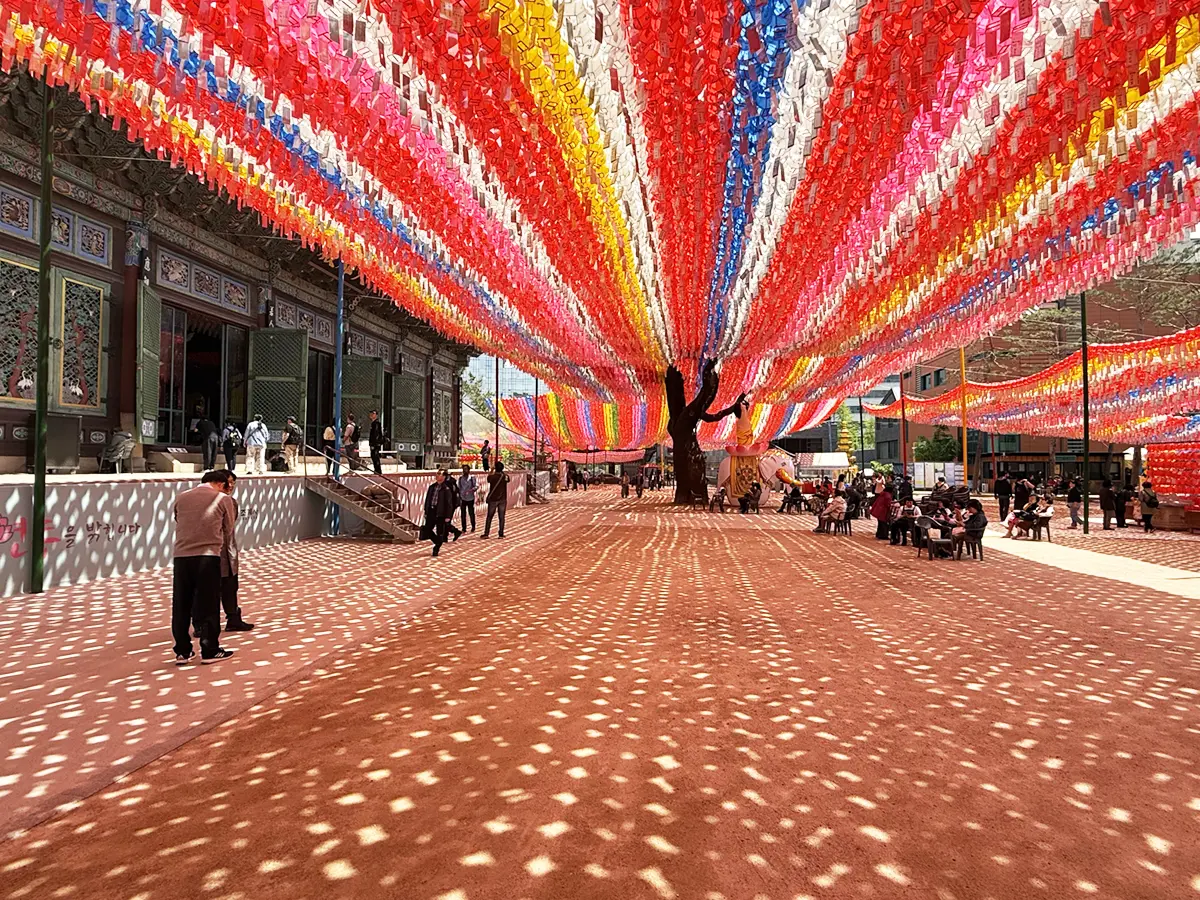
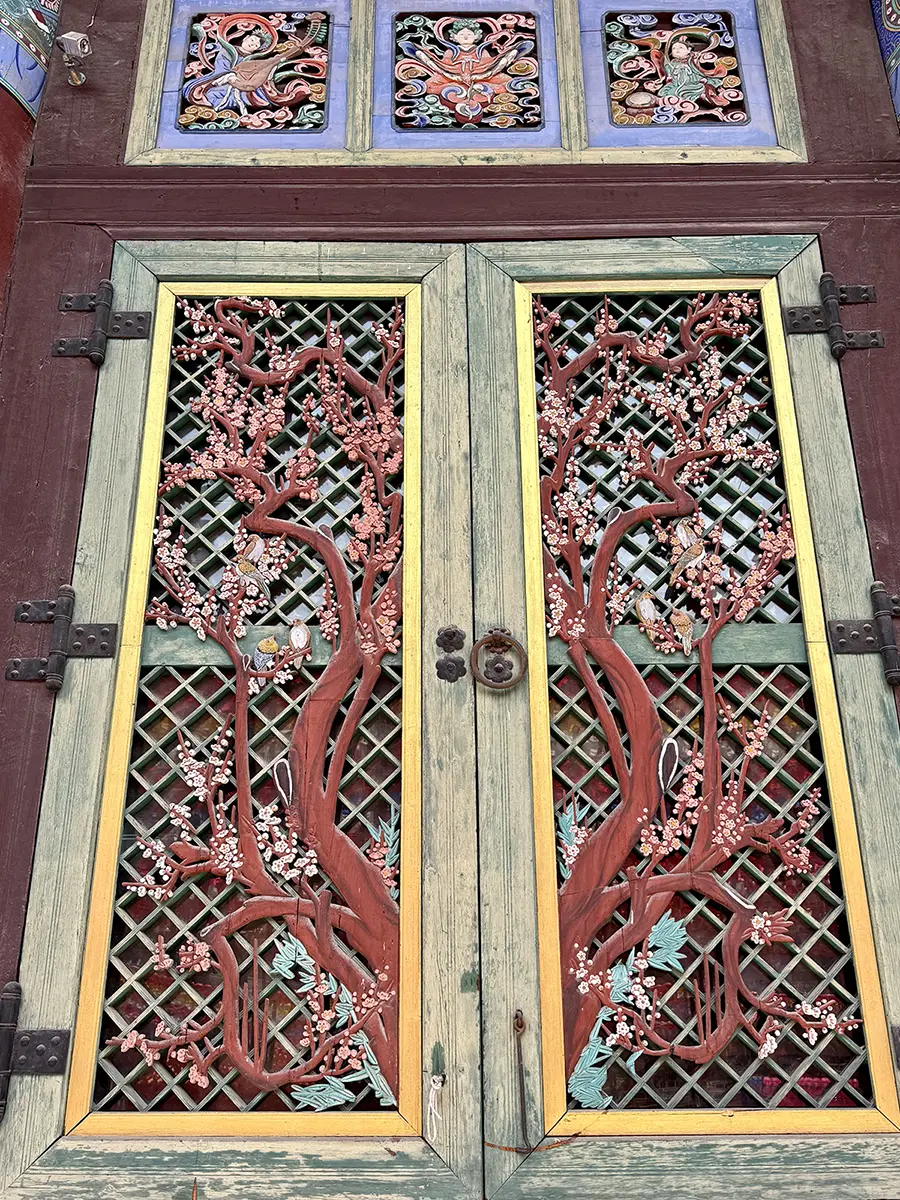
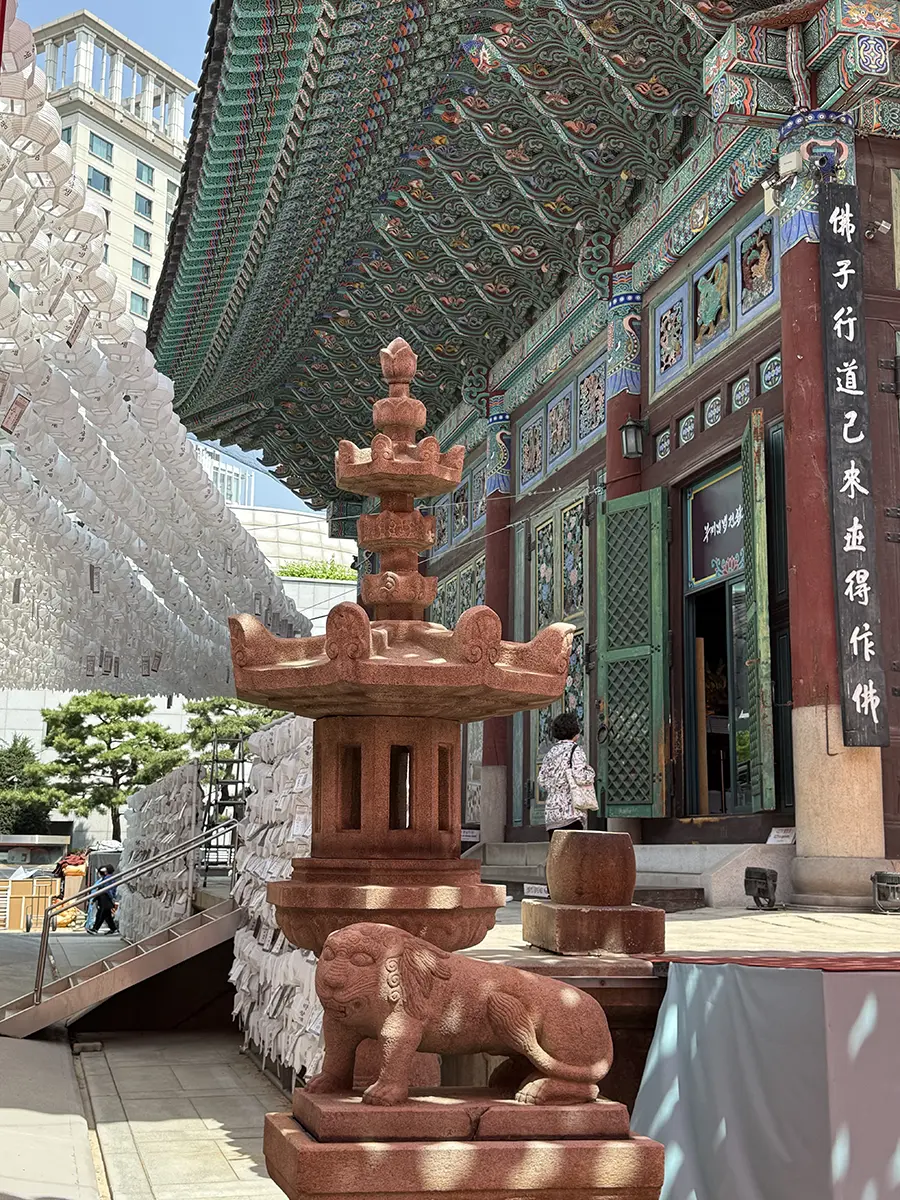
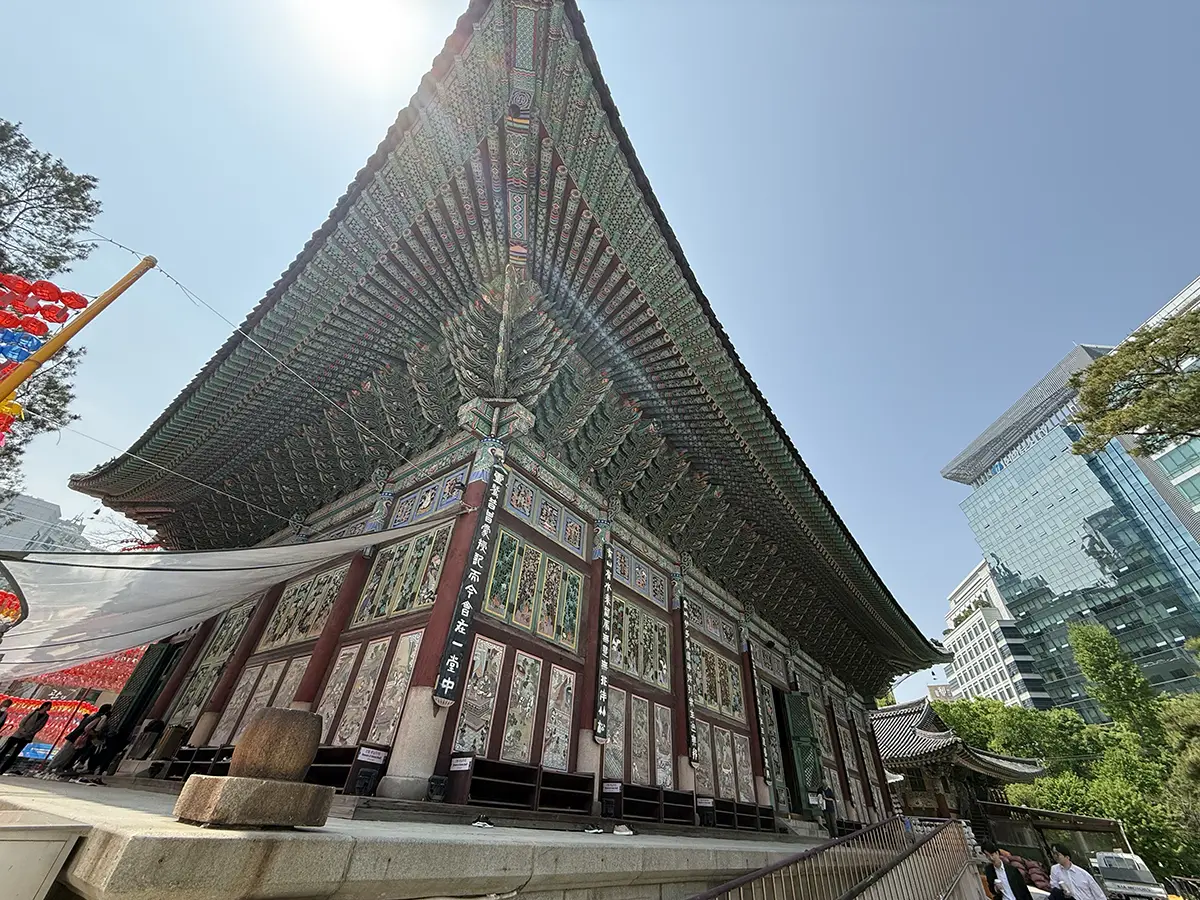
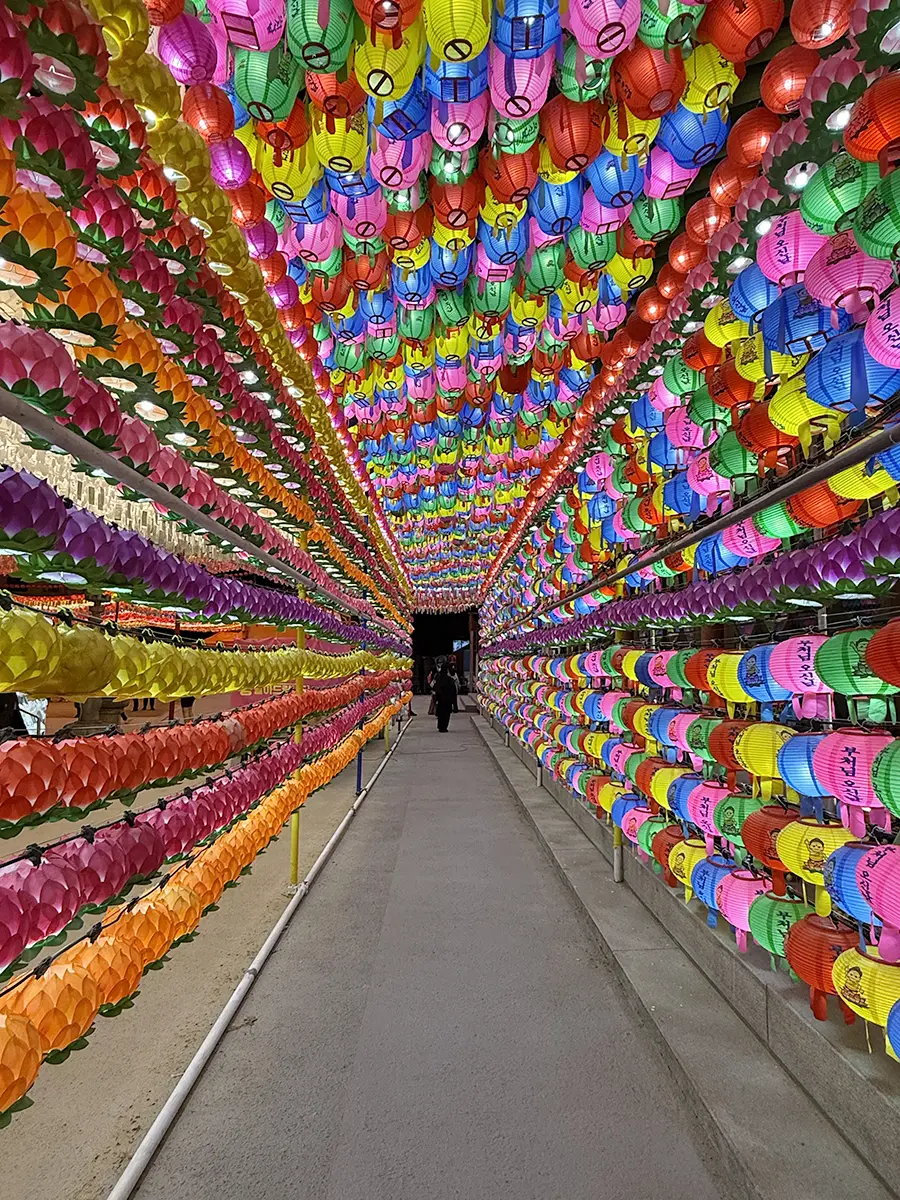
Founded in 1910, the large and intricate main hall houses 3 massive golden Buddhas. The approach to the temple and its surrounding courtyard were completely covered with a blanket of hanging lanterns. Thousands of dangling paper tags made a peaceful music as they fluttered in the breeze. Under the shade of this colorful canopy, we found at a larger than life sculpture of a child Buddha holding a lotus while riding a lion. It was something like a cross between paper maché and origami. What looked like some kind of canvas turned out to be brightly painted Hanji paper (made from mulberry tree bark) stretched over a complicated frame. More sculptures of lotus flowers and other creatures were scattered about. The whole place was unusually busy, with a massive spring cleaning underway. It seemed like something was going on, but we had no idea what. We would find out soon enough...
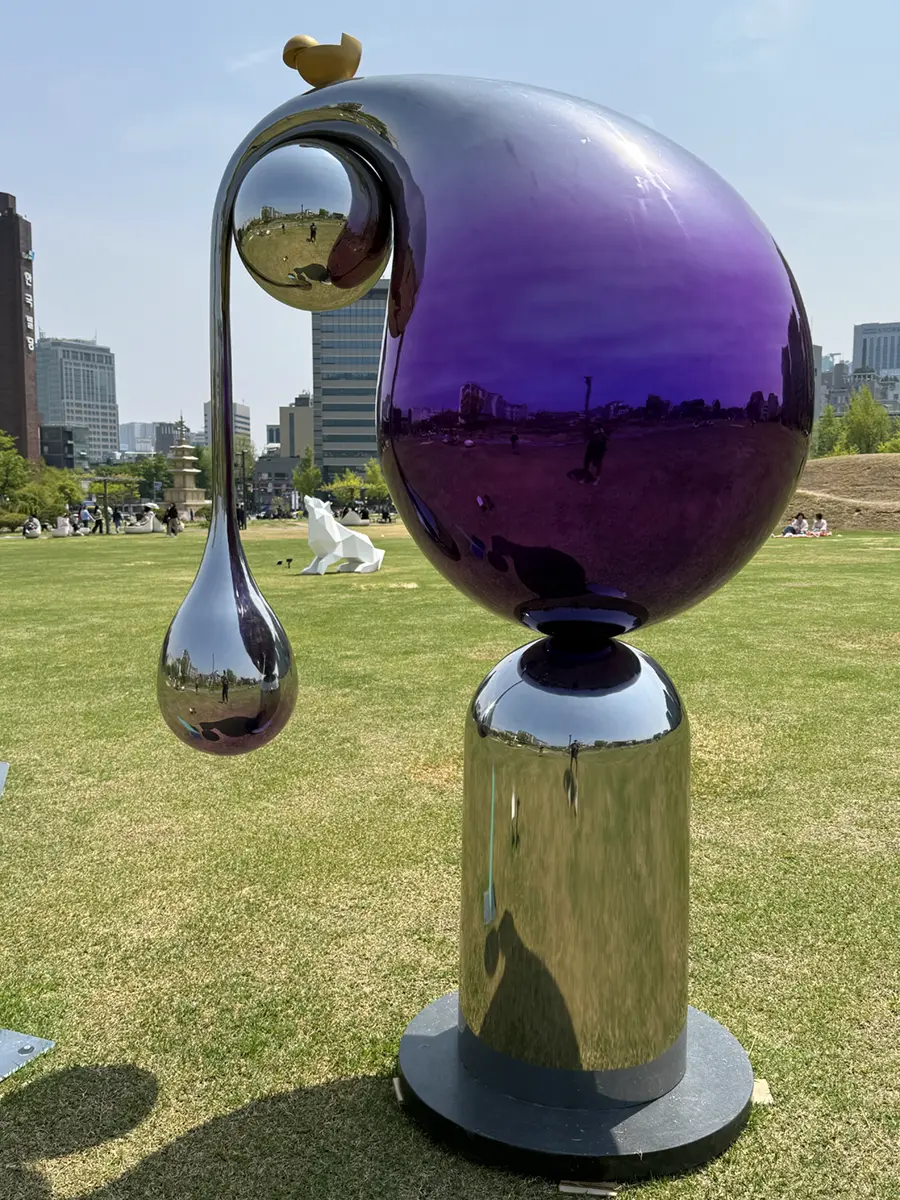
From there we made our way to the massive Gyeongbokgung Palace (First Palace), with its imposing gate and colorful parading guards. However, our late start meant that it was far too crowded. We decided to try our luck at Changdeokgung (Second Palace) instead. Our route took us through Yeolrin Songhyeon Green Square, full of people enjoying the perfect spring weather, lounging and strolling amongst the flowers, walking trails, and sculptures.
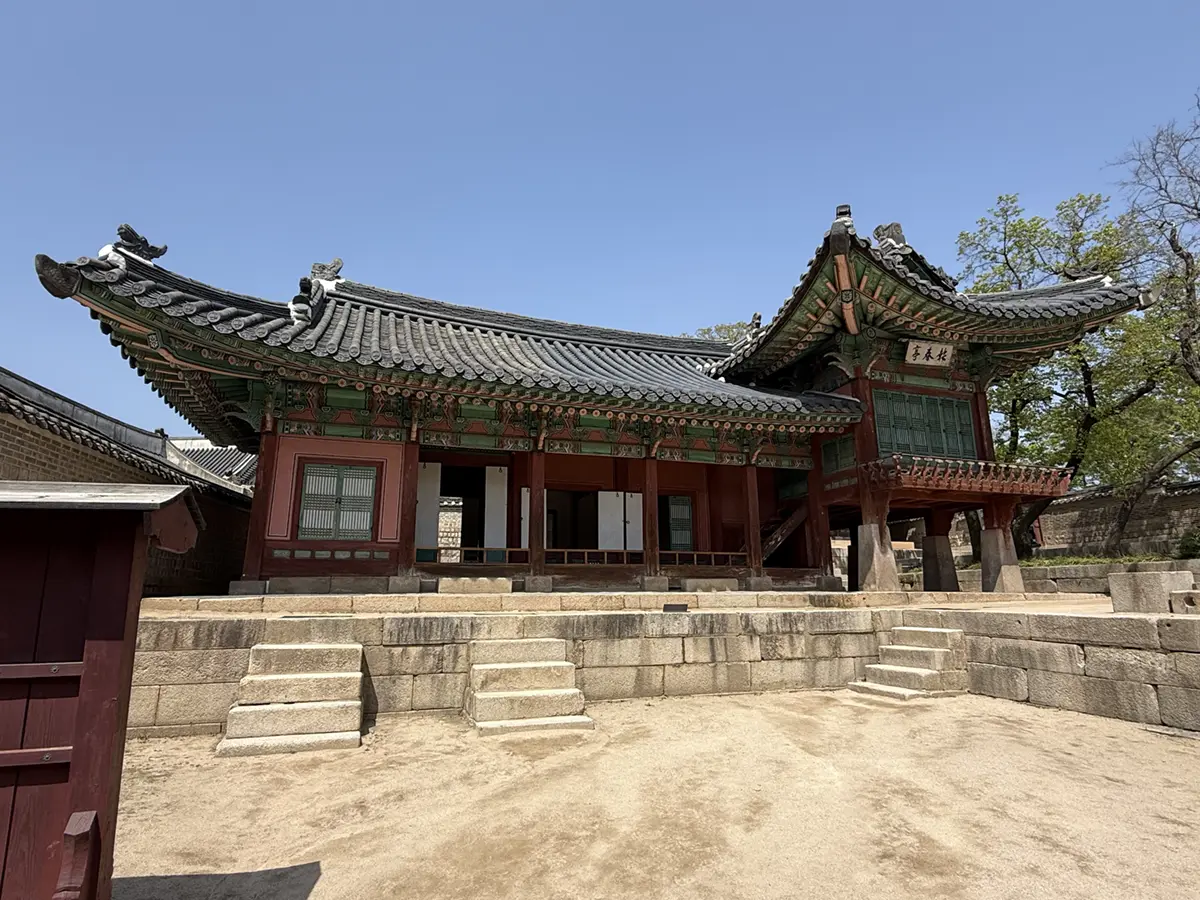
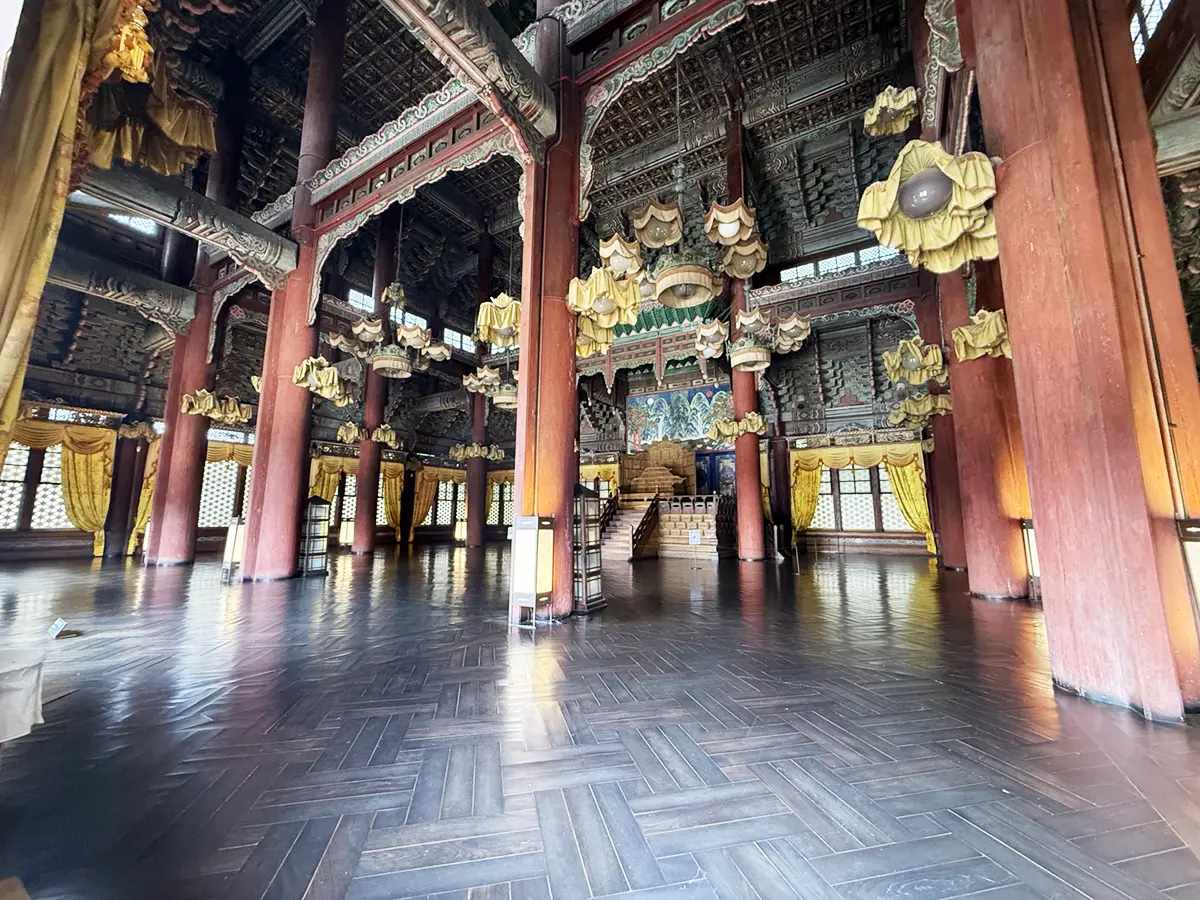
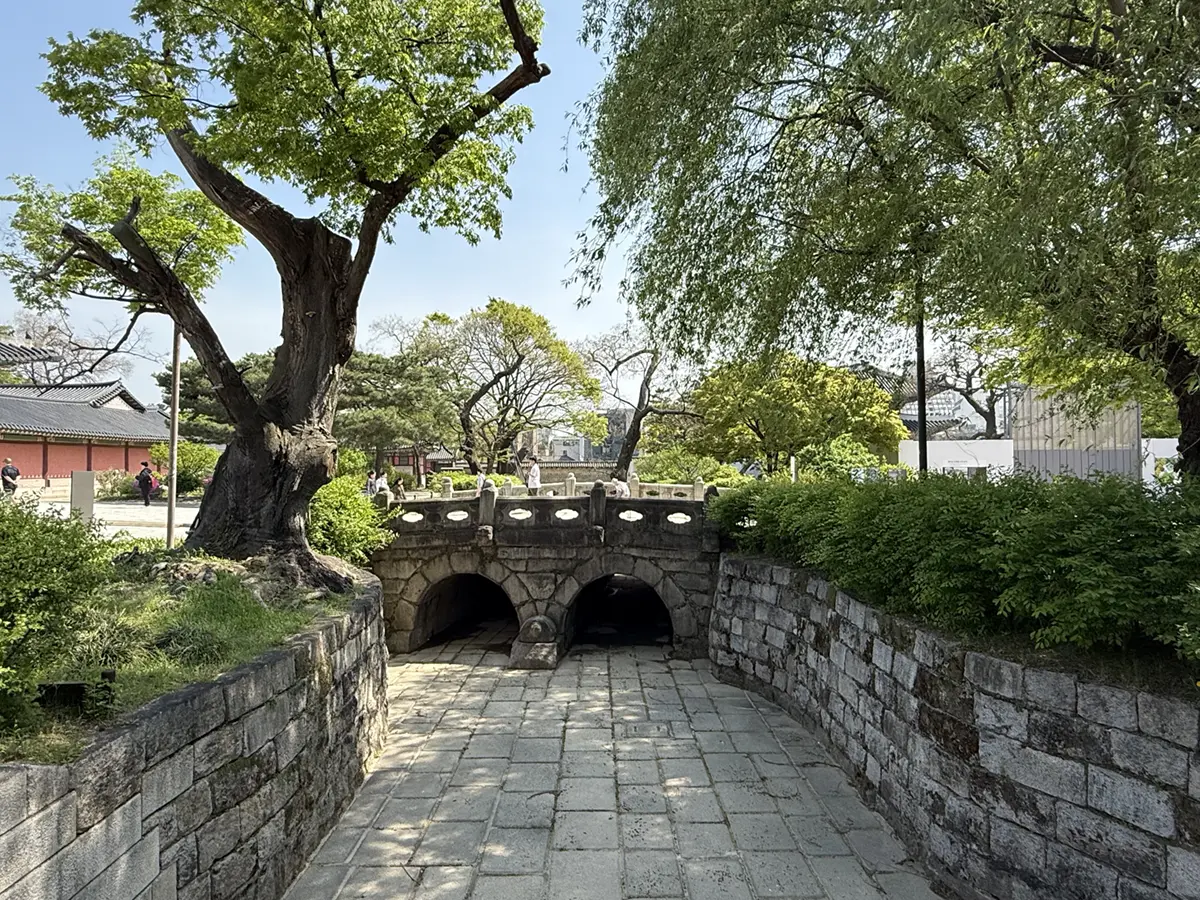
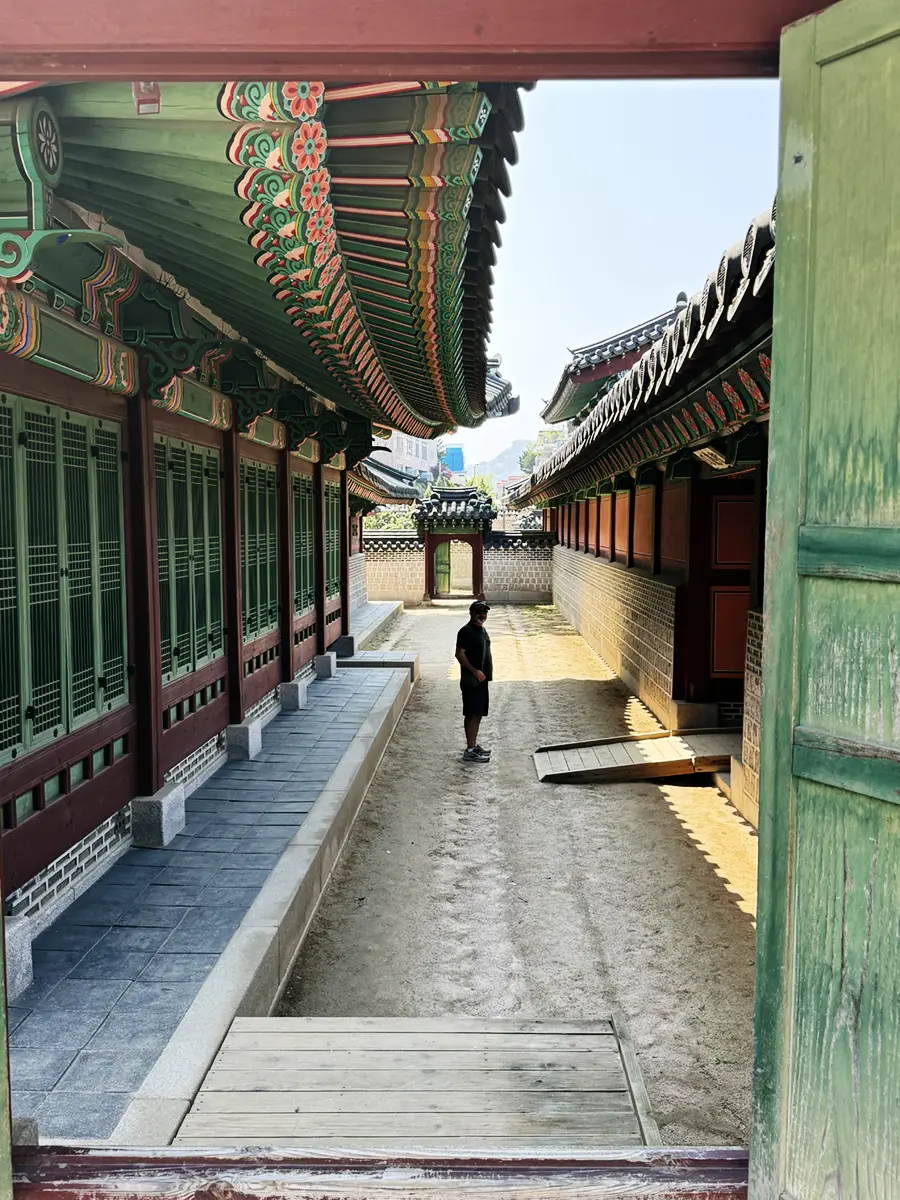
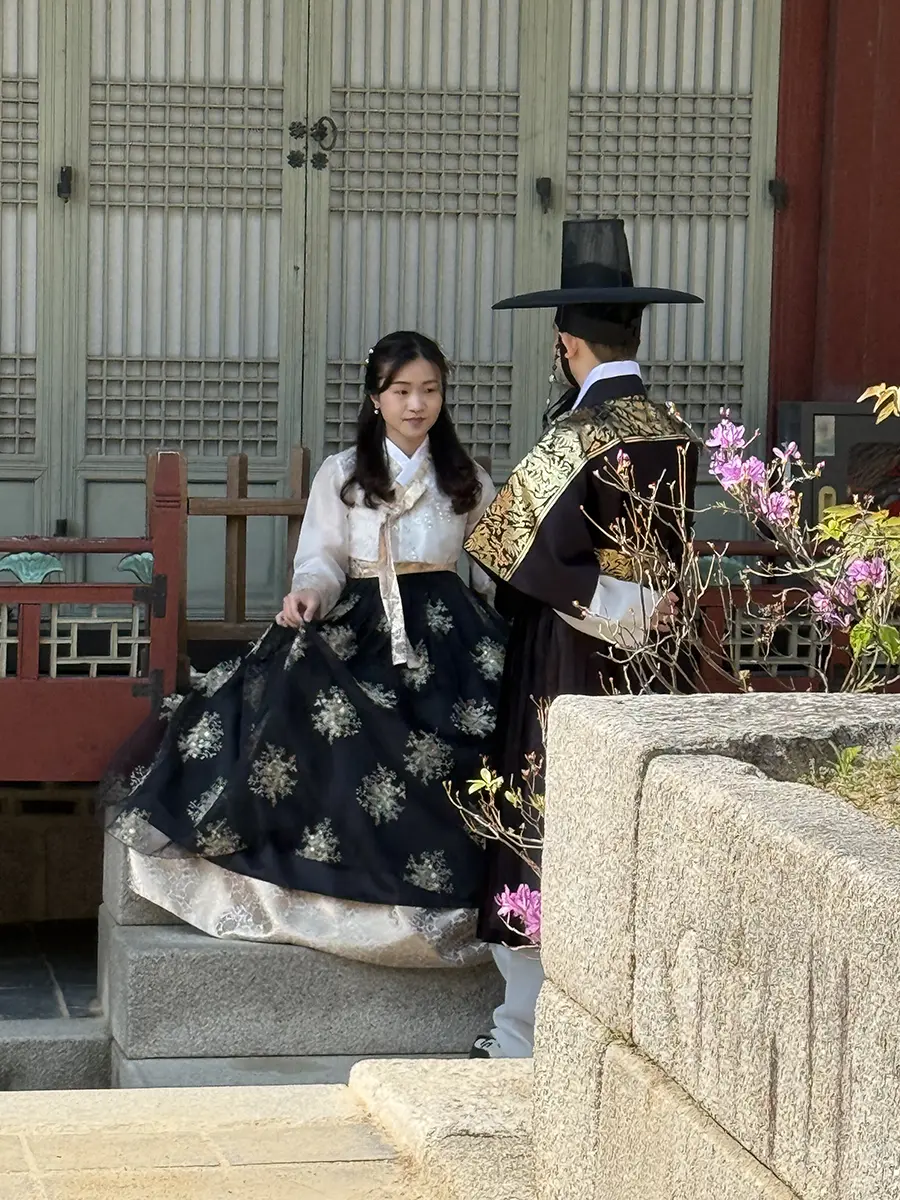
The Changdeokgung Palace complex was established in 1405, and is is the most "Korean-style" of the 5 grand palaces in Seoul. It was the home of the Joseon Dynasty Kings for over 250 years. The extensive grounds flow uninterrupted to the neighboring Changgyeonggung Palace, which meant that it wasn't overly crowded. We ran around the beautiful grounds, gardens and ponds, from massive halls and courtyards to tiny doors and hidden spaces. Wearing a Hanbok (traditional Korean outfit) allows free entry to all of the palaces, and there are countless places to rent them. While it felt a bit Disney, hundreds of people strolling along in traditional clothing made it easier to lose ourselves in the past.
Limping back home, somewhere in the maze of alleys we found a cute hidden spot for pizza and beers. We were by far the oldest people there, and it was fun to "spy" on the kids goofing around, since we were all but invisible, haha. We had a big day planned ahead of us, so we decided to chill out for the rest of the evening. The next day would bring us to the DMZ (see next post). Stopping at the "robot store", we stocked up on breakfast onigiri for our upcoming adventure, and rested up for a foray into the wildly unknown.
The DMZ
This was such a crazy day, we decided it deserved a post of it's own. Especially since these just keep getting longer, haha.
[coming soon, see Part 21: South Korea (#2: the DMZ)]
Bonwonsa temple and Ansan mountain
After our intense day at the border, a trip to the temple and a beautiful hike were just what we needed. We had also figured out by now that all of the preparations and decorations everywhere were for Yeondeunghoe, the Lotus Light festival honoring the Buddha's birthday. Lucky for us, the epicenter for the festival was Jogyesa Temple across the street from our hotel. As we got ready to head out, hearing the festival opening music got us excited for the parade later on.
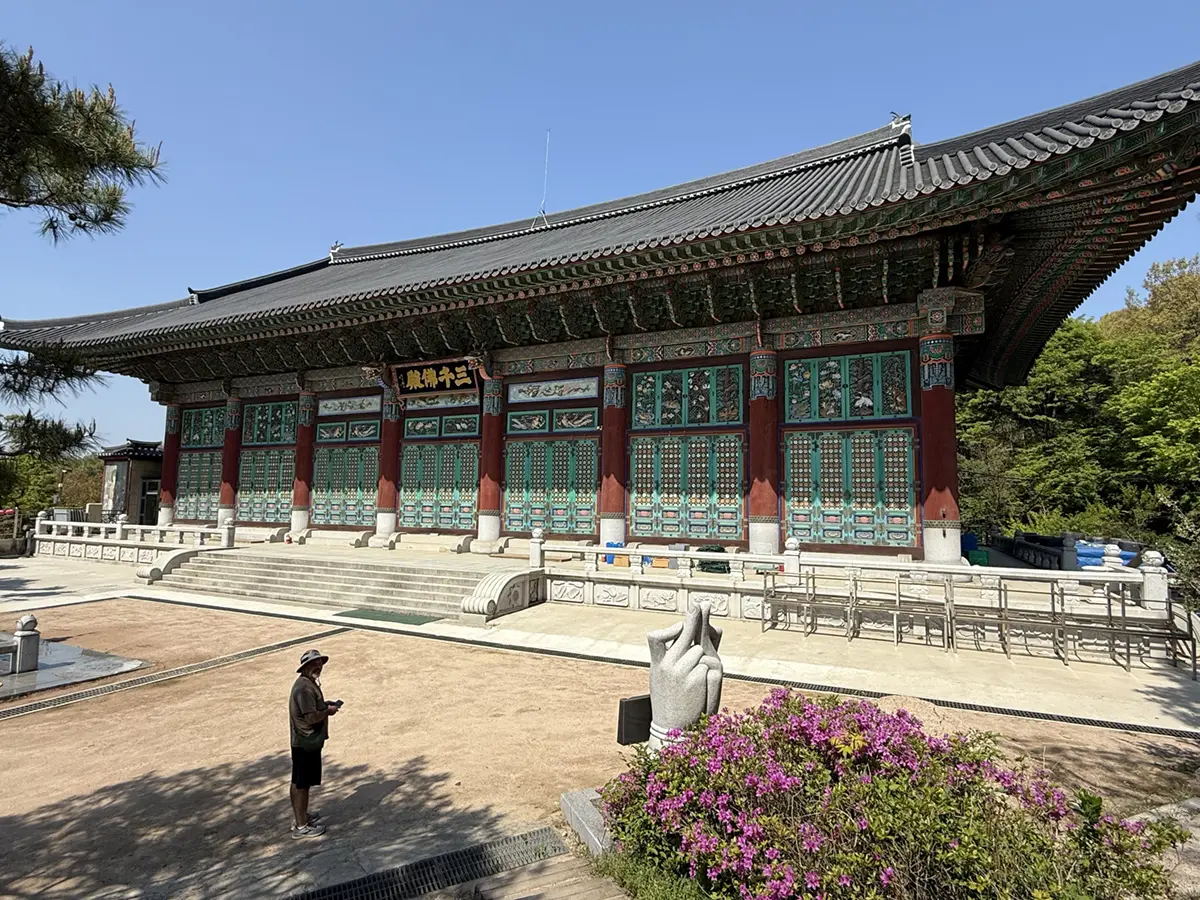
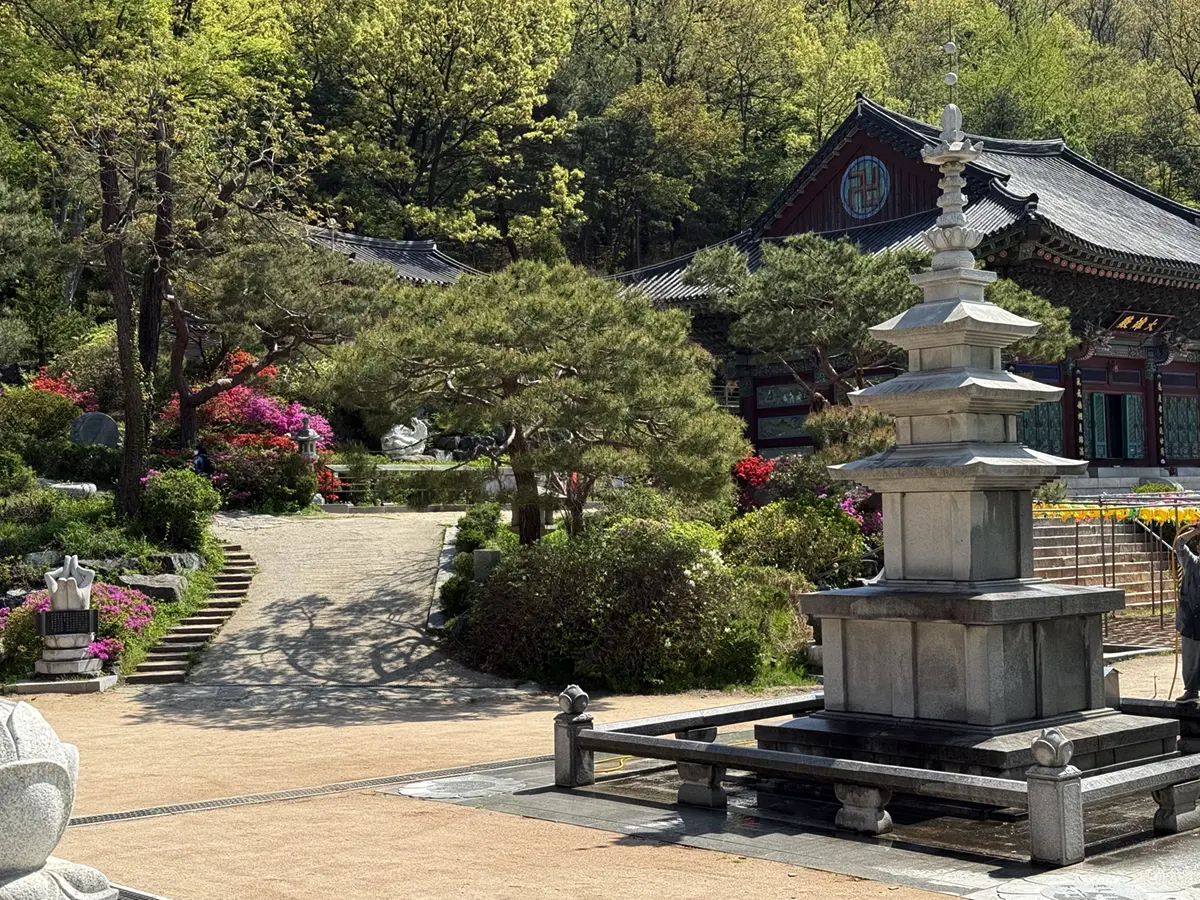
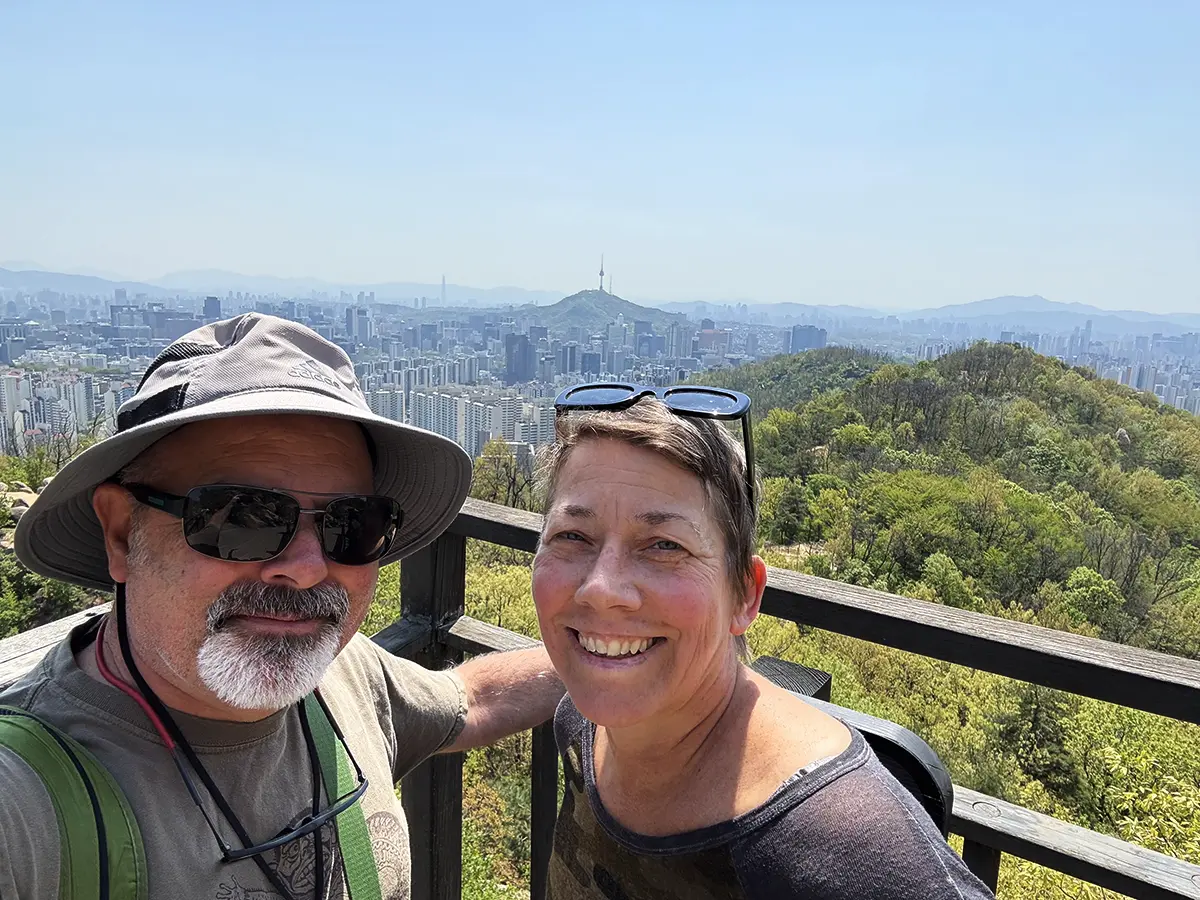
We started our day with Bonwongsa temple (founded in 889, and moved to its current location in 1748). Tucked among the trees on the side of Ansan Mountain, it offers a great view of the city, and a network of hiking trails make their way from here up the mountain. Yet somehow it's still less crowded than some of the other major temples.
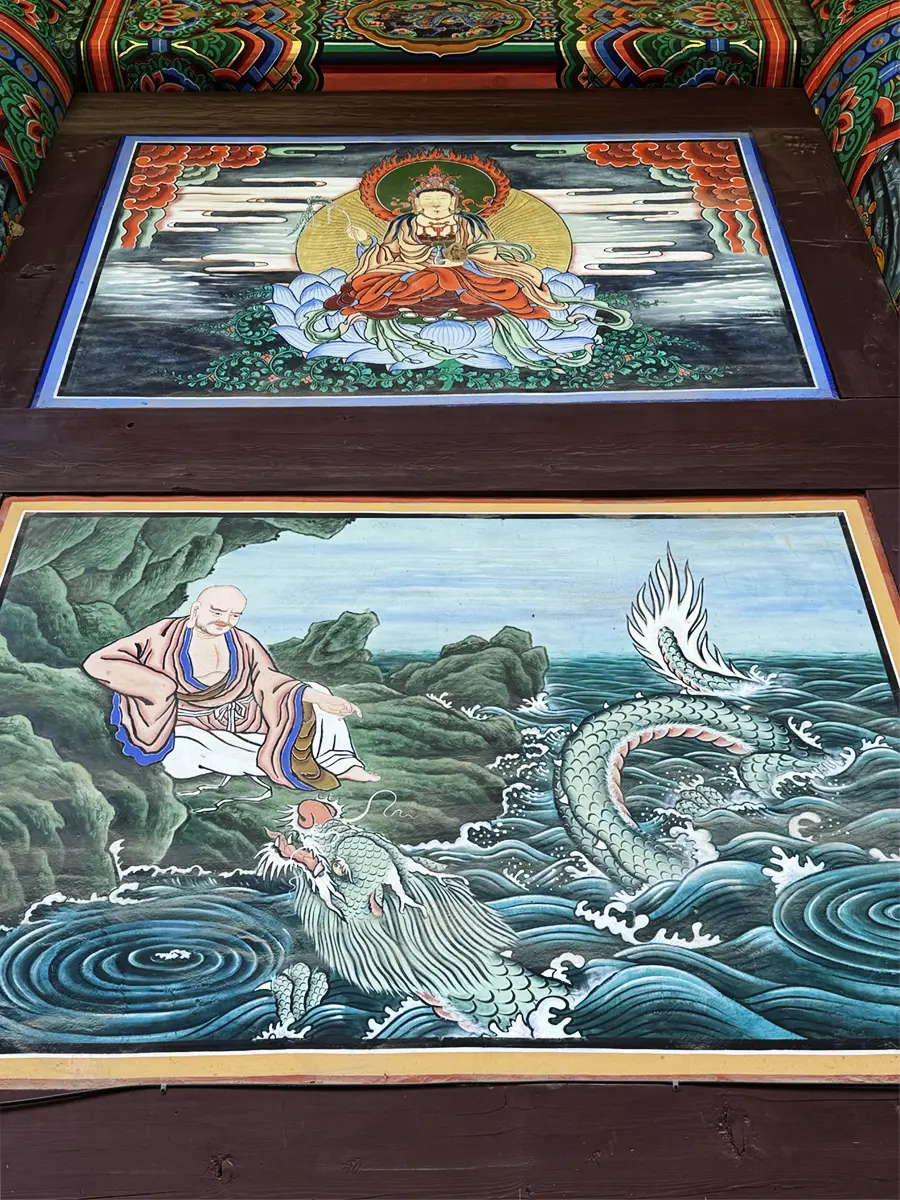
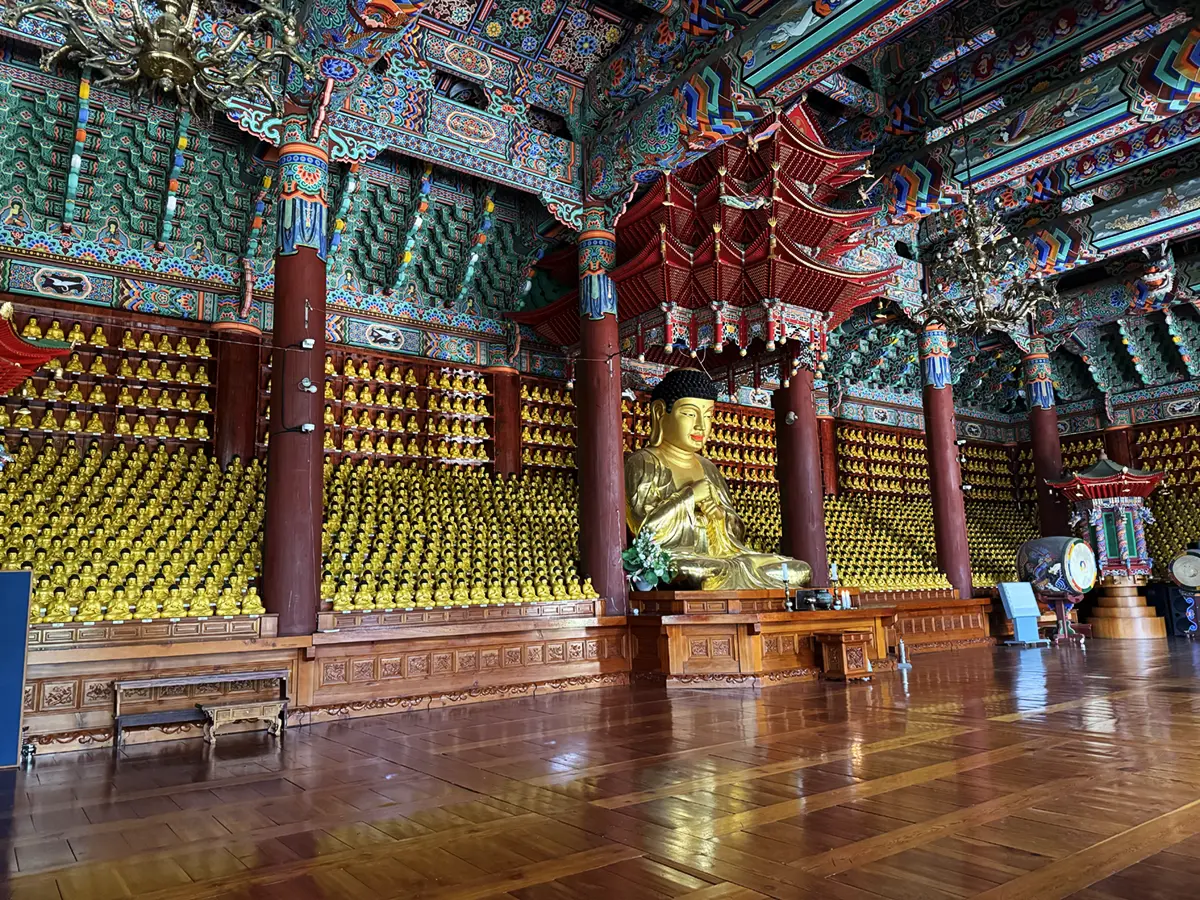
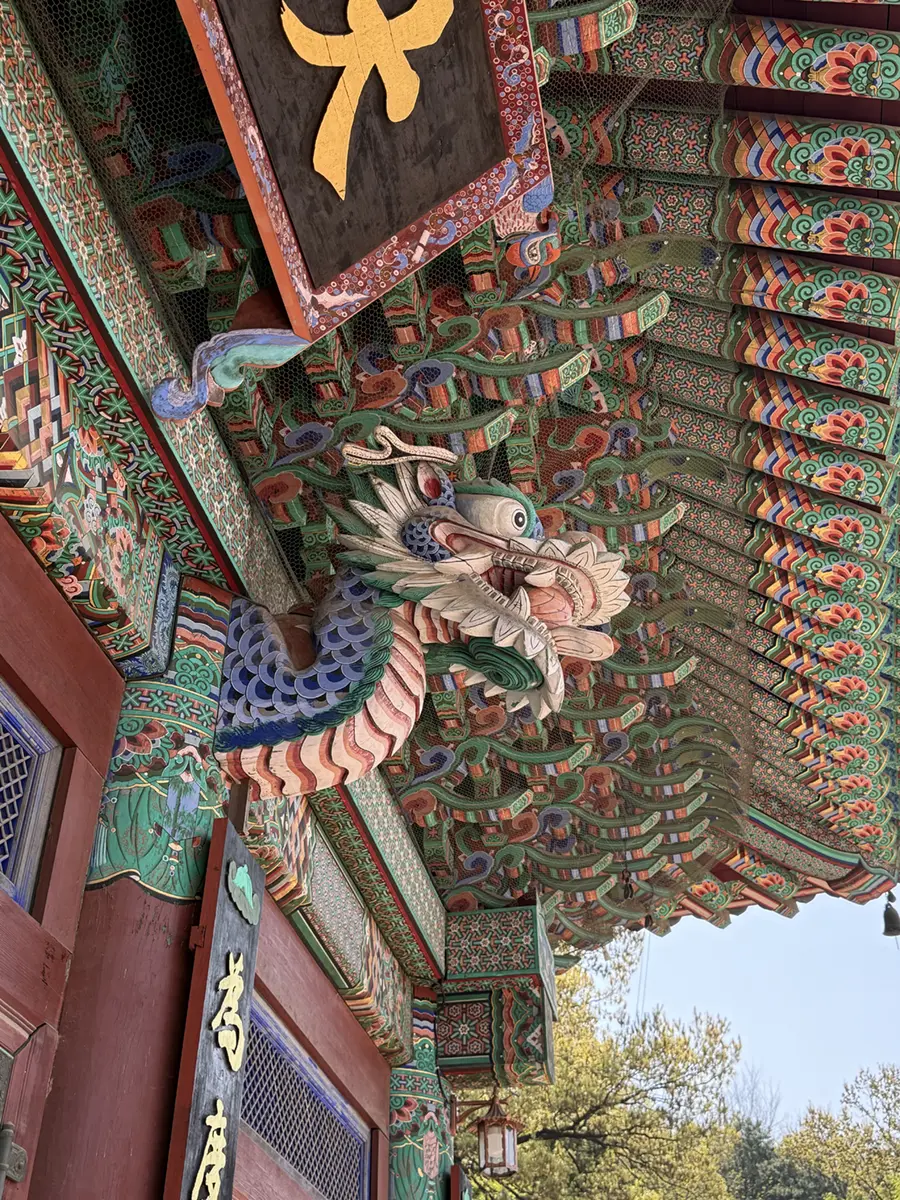
The steps approaching the complex pass 16 white marble Arhats (meaning "to be worthy"), their strange and contorted faces depicting those who had found enlightenment. We spent a long time wandering the beautiful grounds and ogling the murals depicting the life of Buddha covering several building exteriors. Once again, the courtyard was filled with lanterns, and more festival preparations were underway. Finally we entered the enormous hall of 3000 Buddhas. Approximately 3 stories high and built without nails, it's the largest wooden building in Korea. Every inch inside and out is covered with intricate and brightly painted woodwork.
We thought we were somehow in trouble when a monk walked quickly towards us. Instead we got a warm welcome and an invitation to participate. He happily explained and demonstrated the spinning library, or Yunjangdae - very rare in South Korea. It's a round spinning pillar made of latticed panels. Shelves of Buddhist texts are hidden away inside, and somehow spinning the Yunjangdae around equates to reading the entire canon of texts inside. We set the wheel spinning with thoughts of good karma, sending the wisdom within flying up to the heavens.
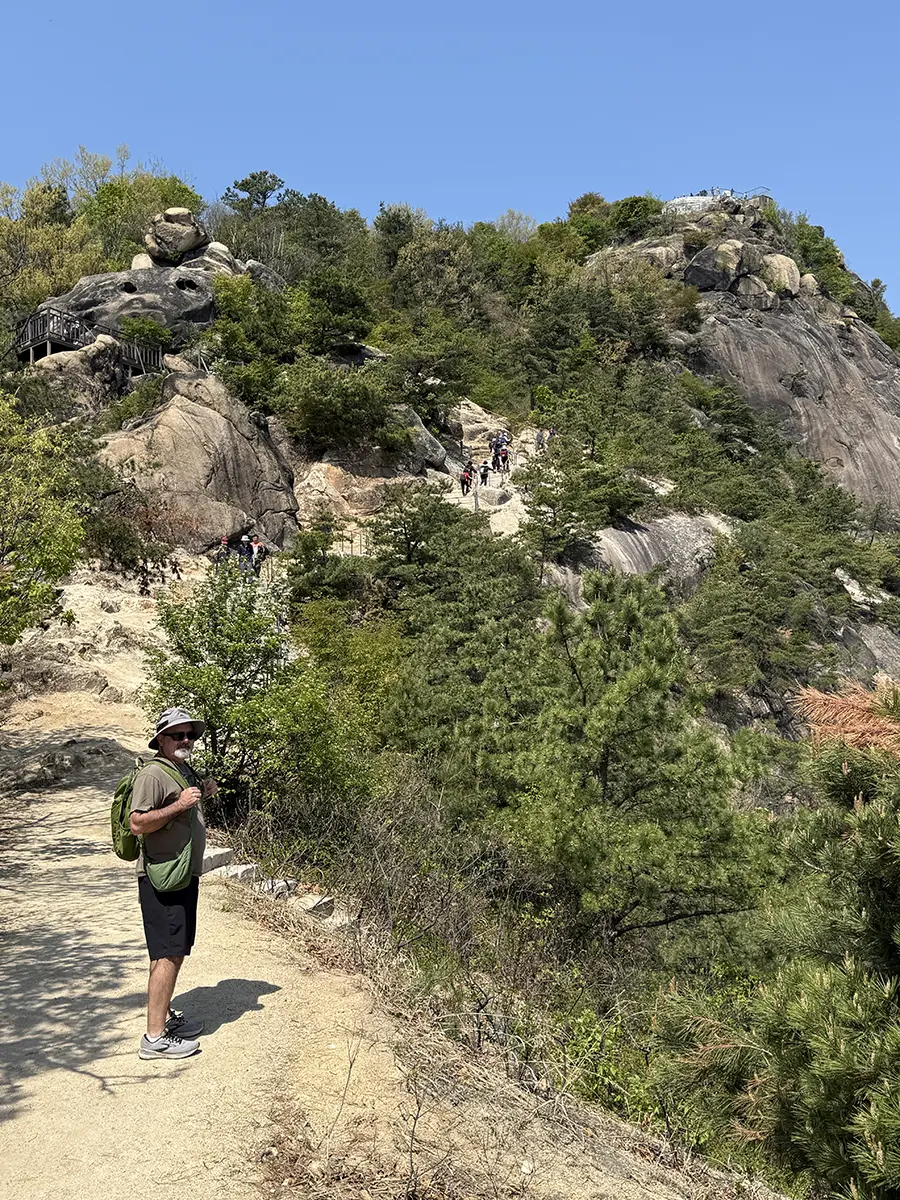
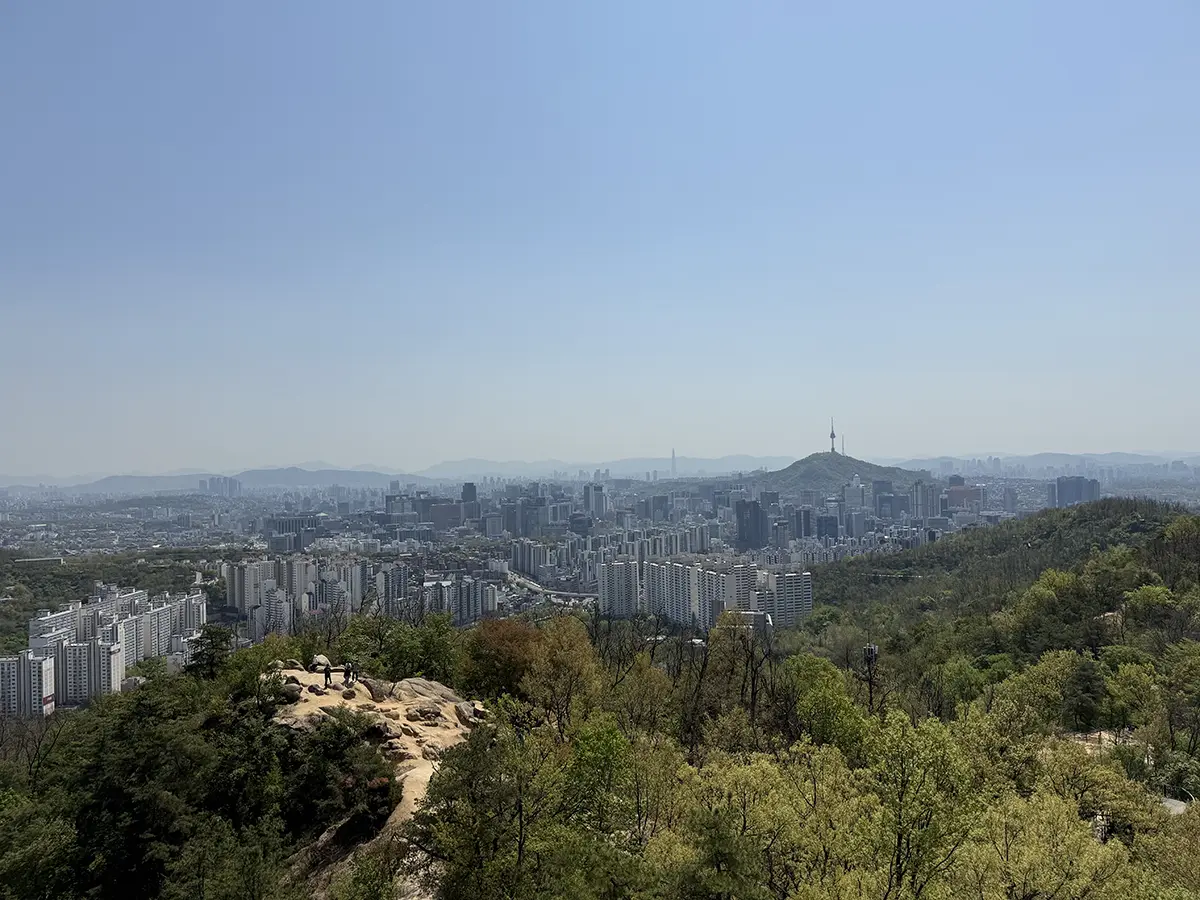
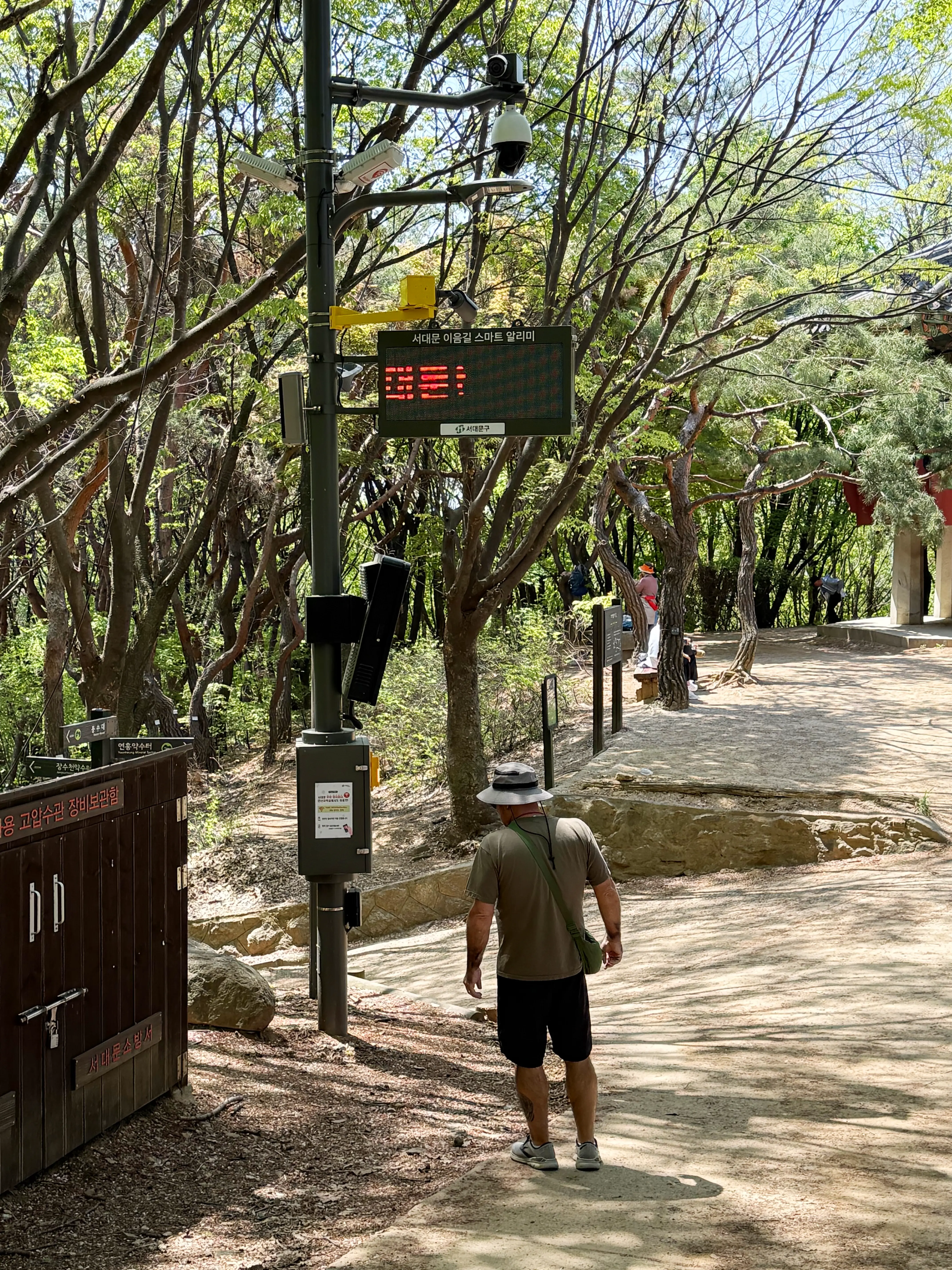
Then it was time to begin our trek up the mountain. Steep stairs and winding paths led us upward, high green peaks rising like islands up from the sea of the city below. I somehow dragged myself to the top, frustrated at having so much trouble (it would take a few more months to discover my severe anemia). After beautiful views and taking lots of photos for strangers, we made a meandering descent. Most of the trails were either smoothly paved, or boardwalks lined with railings that clung to the hillsides. Along the way, large wooden rest areas dotted with benches were filled with happy crowds of hikers, chatting and eating. Each one was like a strange bus stop in the middle of the woods, sporting a tall solar-powered CCTV camera and LED sign with the location and designated coordinates within the park. It was impossible not to expect a city bus to roll up at any moment.
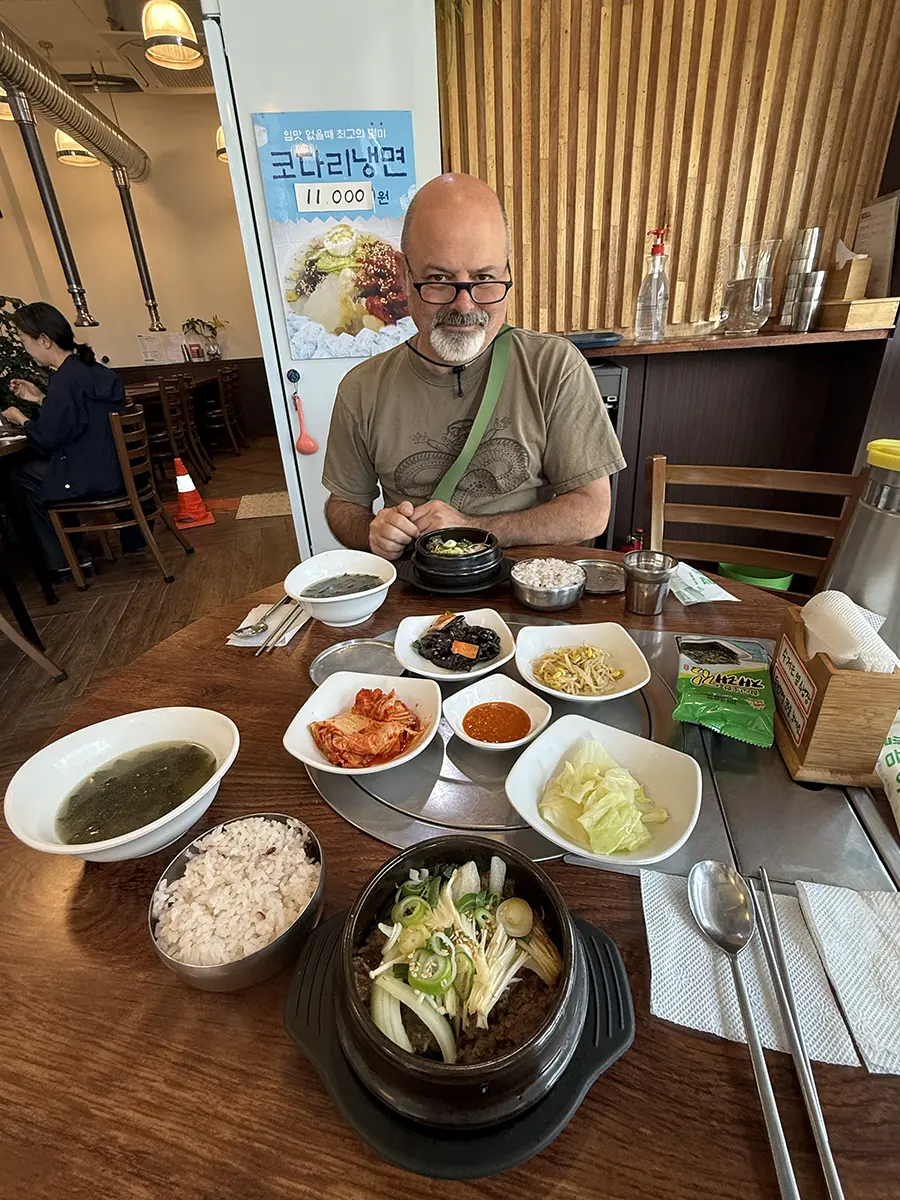
Finally back down in the city, on reaching our actual bus stop, David found a fantastic lunch of spicy Bulgogi stew, our table filled with all the accompanying dishes (banchan). We stuffed ourselves until we could barely think of getting home, but we still had a long night ahead of us. It was finally time for the Lotus Light Festival, starting and ending with ceremonies at Jogyesa Temple. We expected it was going to be pretty cool, but we had absolutely no idea what the night had in store for us!
Buddha's Birthday
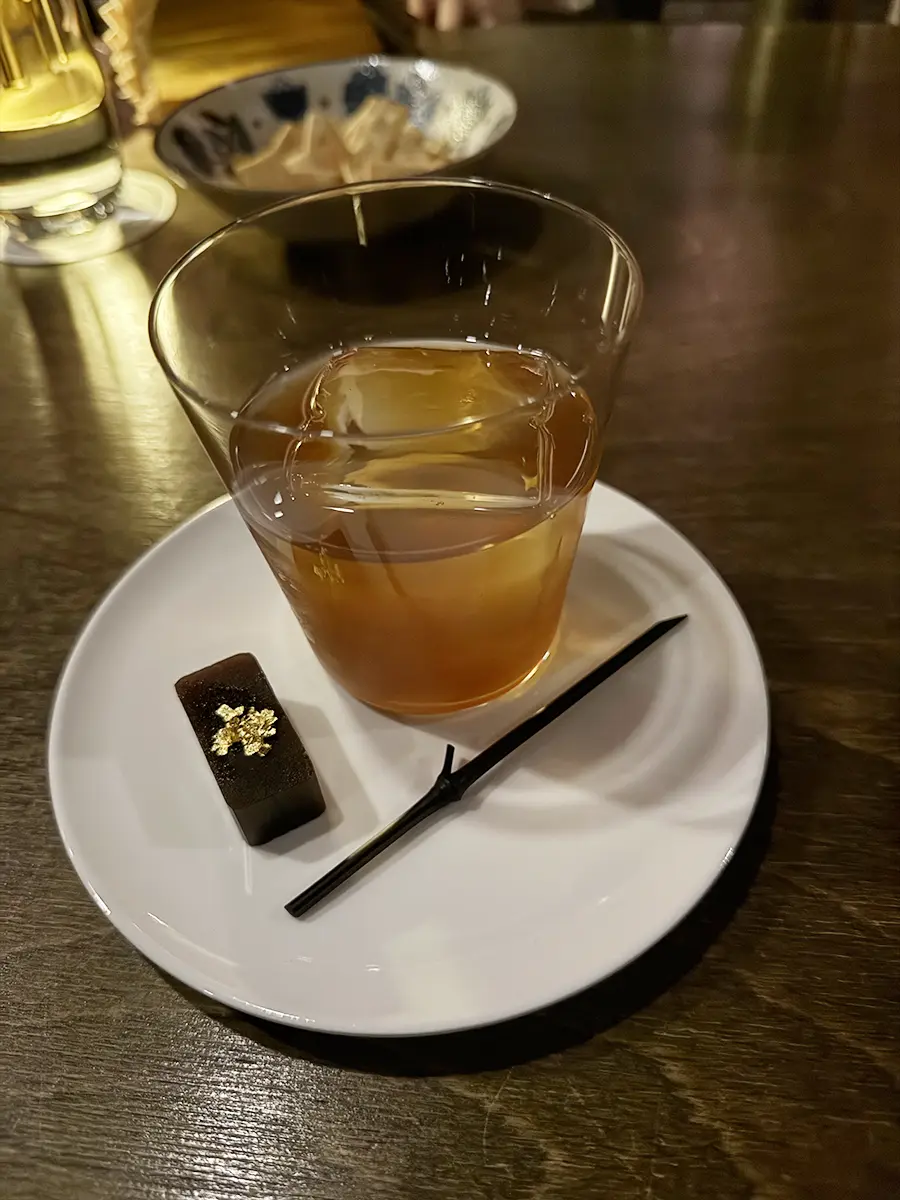
A couple of blocks away from our hotel, a huge public square was converted into a large stage. Traditional artists eventually gave way to Kpop bands rocking their finest glamor, ramping up the intensity for the main event. Before settling in along the parade route, we decided to fortify ourselves with a cocktail. Opposite our chosen spot was a beautiful little whiskey bar, hidden away below the street. Inside the cozy vintage room, a most attentive and knowledgable bartender deftly navigated an extensive collection of bottles. Best of all, with everyone lining the street upstairs, we had the whole place to ourselves.
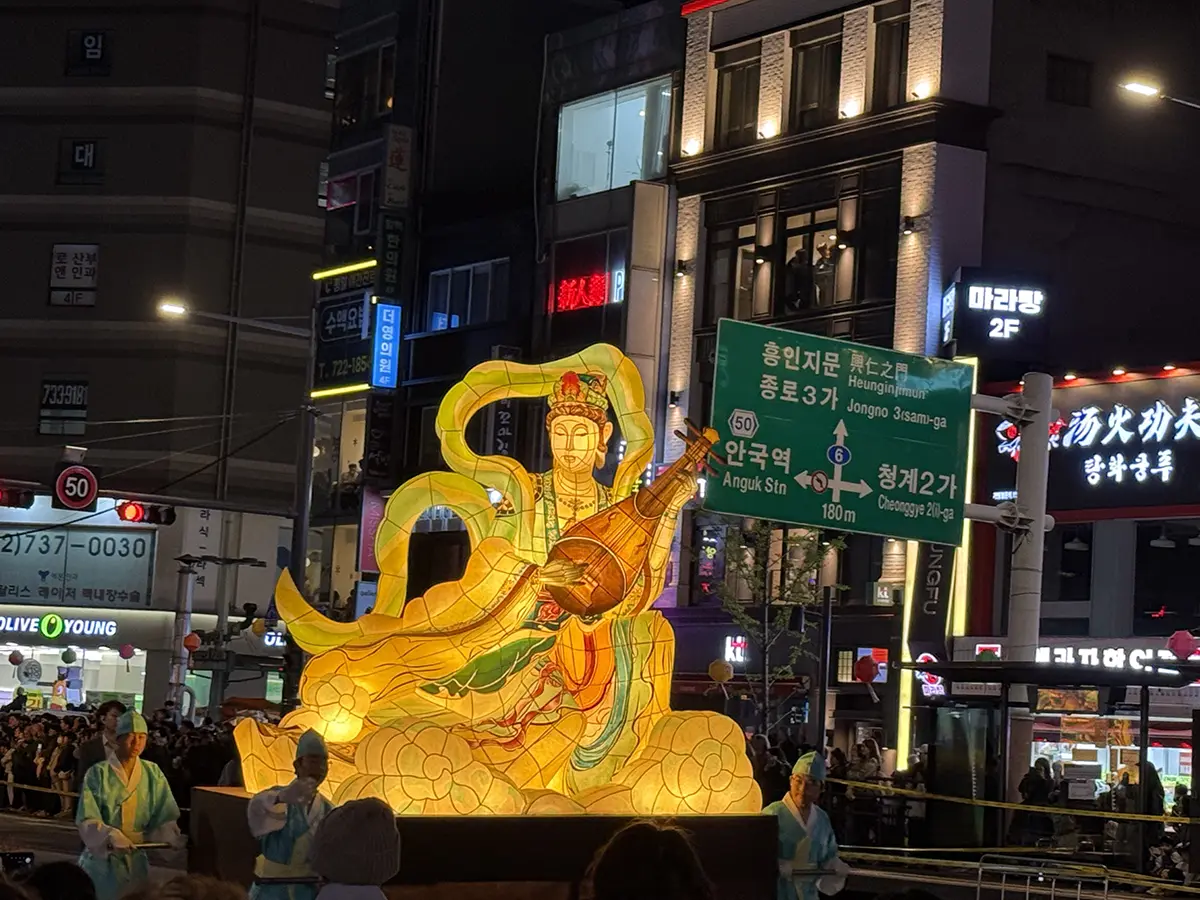
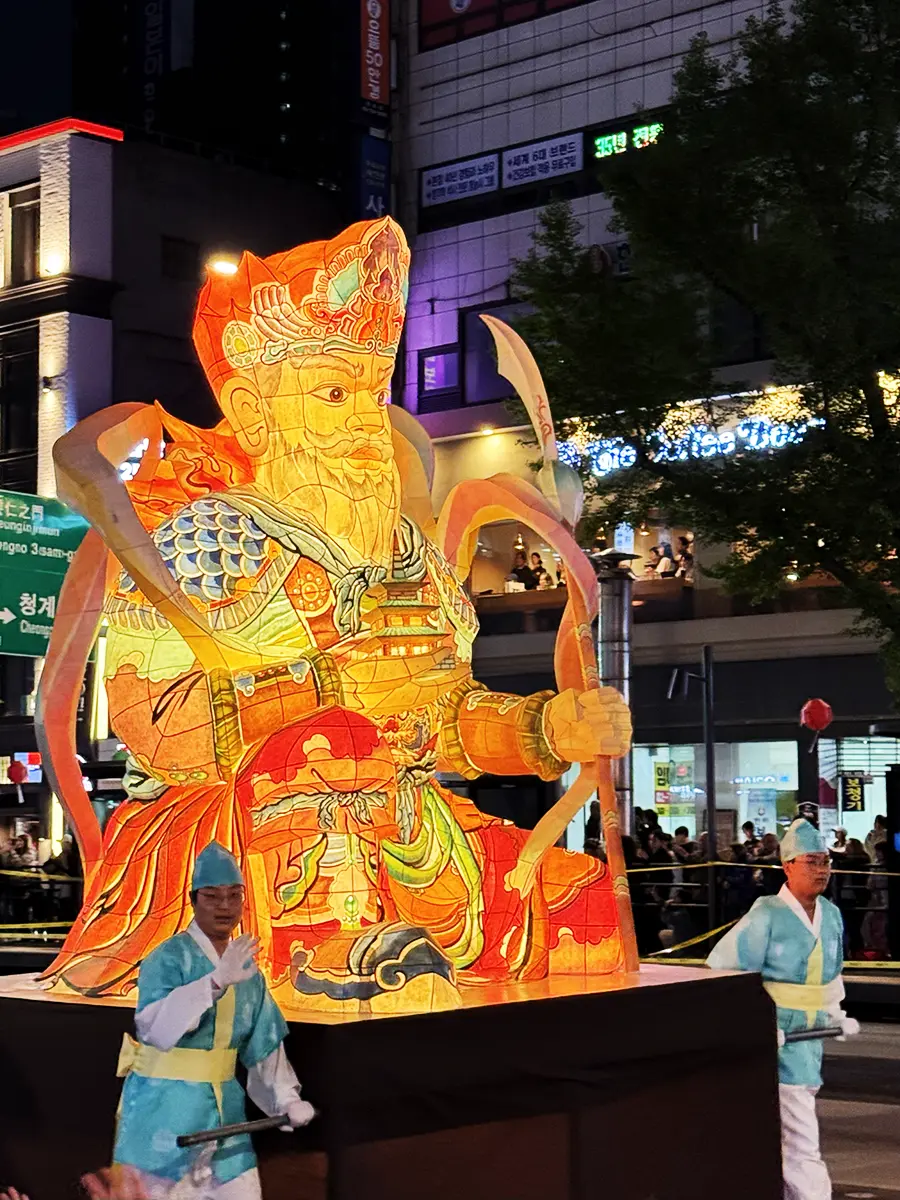
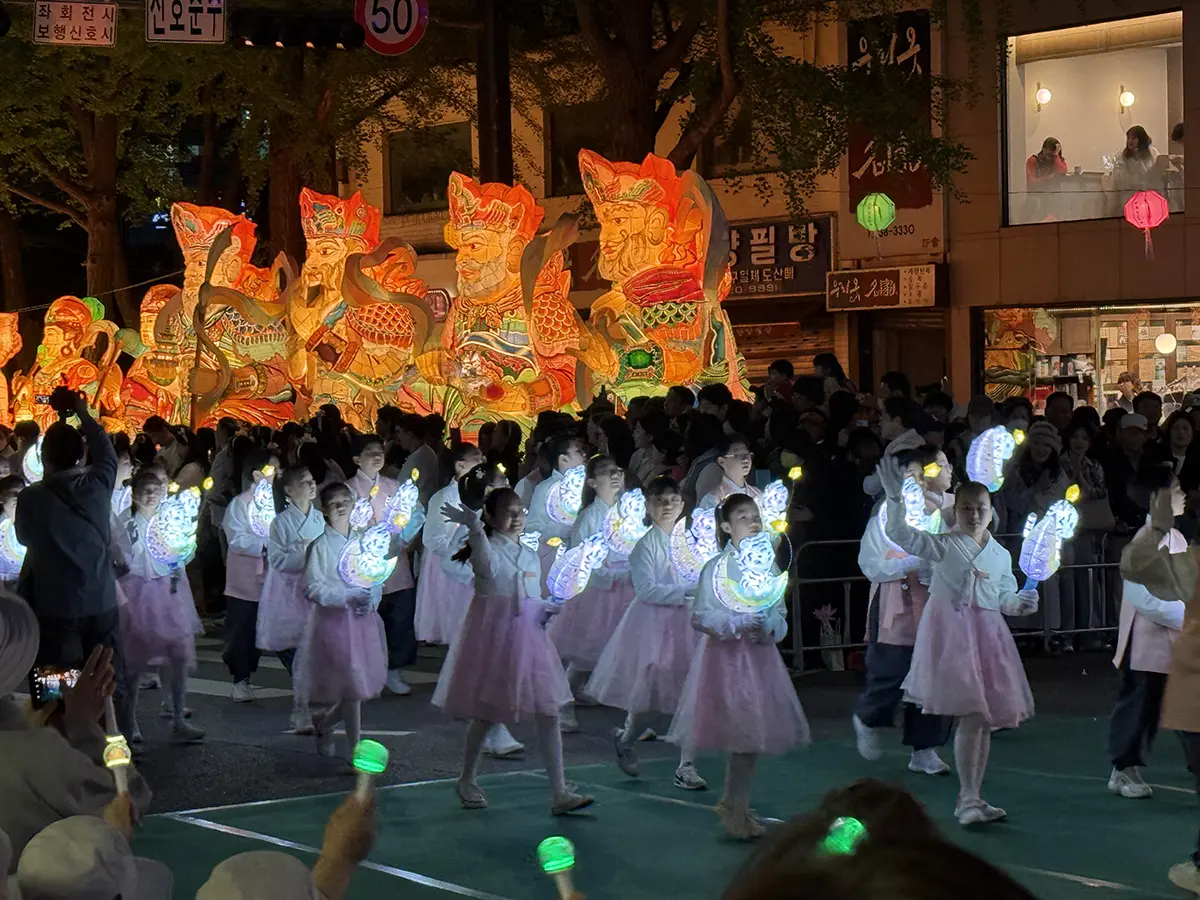
Finally it was dark enough for the parade to begin, so we made our way back into the fray. Large groups of people drifted past - monks in ceremonial robes of grey and orange, and groups from all across Korea dressed in beautiful Hanboks. Tens of thousands of people lit by the colorful lotus lanterns they carried made a river of light flowing through the night. The marchers and the crowd cheered each other on, participating in each other's excitement. And then the floats started to appear.
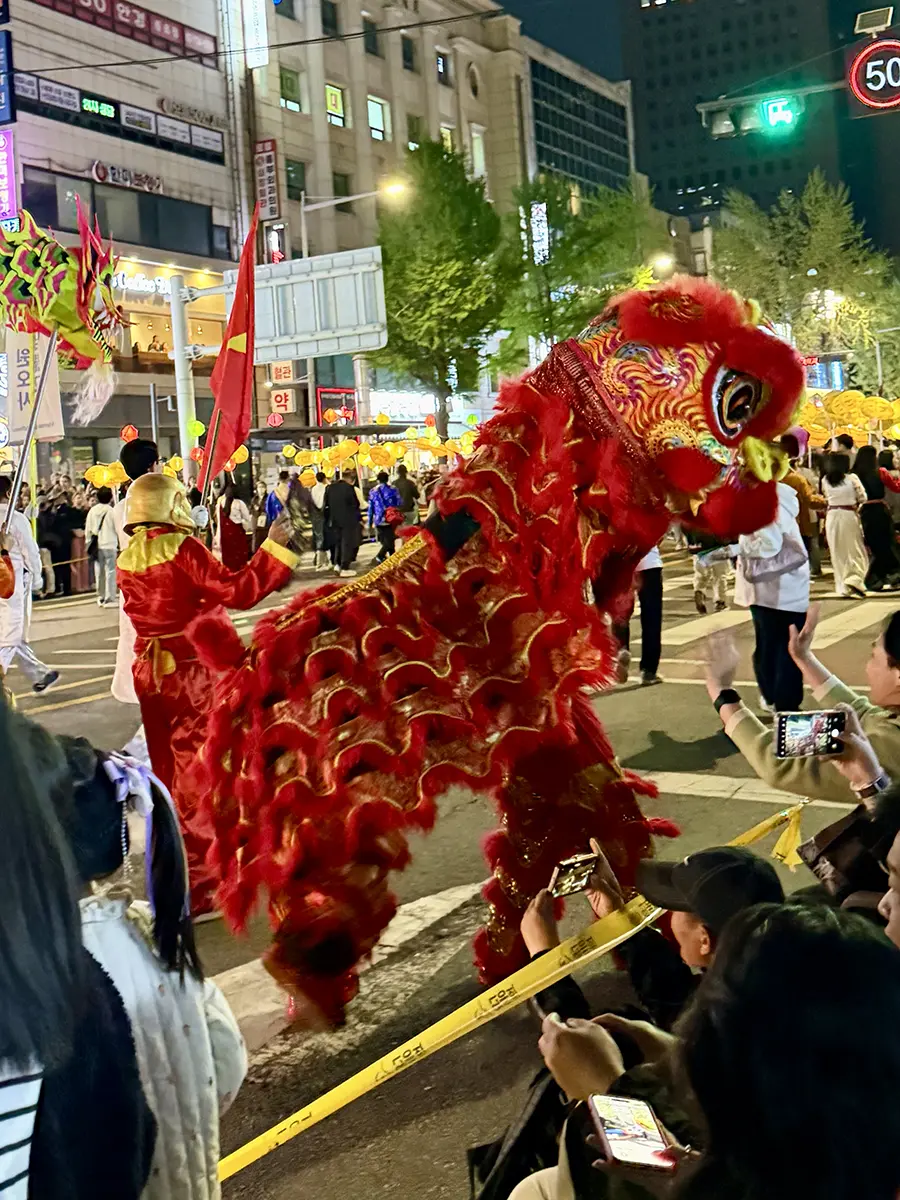
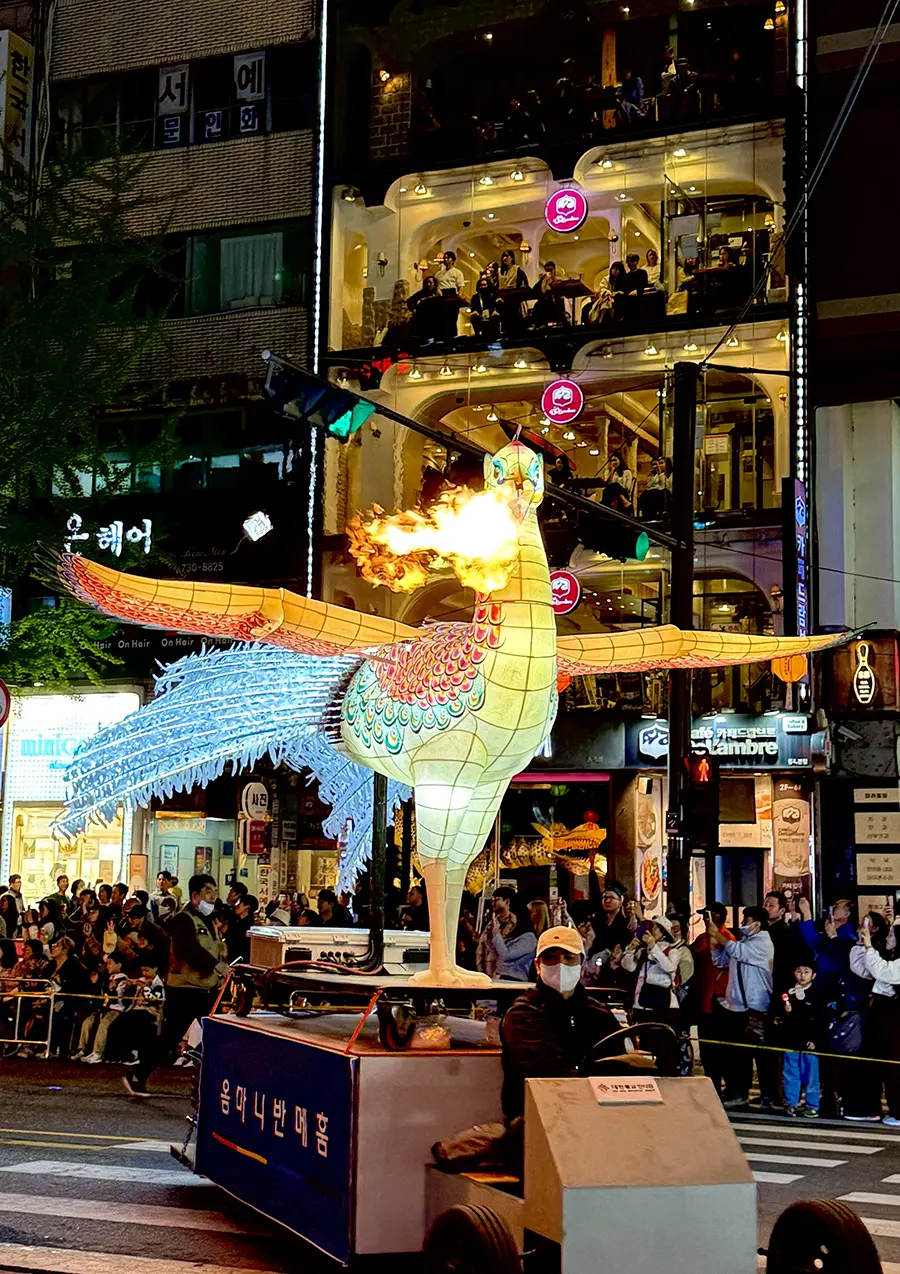
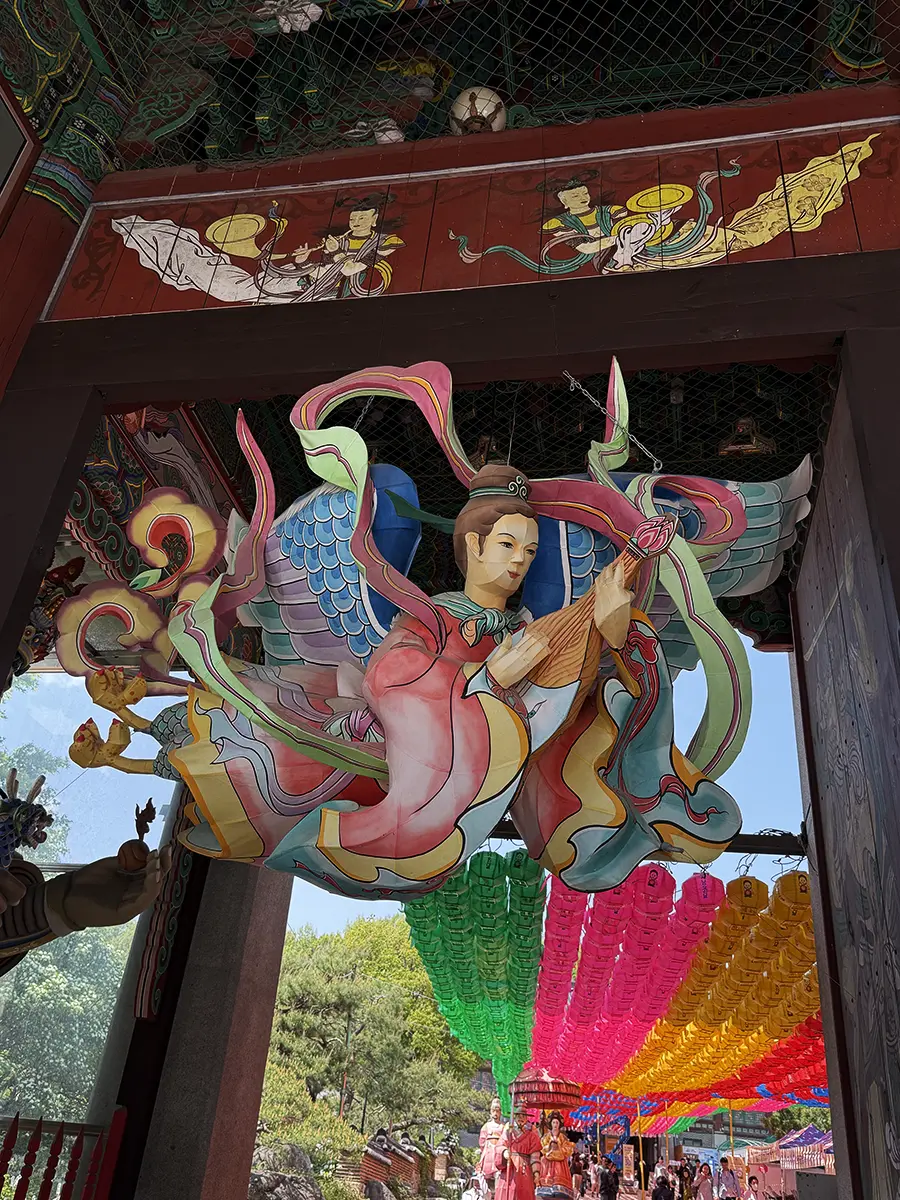
All of the huge lantern floats we had been seeing over the last couple of days were now lit from within, slowly moving past. Their size, complexity, and variety were amazing: mountainscapes complete with wild animals, huge deities, mythical musicians, enormous flowers, pop culture characters, and so much more. And then they started to move. And roar. And breathe fire. Two massive dragons with rotating legs and swinging necks crawled their way down the street, roaring and spouting bursts of flame. Later, 2 giant phoenix fluttered sweeping tails made of lights, flapping their wings and breathing more fireballs. It was so amazing, and impossible to tear ourselves away, but eventually we had to crawl home to bed.
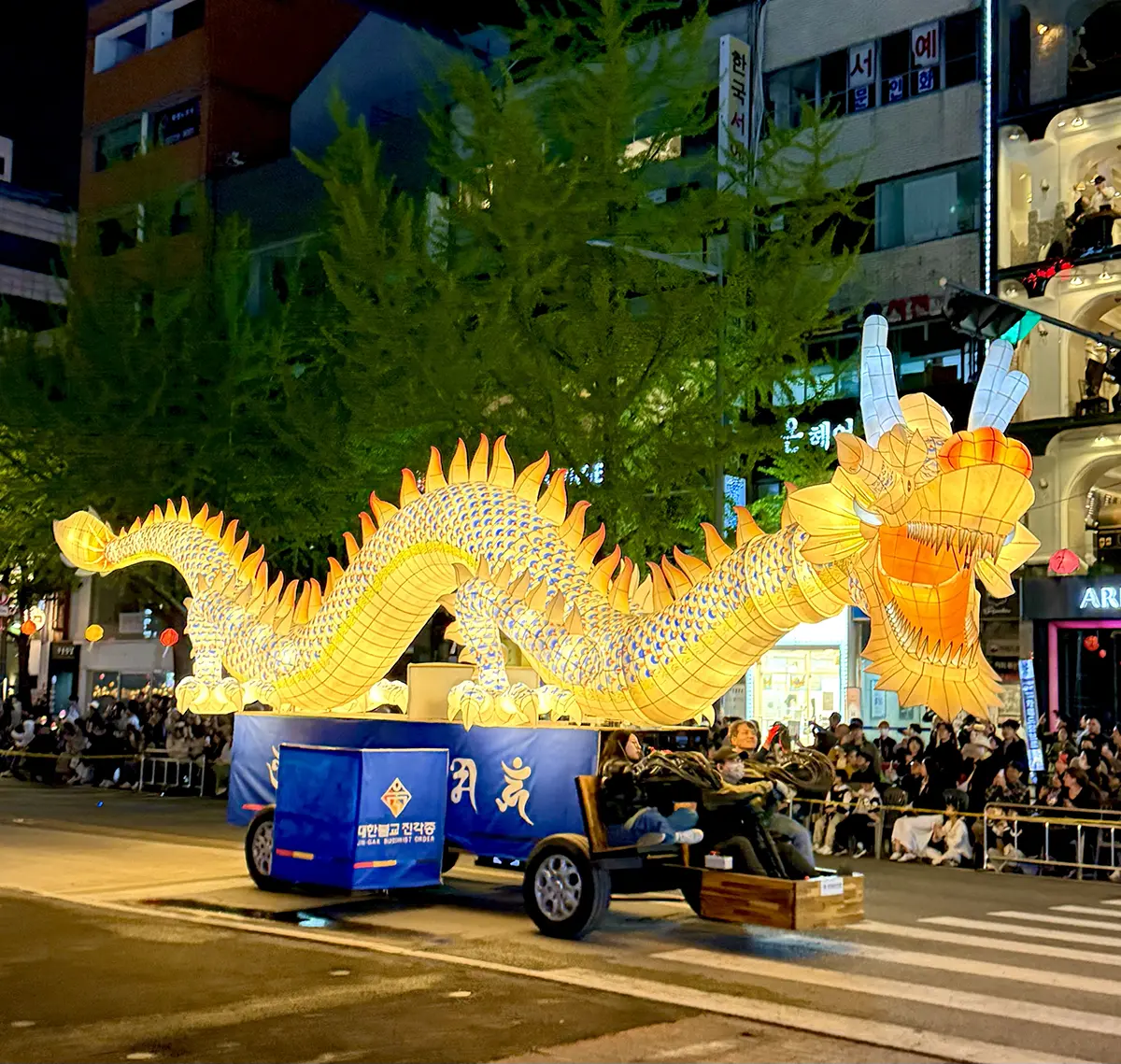
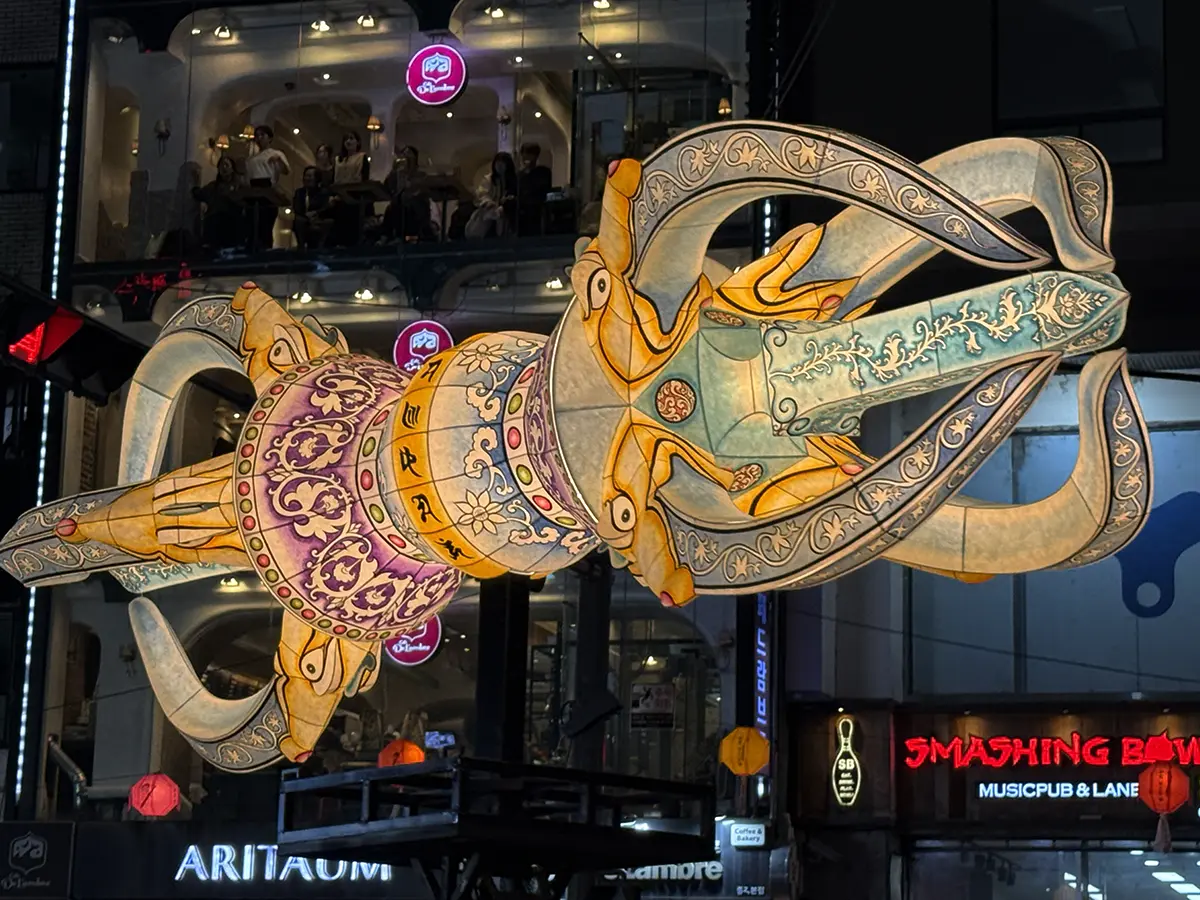
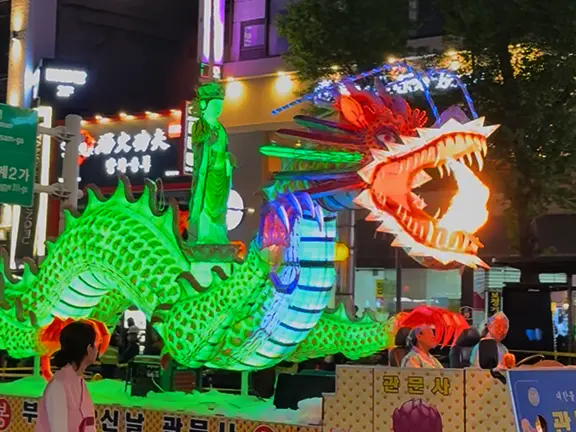
Bukcheon Hanok Village and more festival fun
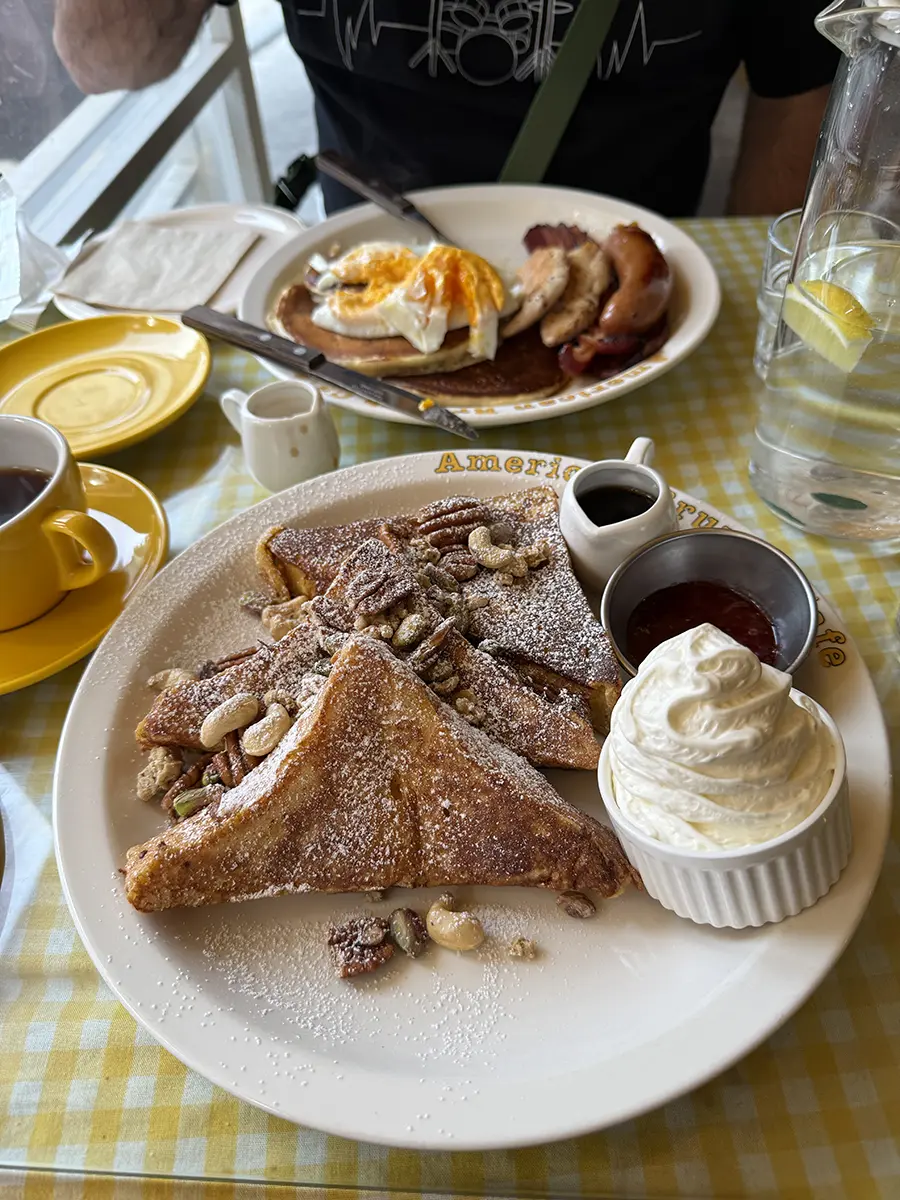
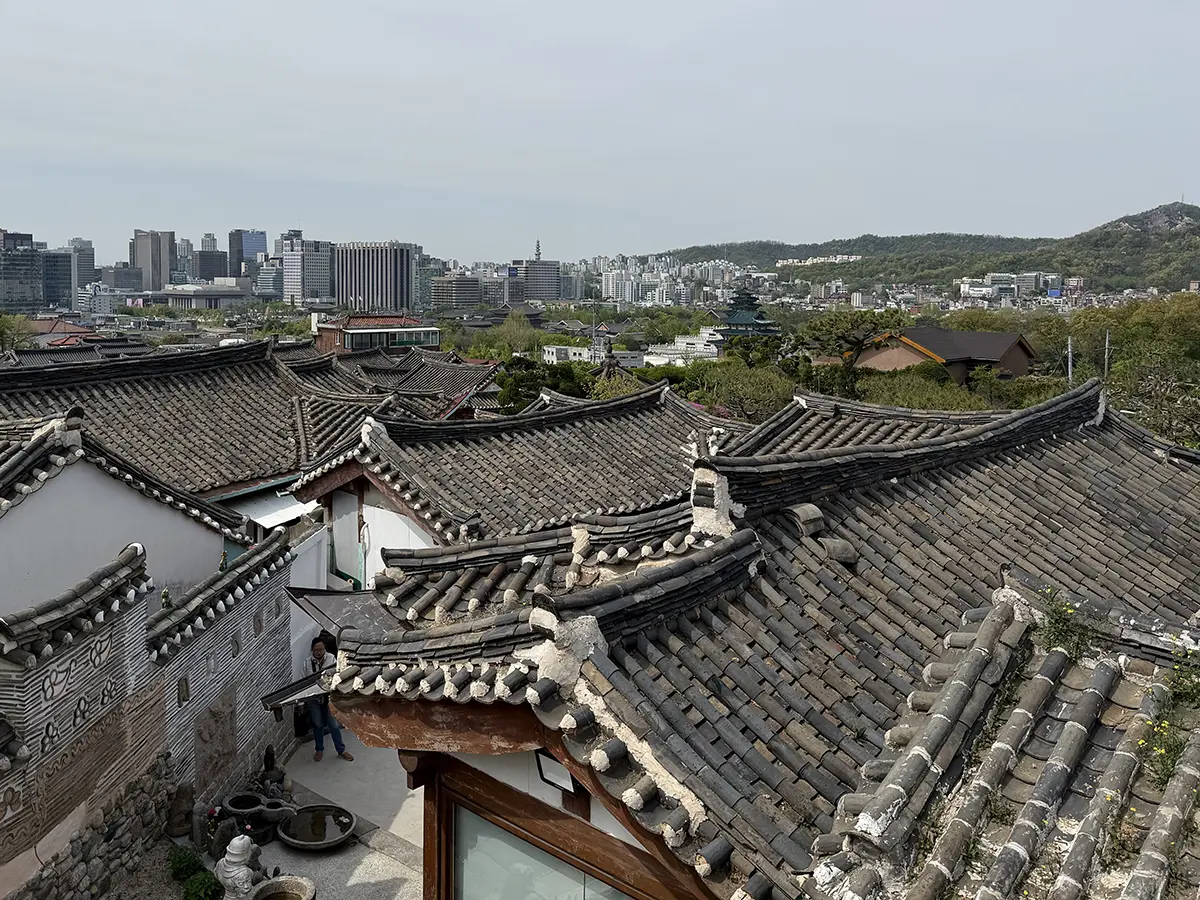
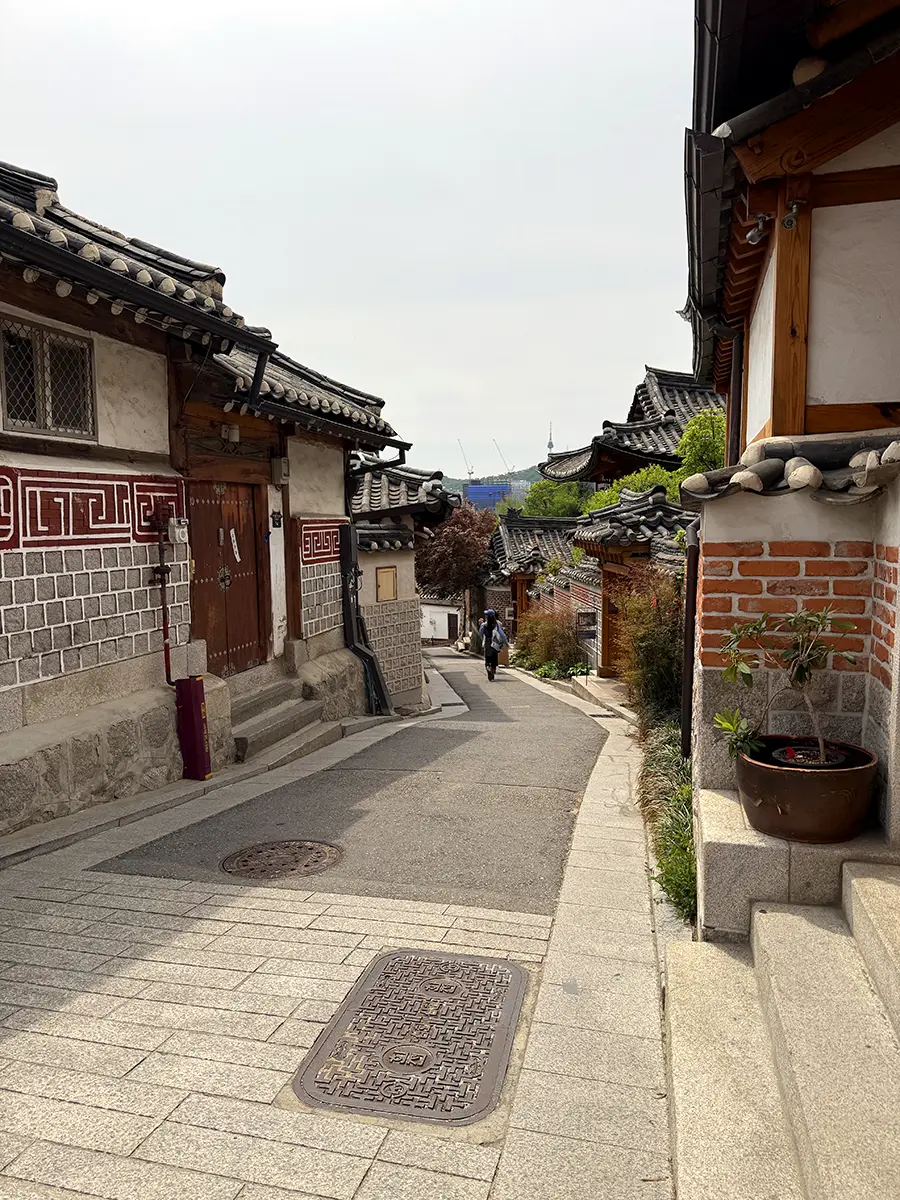
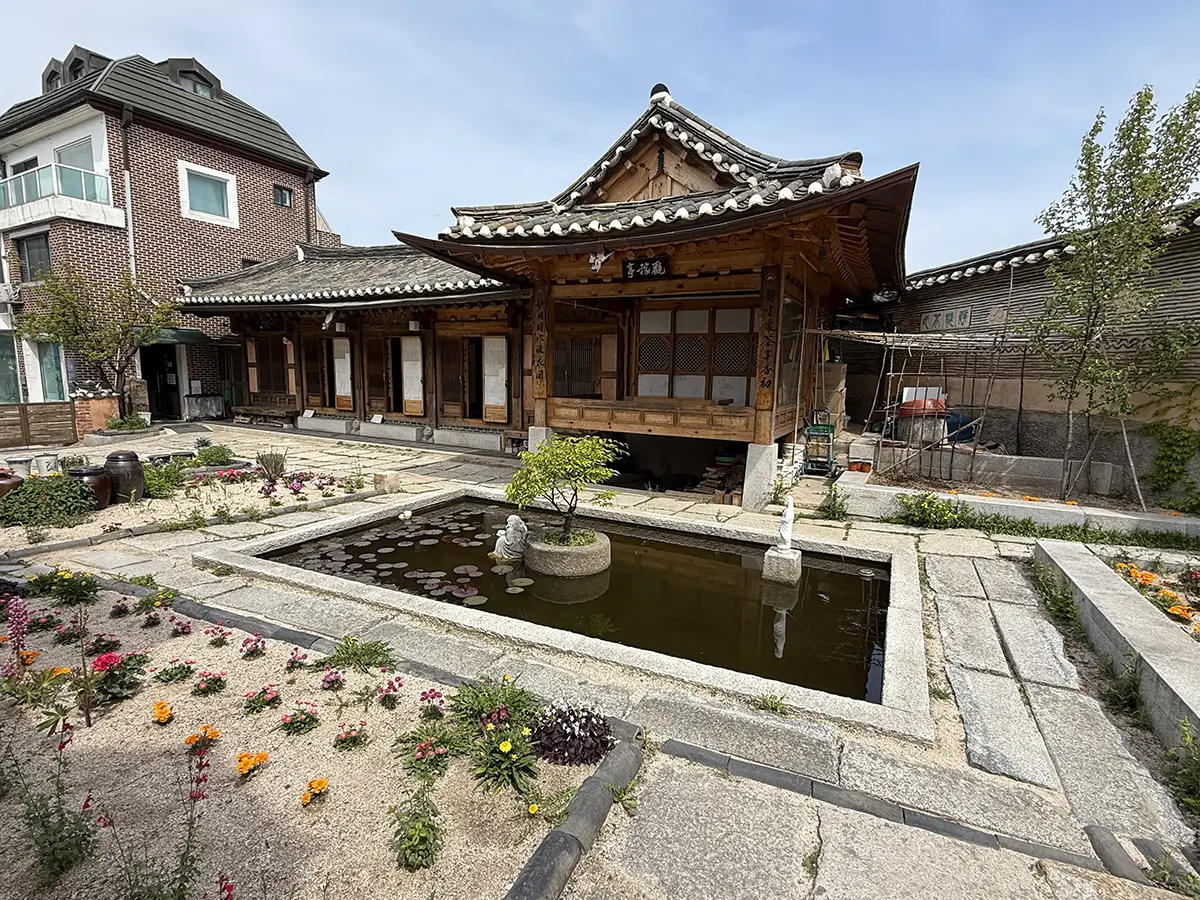
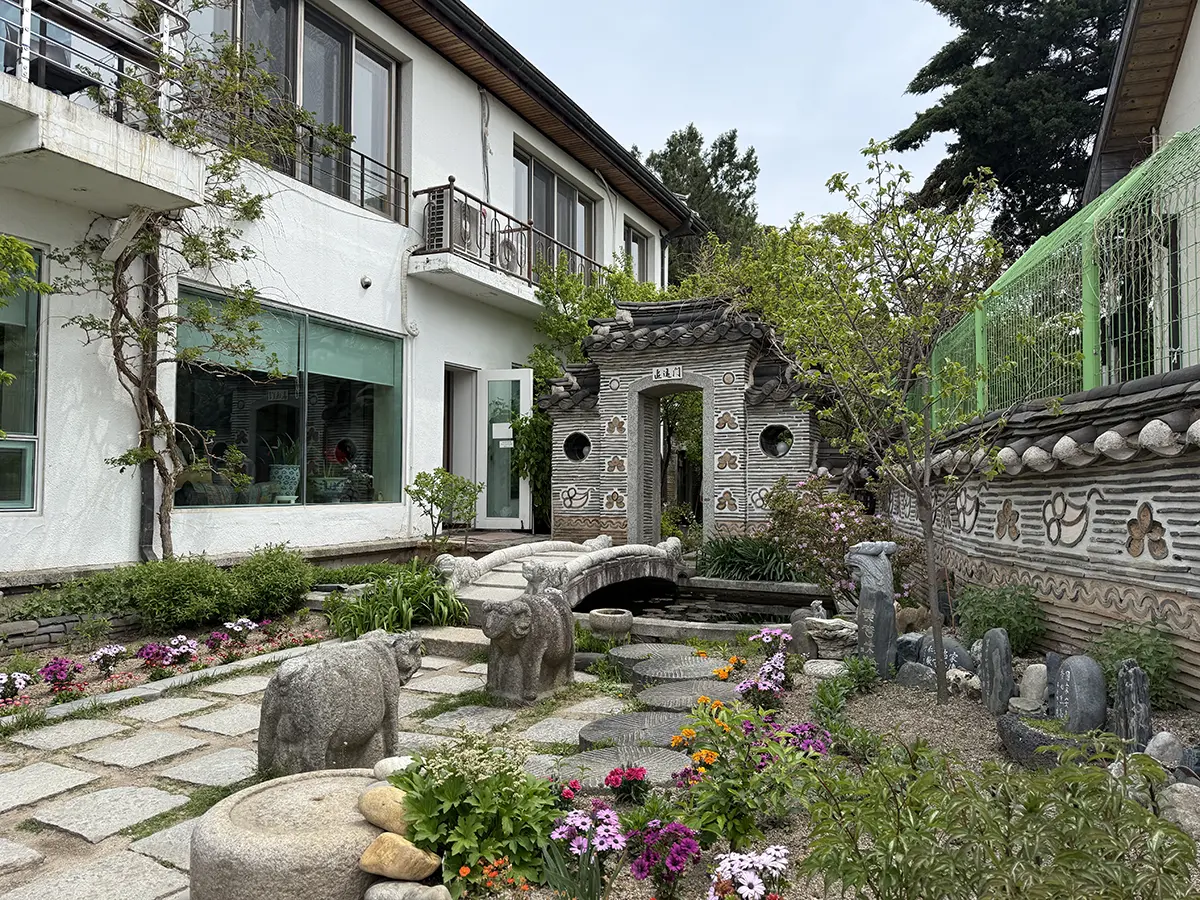
The next day we took a break from the festivities for a bit, and headed to Bukcheon Village. This neighborhood is full of over 900 traditional hanok (houses) from the Joseon Dynasty. Many have become museums, cultural centers, tea shops, restaurants and guest houses - but most are still people's homes. The narrow streets are soon crawling with people wearing hanboks for photo shoots, so we wanted to see it as early in the day as we could. With new tourist visiting hours in effect, that meant 10 am, giving us time to stuff ourselves at the American Breakfast Café. Once at Bukcheon, we soaked up the elegant simplicity of the antique architecture. Walls of alternating brick and stone made the narrow streets feel almost like tunnels, where elaborate gates of wood or copper promised a hidden world waiting on the other side. Beautifully crafted wooden houses with ornate tile roofs demurely peeked over the walls. Roof tiles were often cleverly incorporated into walls to make designs of flowers and waves. We stopped for tea at a shop with a serene garden, which also gained us entry to a small but excellent museum. The neighborhood was quickly overrun, but we were glad we had made it.
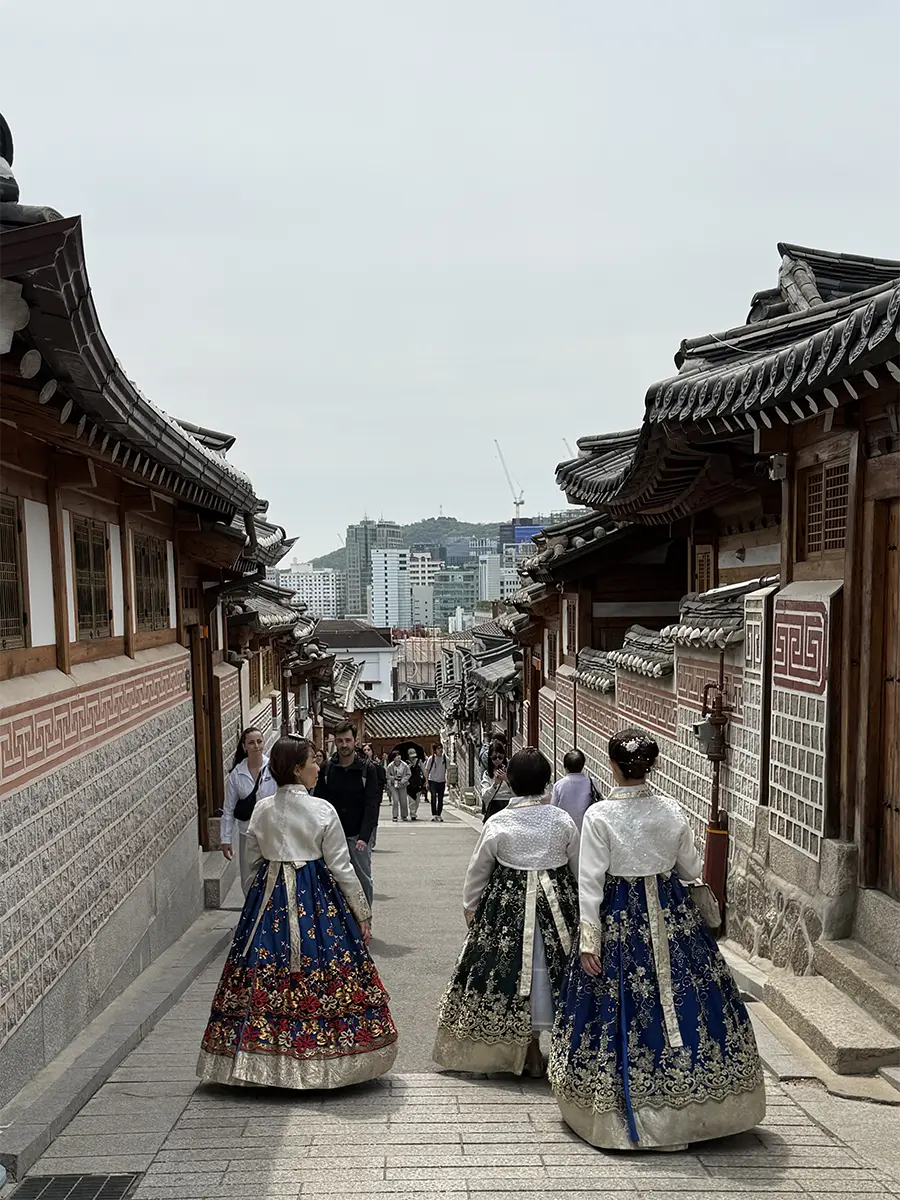
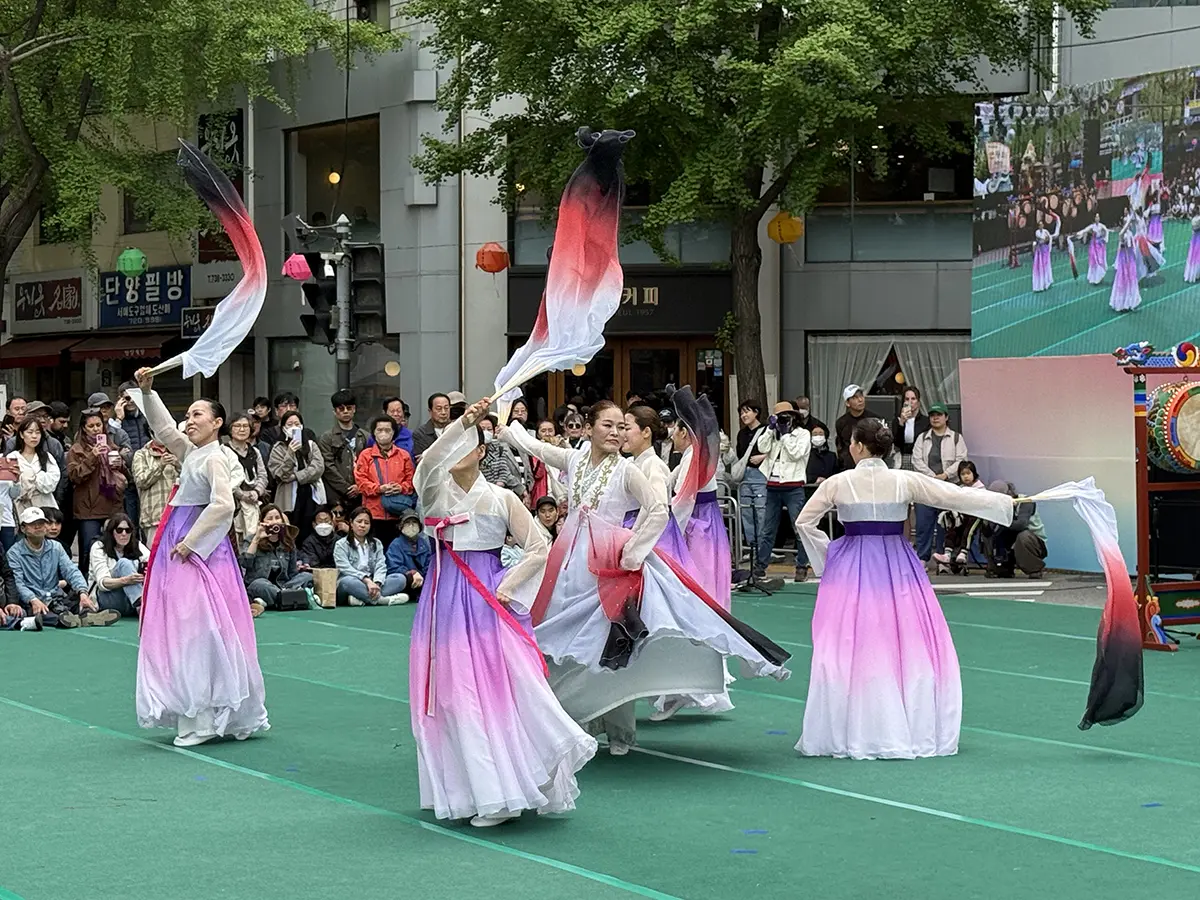
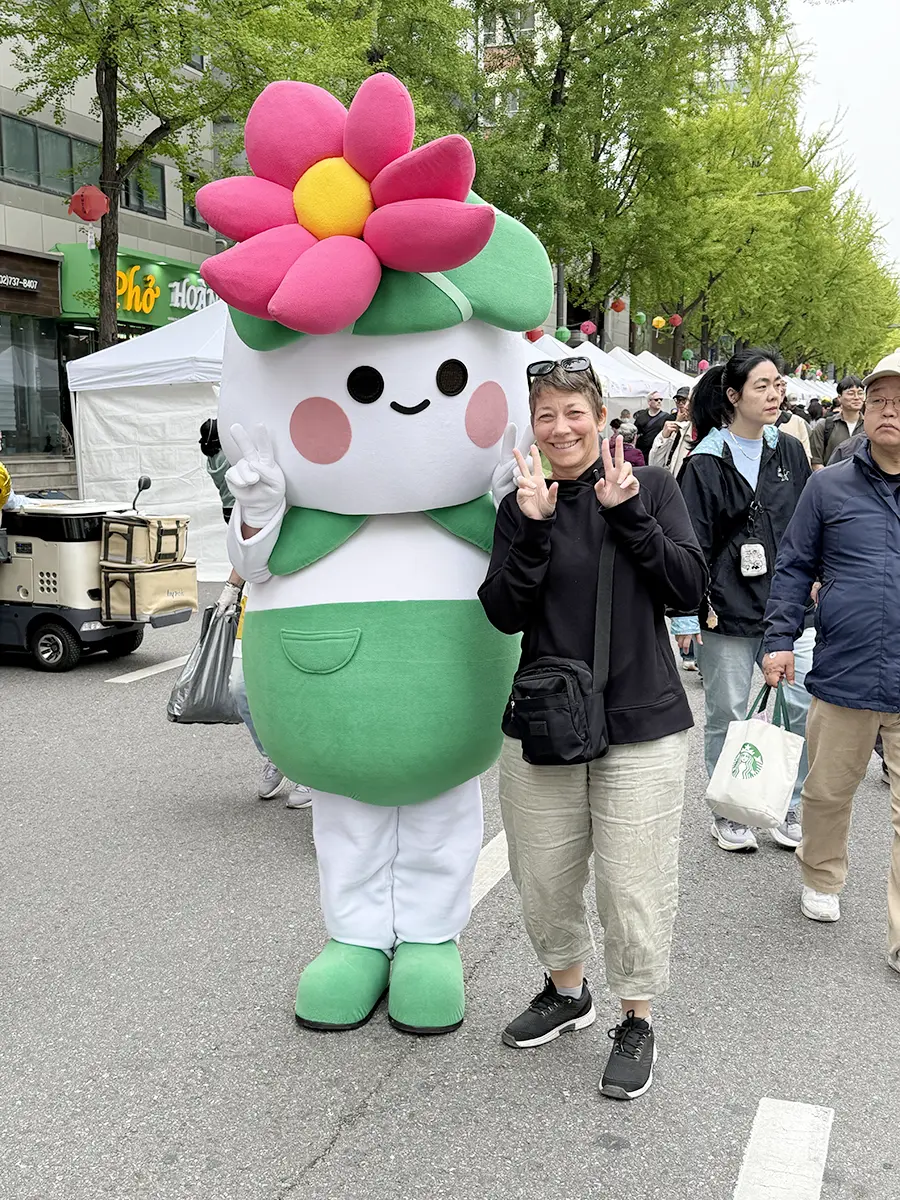
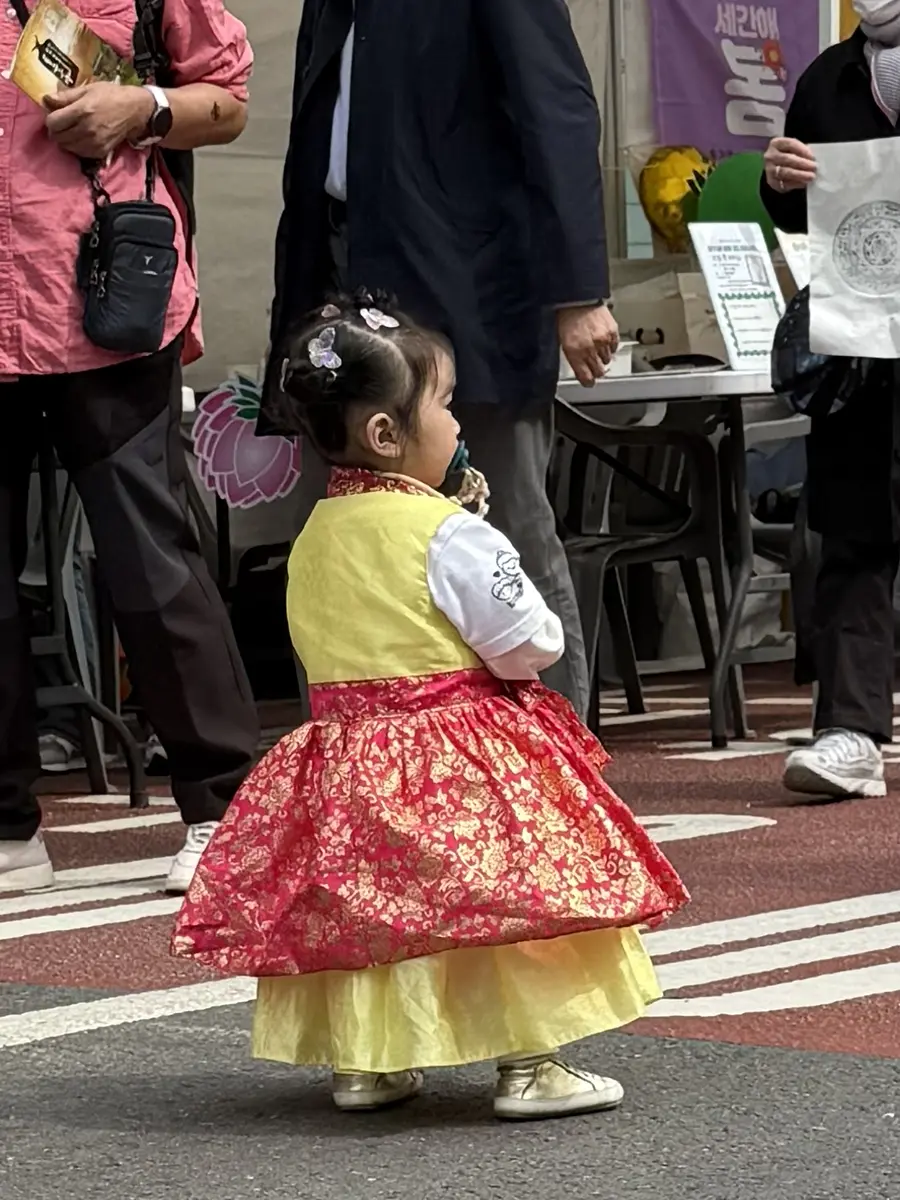
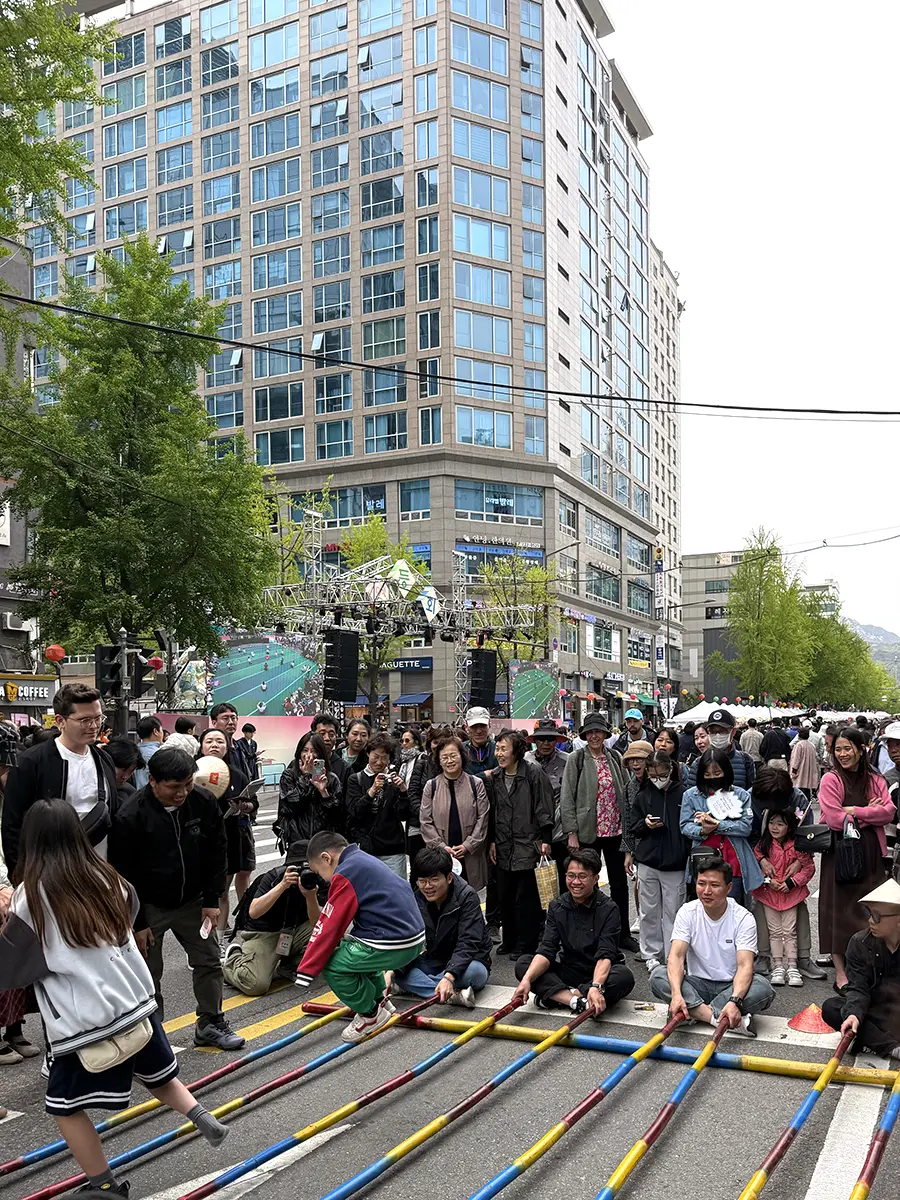
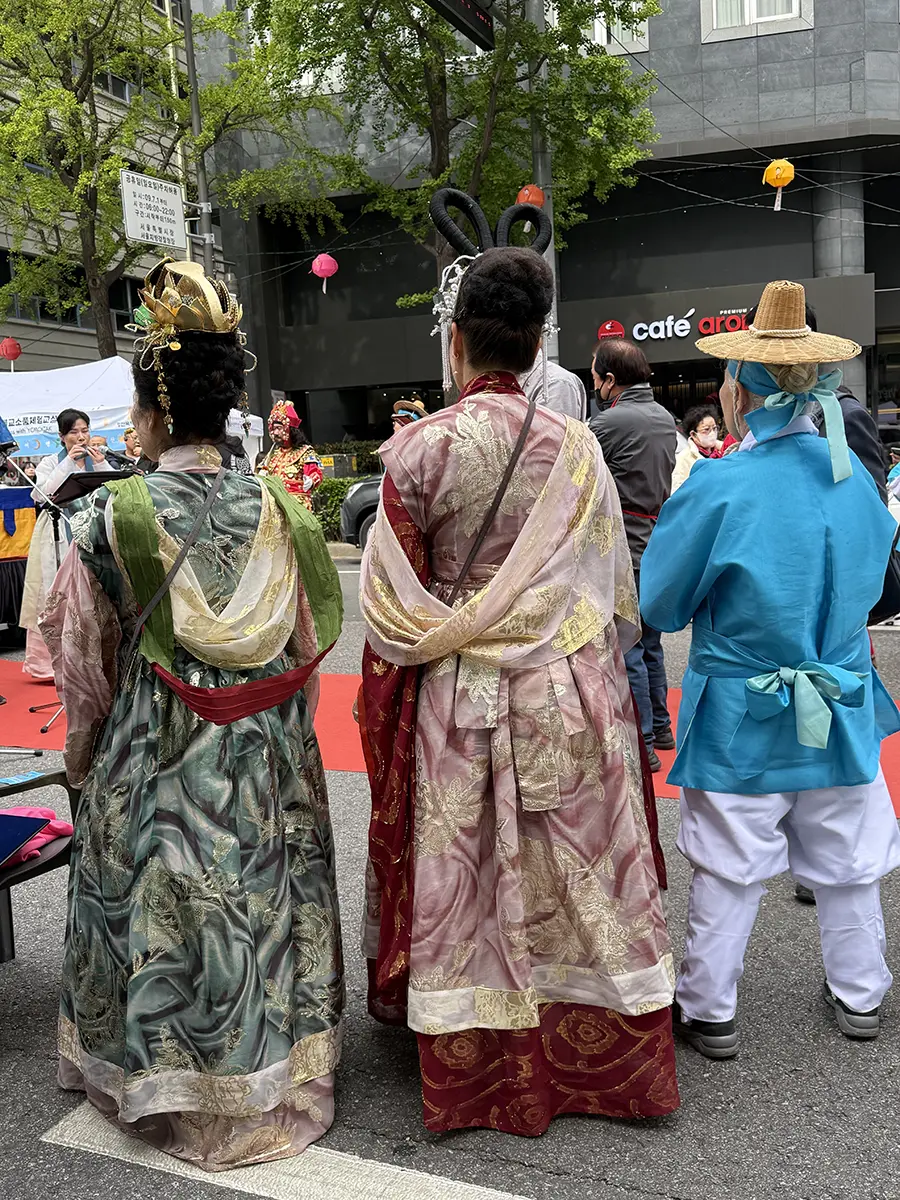
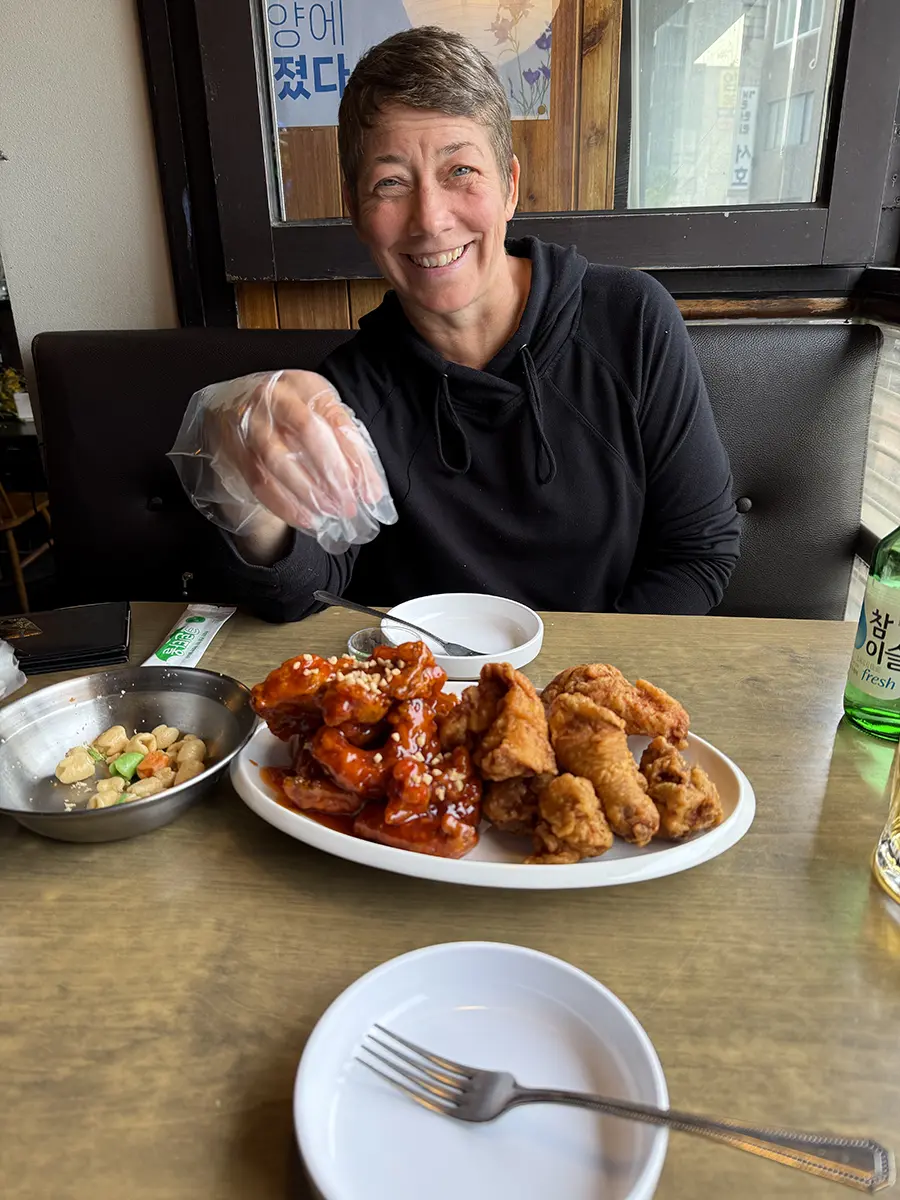
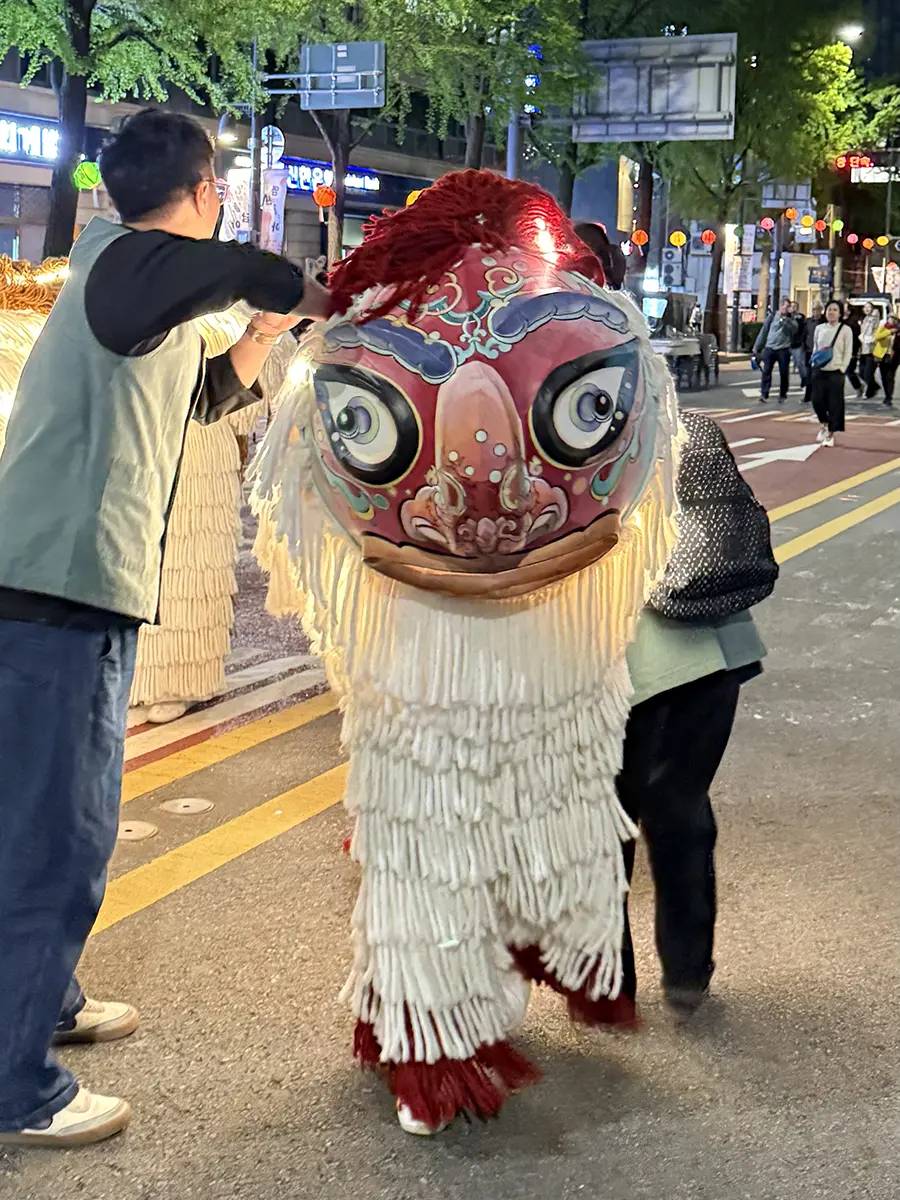
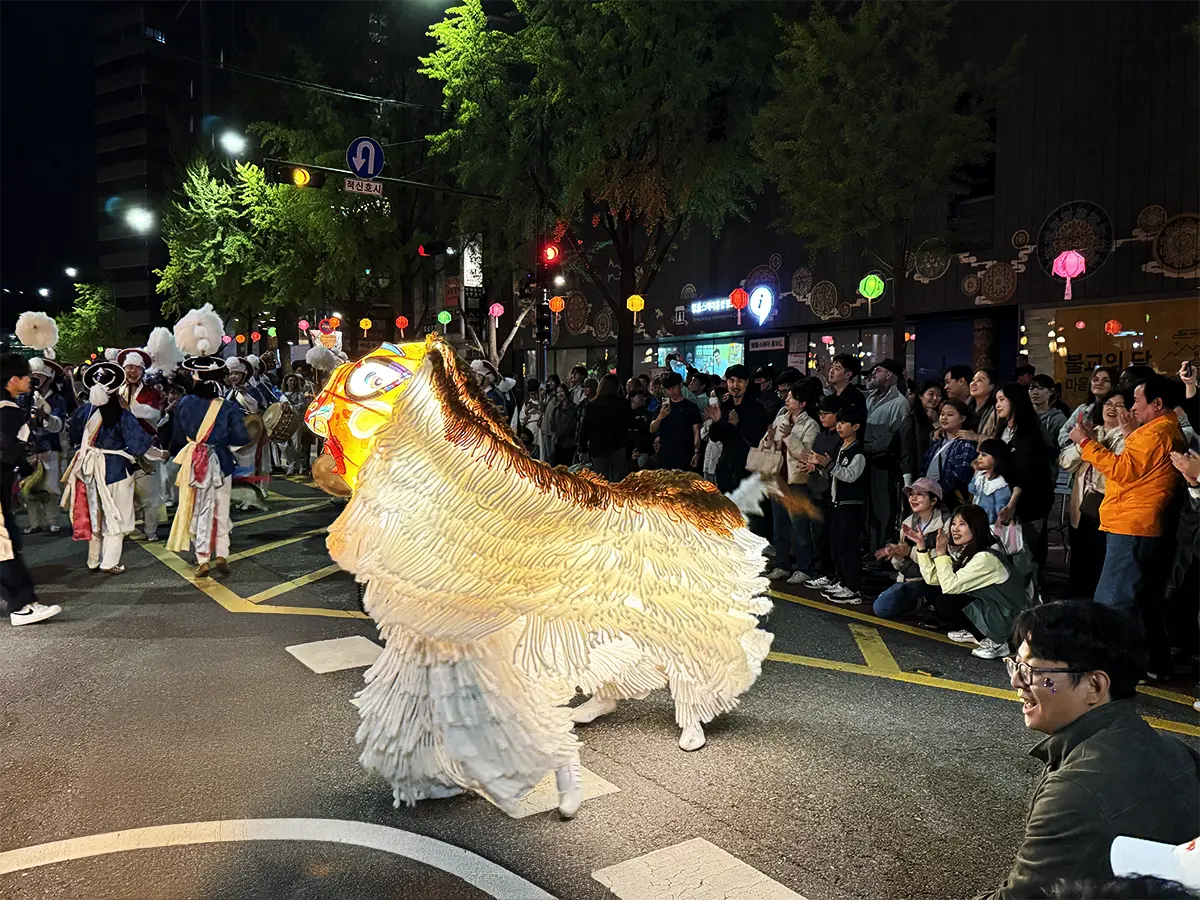
From there, it was back to our neighborhood and the rest of the festival. Down the street from our hotel, a cultural fair showcased Buddhist monks and traditional costumes from other countries. A large performance area showcased singing, tai chi, yoga, dance, and drumming. We took a break for delicious Korean fried chicken, so sticky and saucy that we had to eat it wearing plastic gloves. Epic! In front of Jogyesa Temple, many of the parade floats were lined up on display. Crowds gathered under the carpet of glowing lanterns overhead, especially as it got dark again. We saw a troupe of dragon dancers, and decided to follow them. Running down the street, they reassembled into dragon form, converging with another dragon and a group of costumed and plumed musicians. The 2 illuminated dragons frolicked and taunted, surrounded by drummers in an impromptu performance in the middle of the street. It was a great way for us to finish the festival.
Gyeongbokgung Palace, Bongeunsa Temple and Itaewan
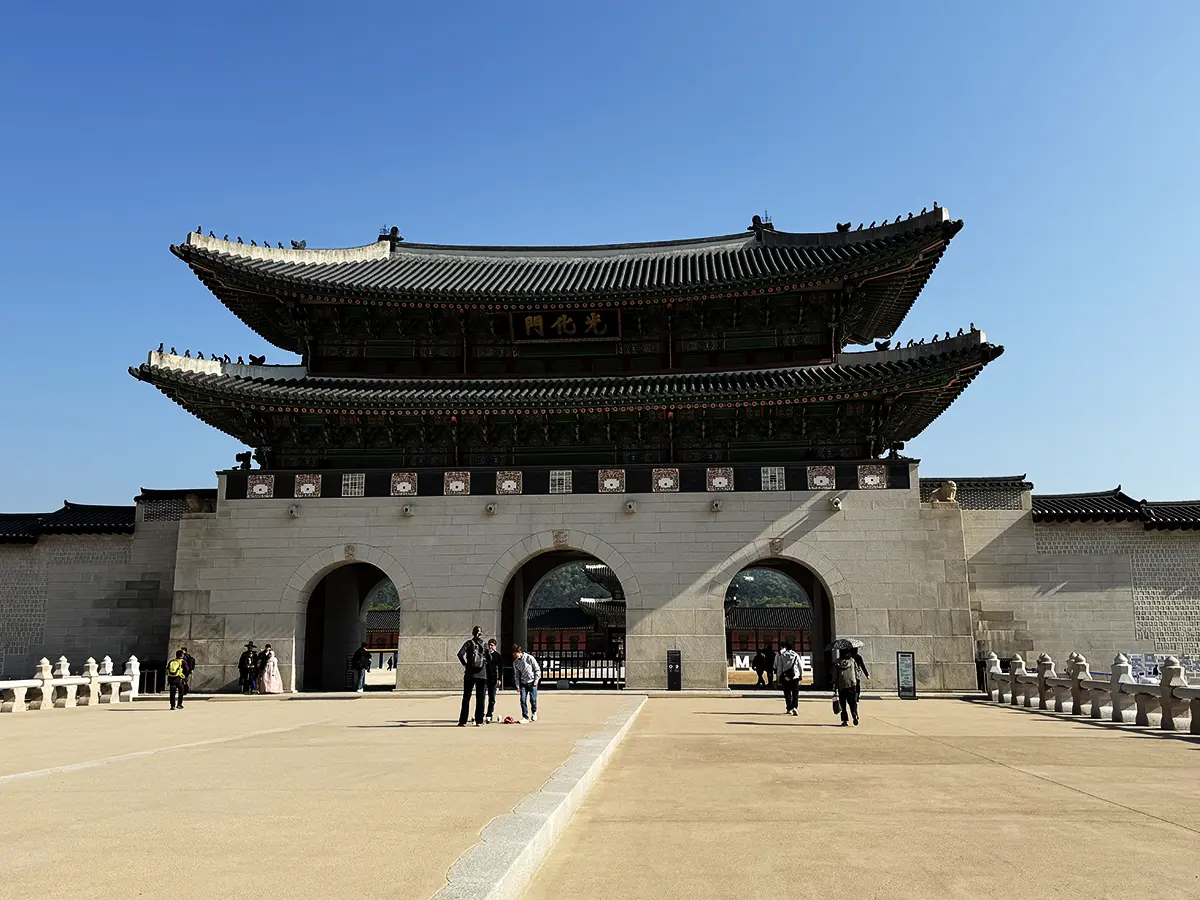
Finally it was time for an early start at Gyeongbokgung, the first and largest of the 5 grand palaces in the city. It was completed in 1395 when the capital of Korea moved to Seoul. It has a complicated history - long abandoned and rebuilt several times. Only a few buildings from the 19th century survived both the Japanese occupation and the Korean War. Restoration began in 1989, and is still ongoing.
The palace complex was the size of a small city, and had originally been self sufficient. Massive gates and huge walls surround countless halls and expansive courtyards, all connected by a complex maze of passageways. The Geyonghoeru Pavilion, one of the largest elevated pavilions in Korea, seemingly floats serenely in the center of a large pond made for royal summer boating parties. Behind the Queen's Palace, the terraced flower beds of the Garden of Amisan are bordered with decorative stonework. Four large hexagonal chimneys covered with orange tiles and nature scenes would vent smoke from the underfloor heating in the adjoining structures. In the middle of another lake, Hyangwonjeong Pavilion sits on a small island, connected by a long wooden bridge. Once again we had a perfect spring day with stunning blue skies. Trailing willow branches framed postcard views, while crowds in their hanboks drifted about like flowers on the breeze. As we were leaving, we happened to be just in time for the changing of the guard ceremony.
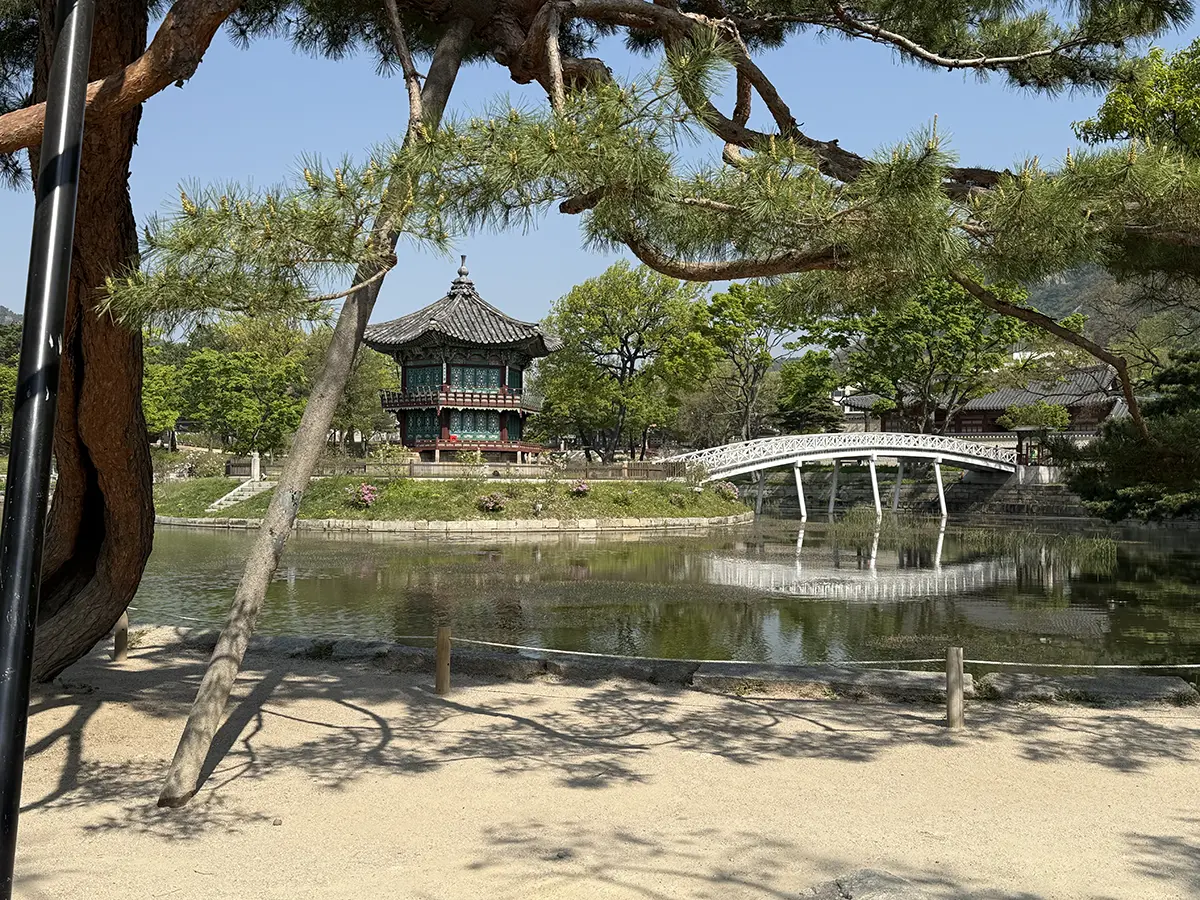
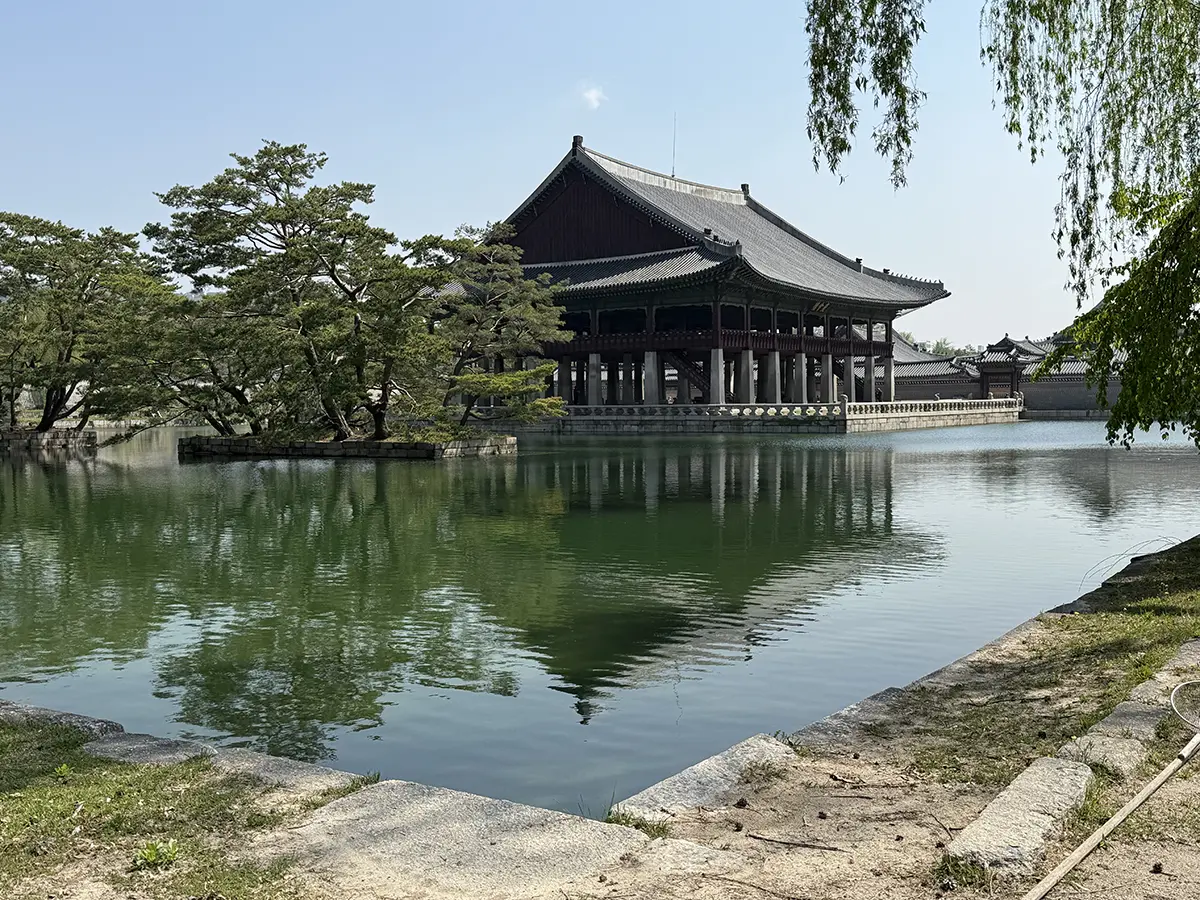
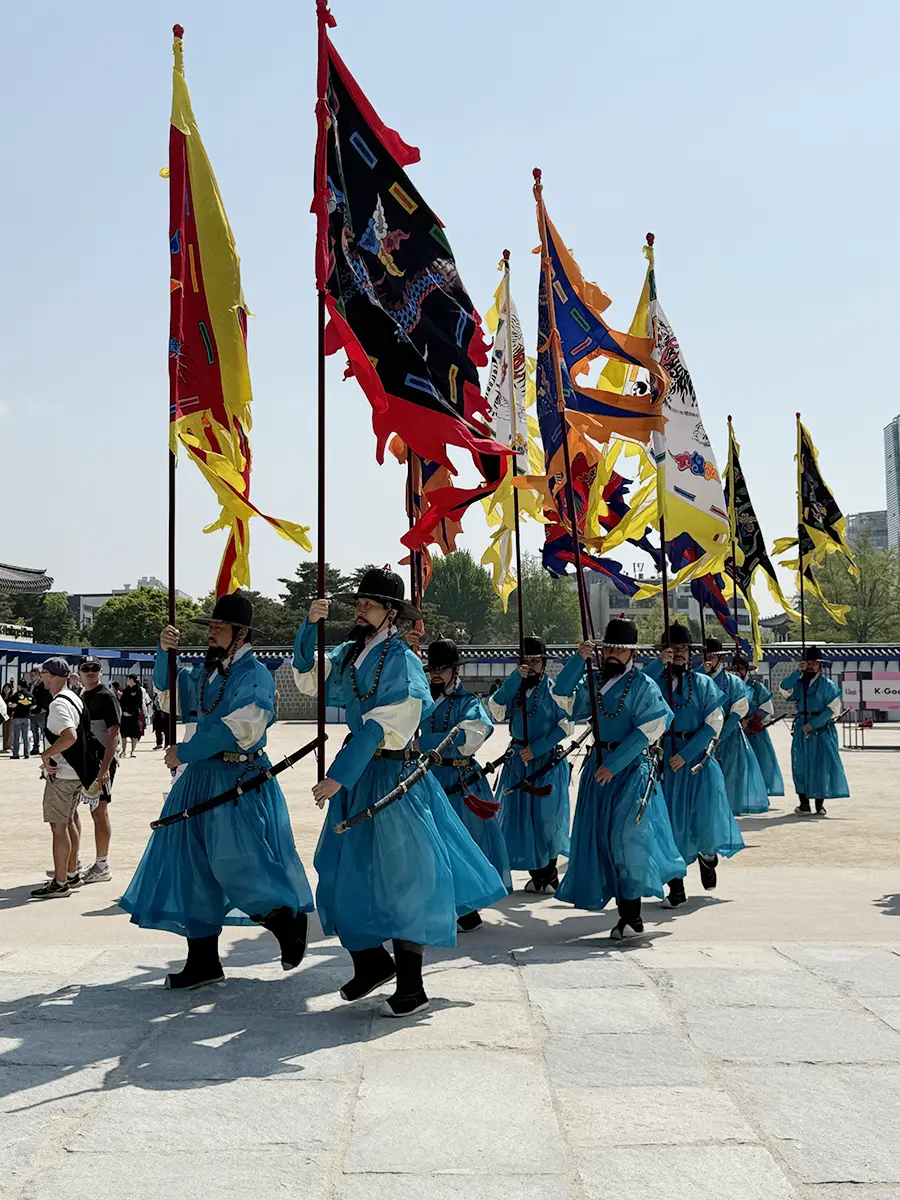
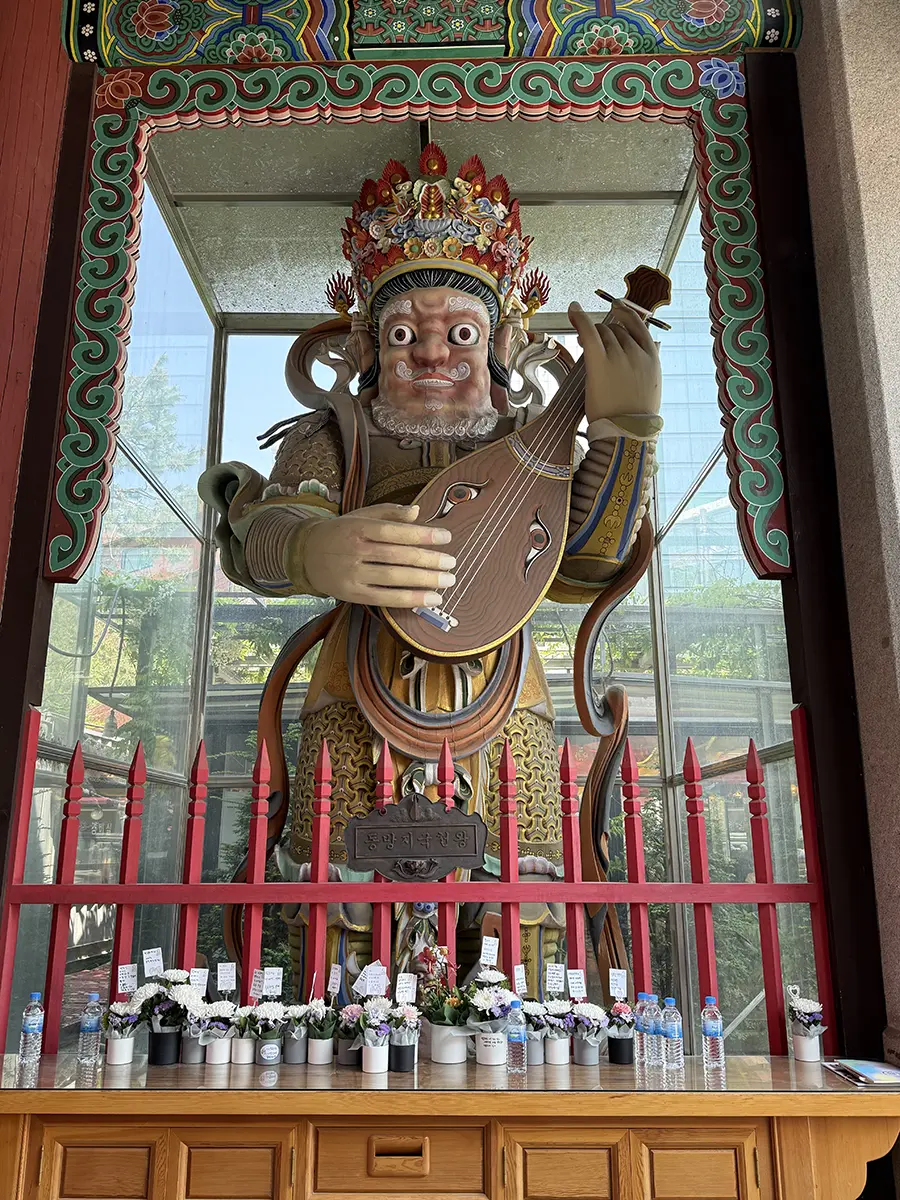
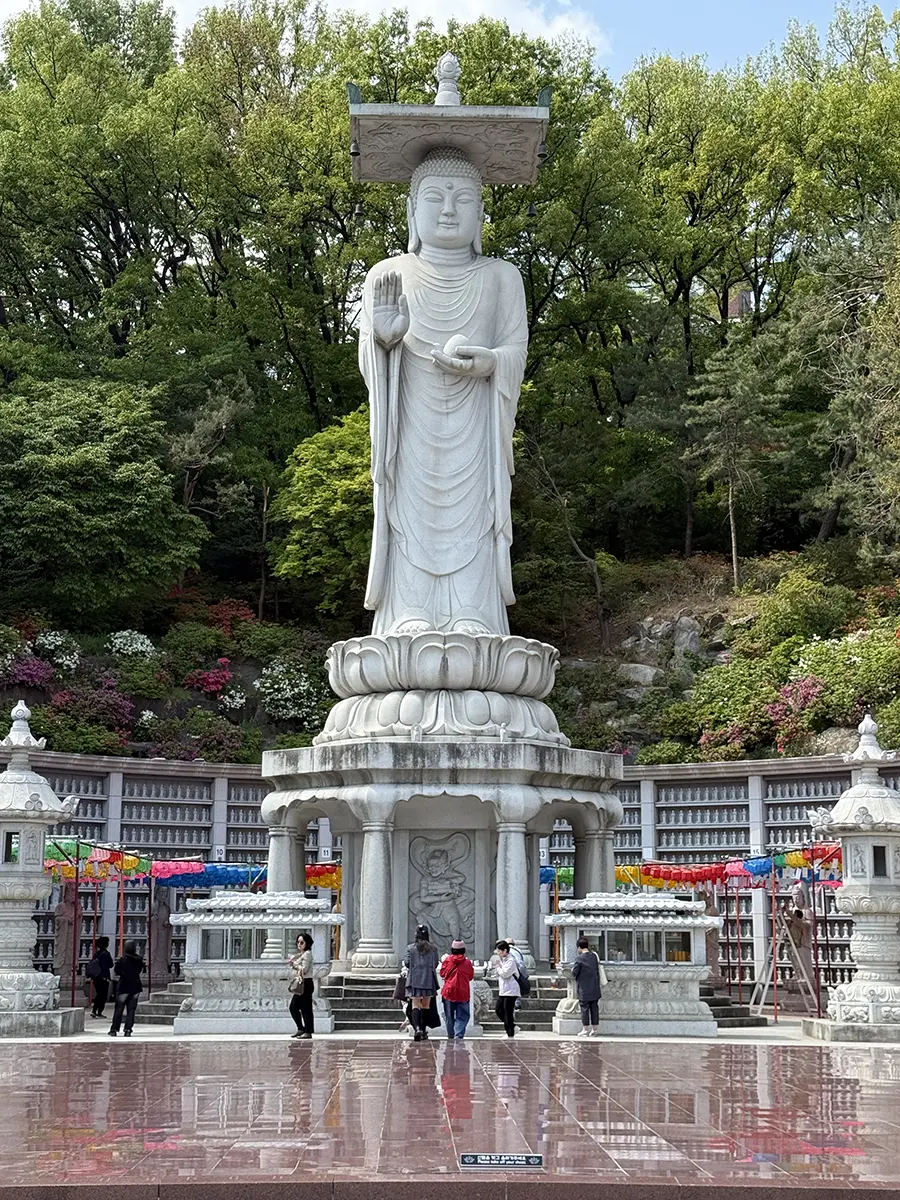
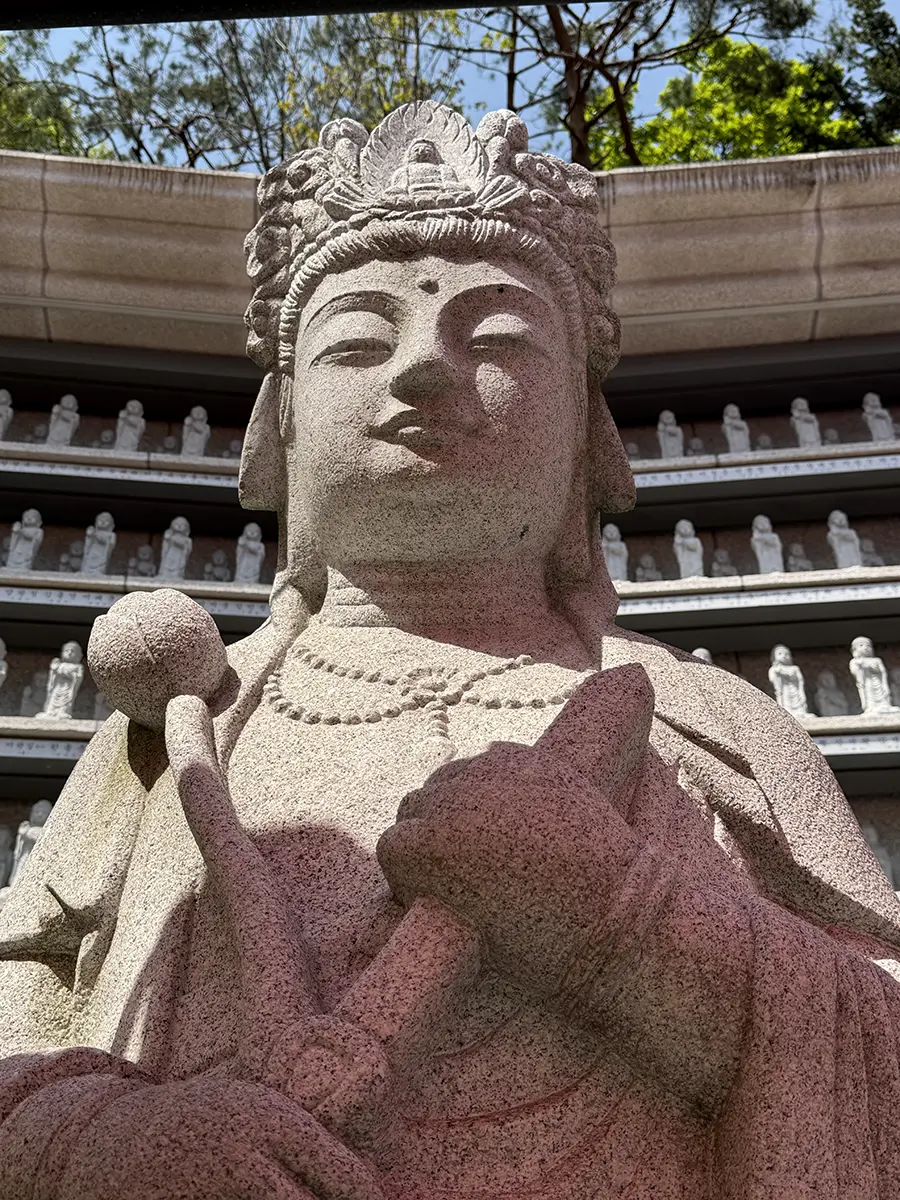
Our next destination was Bongeunsa Temple. Built into a forested hillside, the formerly rural setting is now a calm oasis in the heart of Gangnam: the poshest neighborhood in Seoul (think Gangnam Style). The entrance gate features fantastic carved statues of the four Buddhist kings. Winding paths and stairs connect the various shrine halls and pavilions across the beautifully landscaped grounds. External walls of one of the halls feature menacing murals of the Buddhist underworld. But the most striking feature is the massive and humbling Mireuk-bul, the future Buddha, gazing out over the city. At 28 meters (91 feet), it is one of the tallest stone statues in the country. Surrounding the base, a collection of Vajra Warriors help protect the Buddha from harm. Twice a day, the temple monks here perform a percussion ceremony using sacred instruments. With a drum, a wooden fish, a cloud drum, and a gong, they hope to save and awaken beings on the ground, underwater, in the sky and under the ground.
From there, we made a pit-stop in Itaewon. This neighborhood was once home to a US Military instillation, and all of the bars and brothels associated with it. Eventually gentrification made it into a westernized hipster hotspot, with a large concentration of nightclubs, restaurants, and bars. It's also the site of the infamous "Halloween Crush" disaster from 2022. Shortly after the end of Covid restrictions, on Halloween an estimated 100,000 partiers crammed into this small area of steep, narrow streets and dead-end alleys. A human avalanche of hundreds of people piled on top of one another in five to six layers, up to 15 feet deep. The throngs of people prevented emergency services from reaching the victims, with many partiers unaware of the unfolding tragedy. The ultimate toll was 159 deaths and 196 injuries.
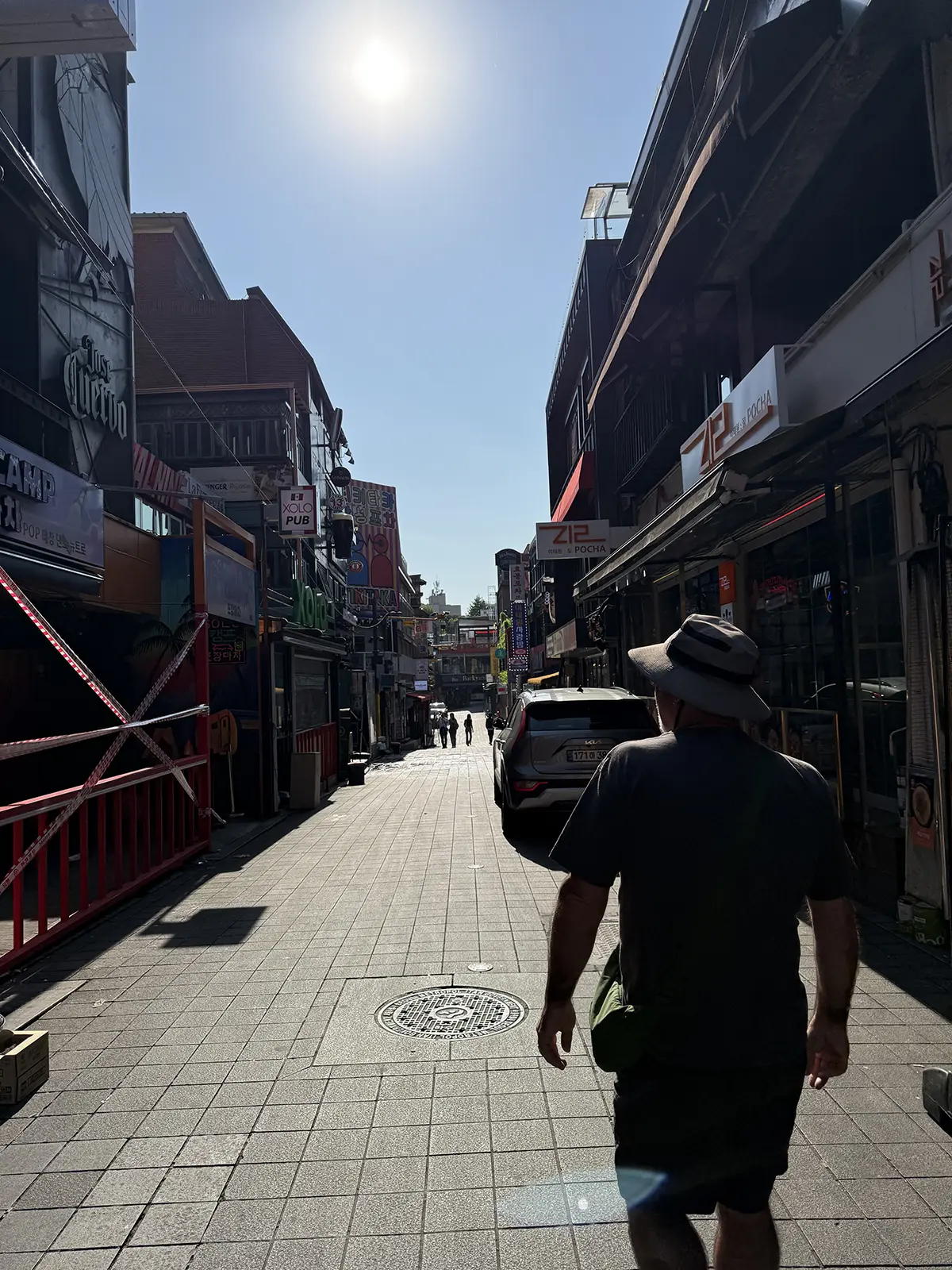
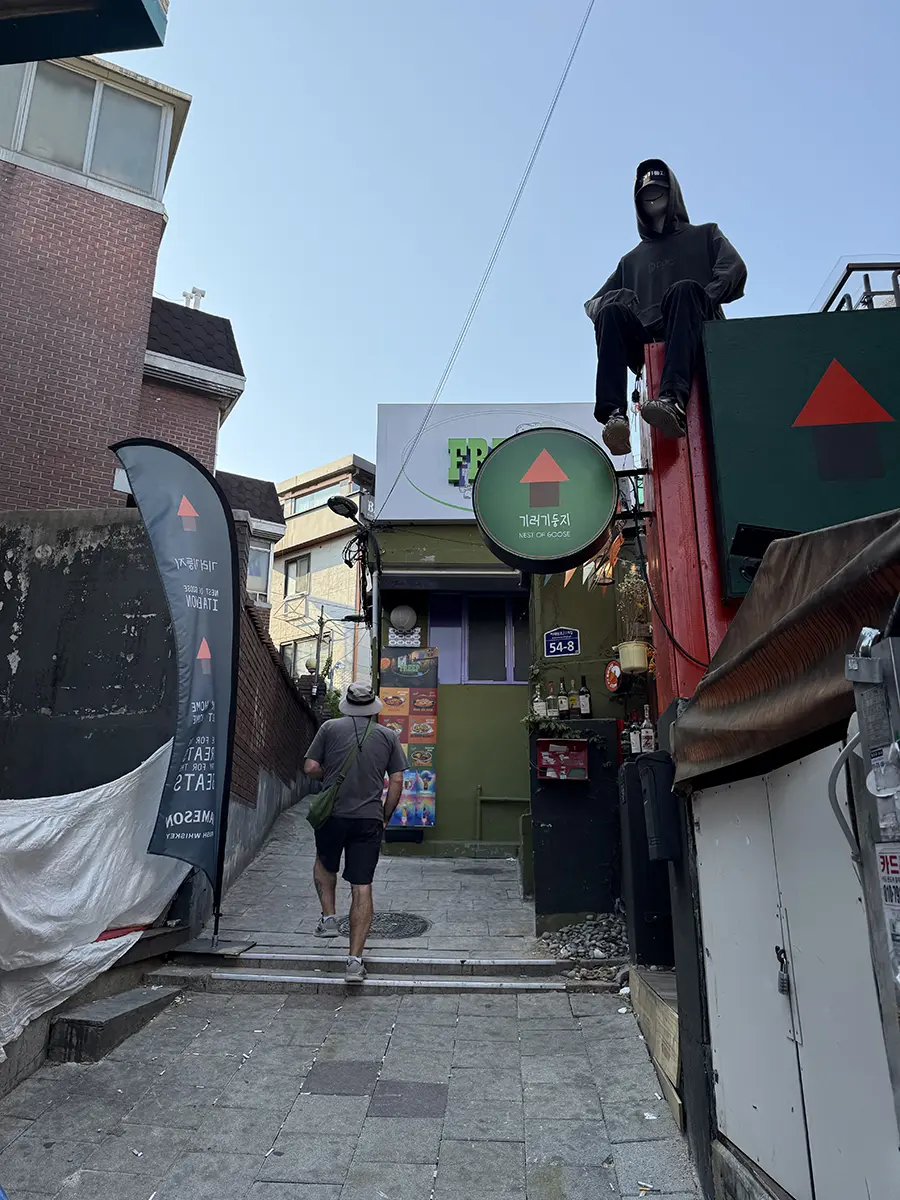
Needless to say, it was a sobering place to stop for a beverage. But a tasty dark beer with a brown sugar and cinnamon crusted rim helped lighten our spirits a bit. On our way home, we found another cool little upstairs spot with New York style slices to continue our developing tradition of a pizza "last supper." The next day was a lazy start, packing to catch the afternoon "Train to Busan" - hopefully free from zombies (it's a great movie, if you like zombies).
Next Stop... Busan.


I really love Asian architecture. It just makes me feel happy!