
Part 22: Busan, South Korea
- mpleva
- Mar 16
- 10 min read
Updated: Mar 18

Busan
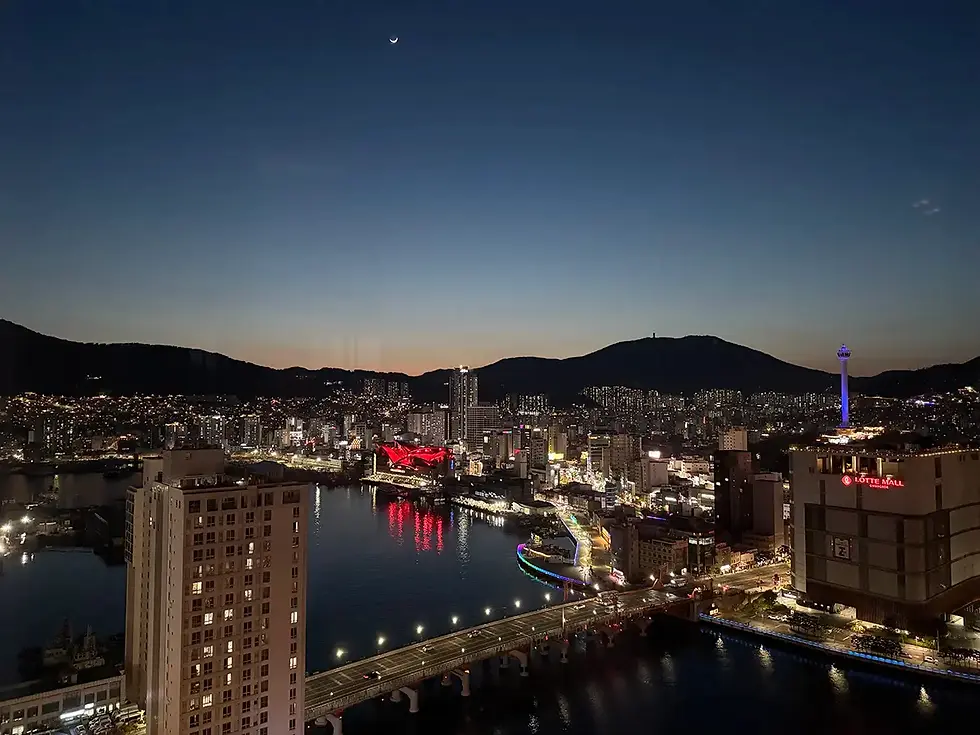
We arrived late and hungry in Busan from Seoul. We had splurged on our location for an incredible view, with a hotel on the edge of Yeongdo Island overlooking Busan Harbor. On the wharf across from our hotel, there were a ton of pojongmacha stands (aka pocha - outdoor restaurant carts). It smelled soooo good, but there was not an open seat to be found, so we opted instead for one of the ubiquitous hole-in-the-wall fried chicken spots near our place. Sunset from the rooftop garden was absolutely ridiculous, with nearly 360-degree views of the city, mountains, and massive harbor. Splurge justified!

Nampo-dong Neighborhood
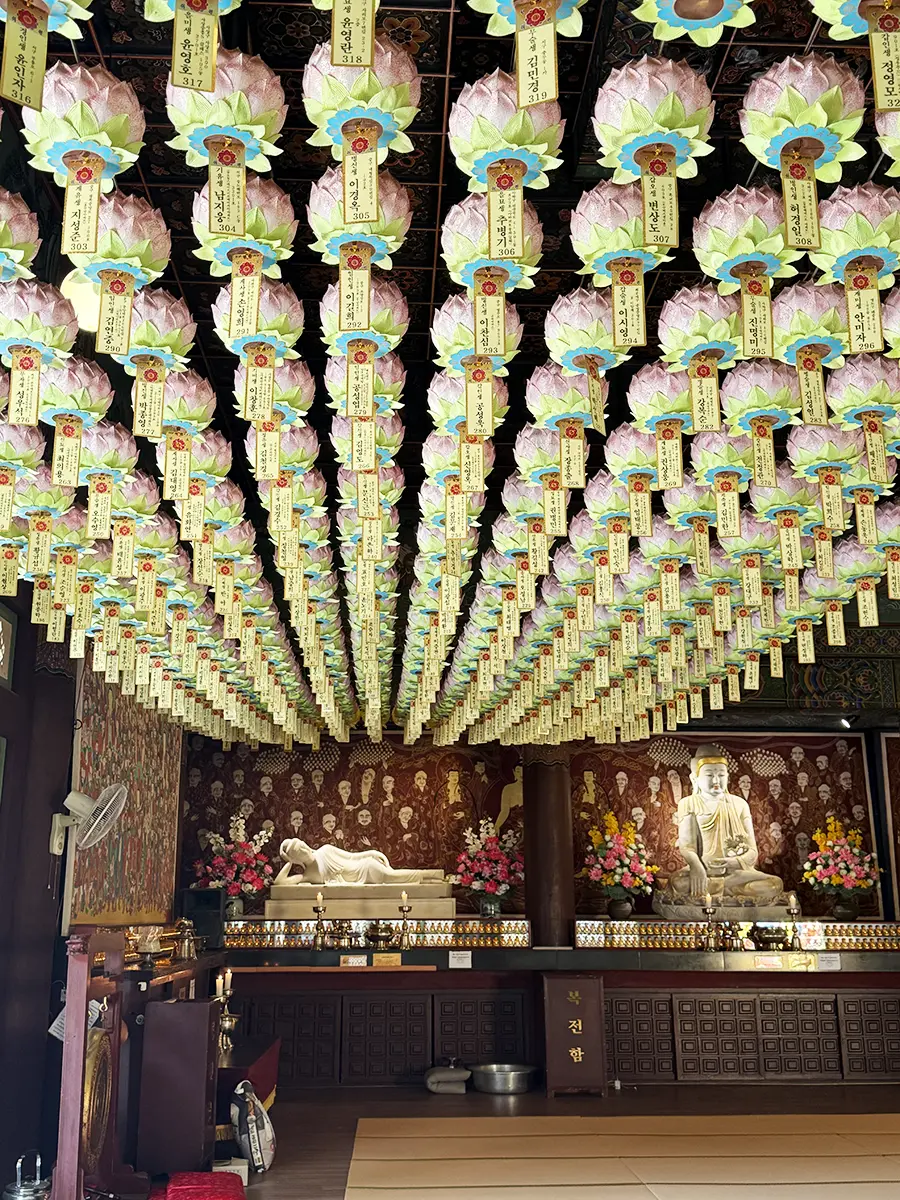
The next day we started on foot to the Busan Tower, stopping at Daegaksa Temple on the way. This was a central location for the pro-democracy protests in 1987. Small but serene, it was a nice way to start our day. Making our way into Yongdusan Park, we had a peaceful and shady route up the back side of the small mountain, shaped like a dragon's head watching over the city. (As usual, it was way harder for me than it should have been, but it would be several months until I discovered my severe anemia.)
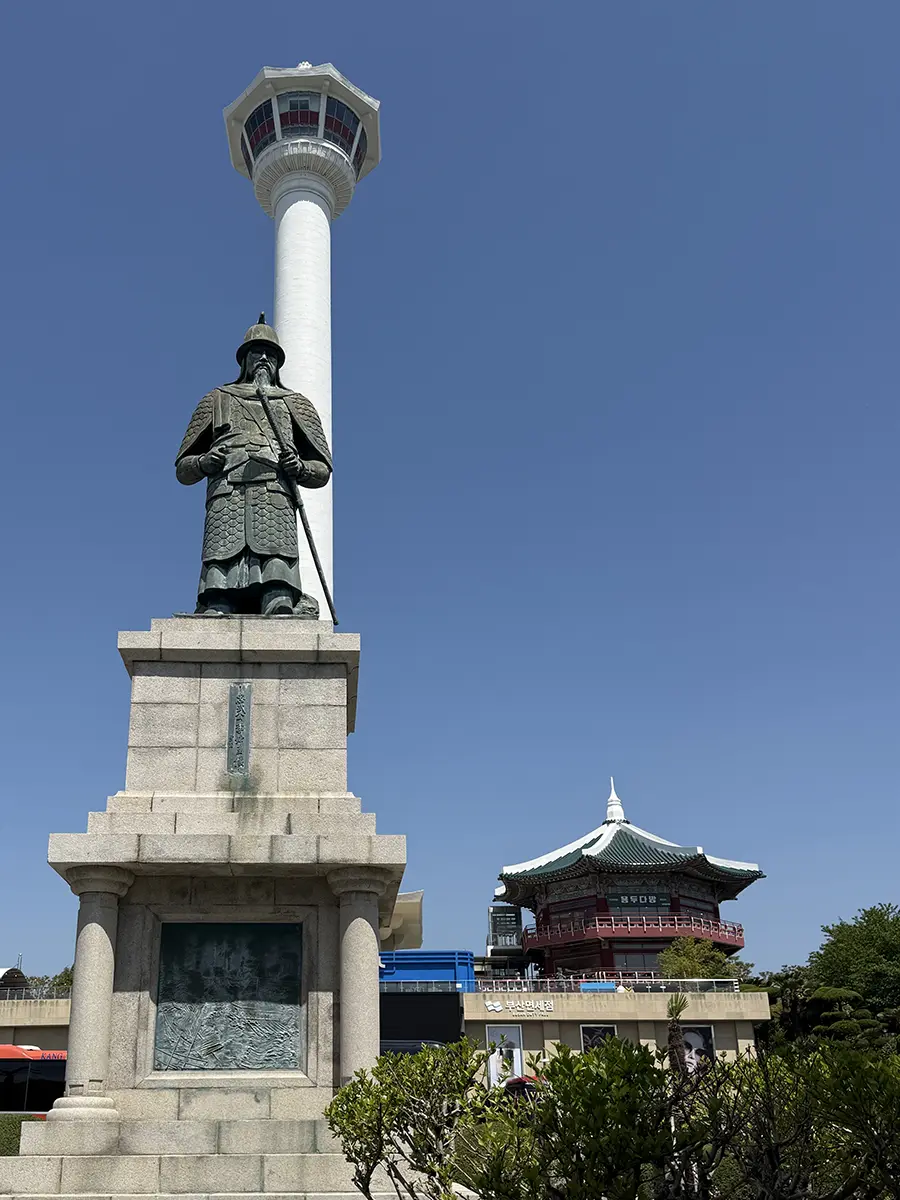
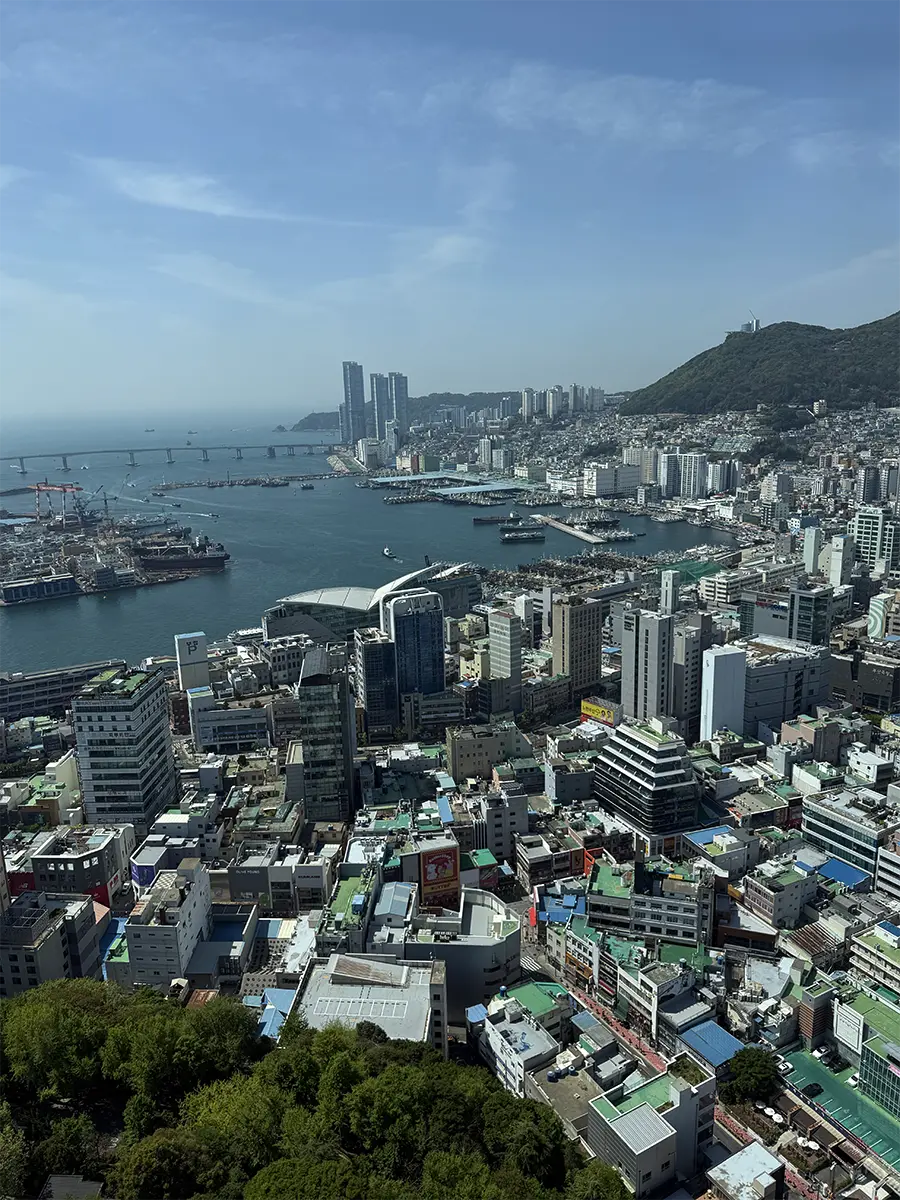
The square at the top had statues, a large dragon, a pagoda and a flower clock - as well as an outdoor escalator taking people up to the 120 meter-tall Busan Diamond Tower. The observation deck at the top is modelled after a famous temple pagoda, looking like a giant scepter. The views were stunning, with city and mountains stretching off into the distance. The massive harbor glittered in the sun, strung with elegant bridges. We arrived to find an entire school congregating, so we had to move fast. We managed to leave the tower just as they were making their way up, the kids excited to show off their English.
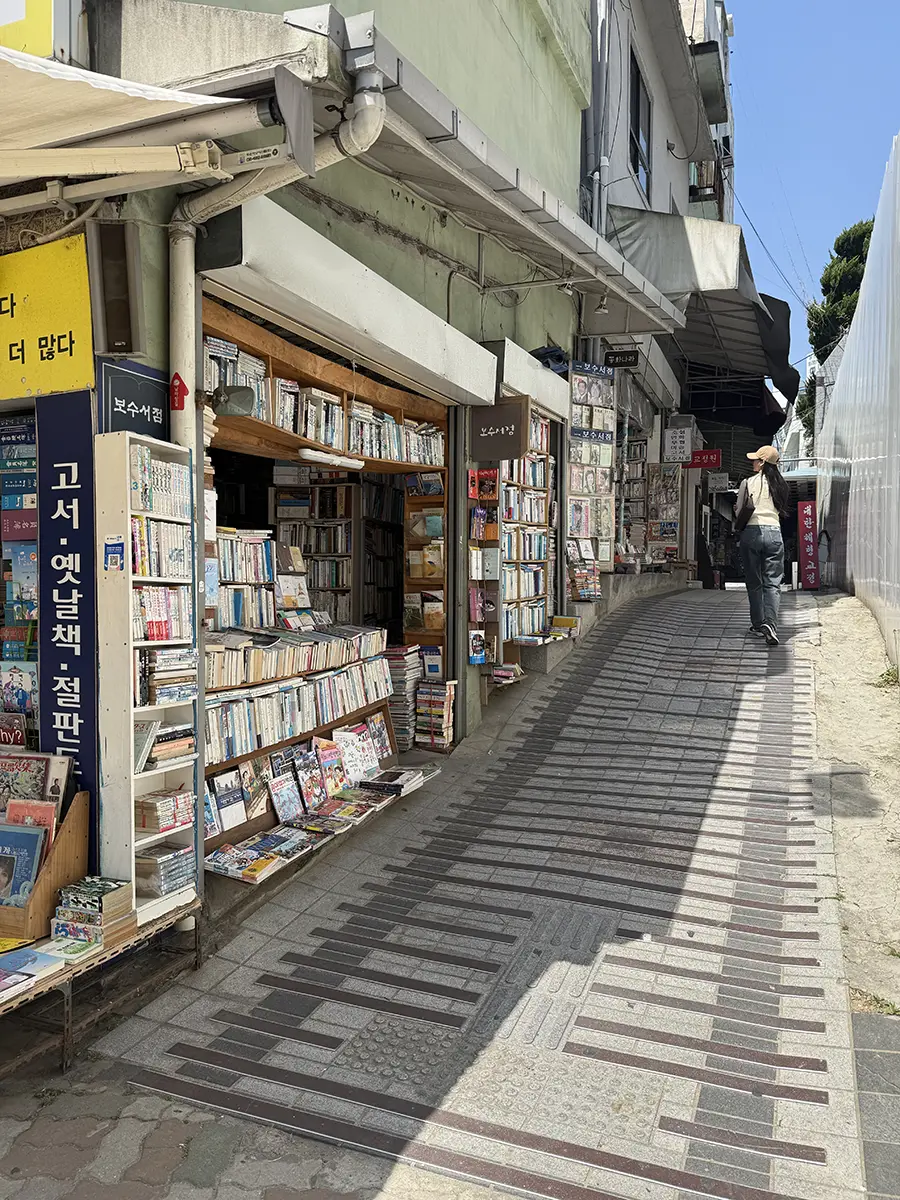
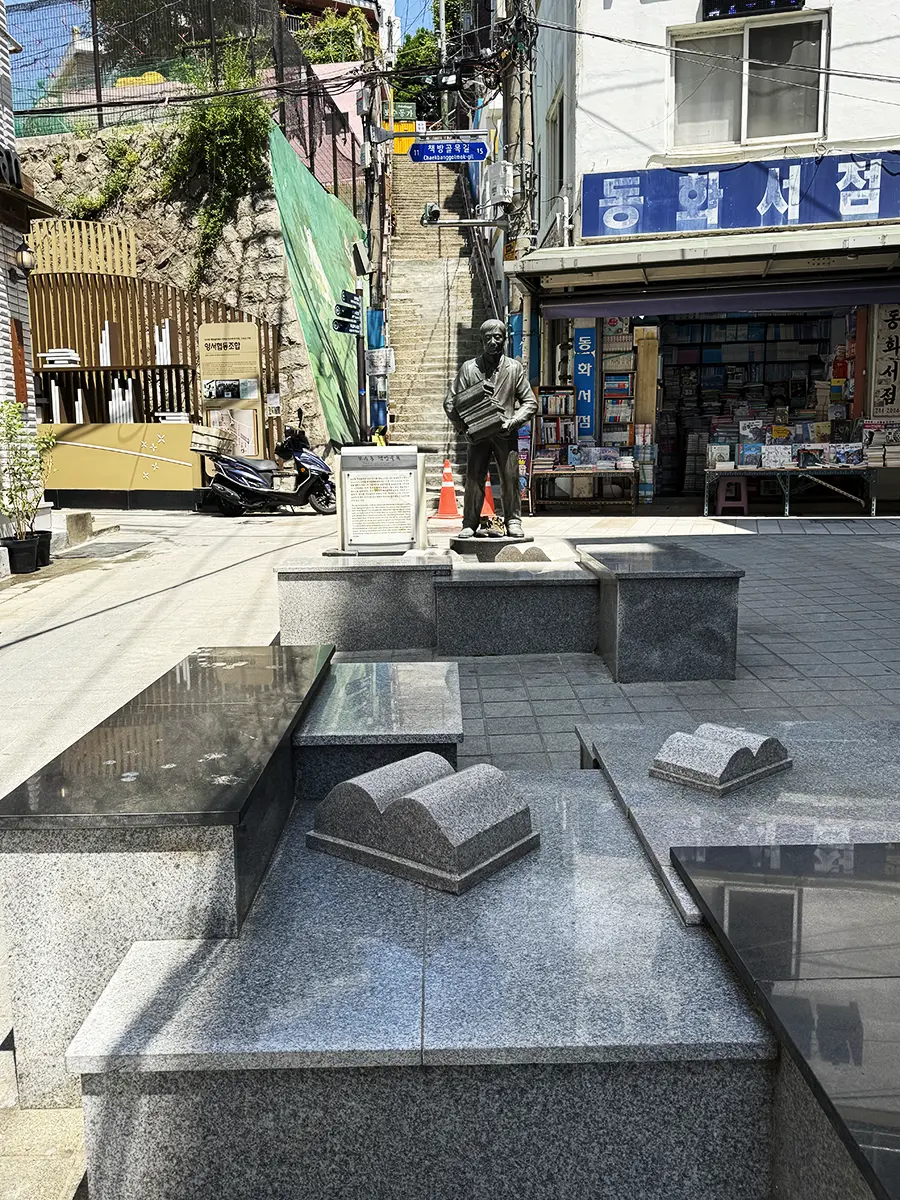
From there we wandered along Bosu-dong Book Street, a maze of narrow alleys lined with shops for mostly used books, piled in towering stacks. In the 1950's, Busan became a temporary capital of Korea, and a haven for refugees during the war. Some wealthy scholars and professionals managed to bring prized books during their flight. A refugee couple set up a stall to sell books on this street, and others followed suit. After the war, teachers, students, and scholars worked to keep the area intact. After some digging, we eventually found much needed reading material for the road.
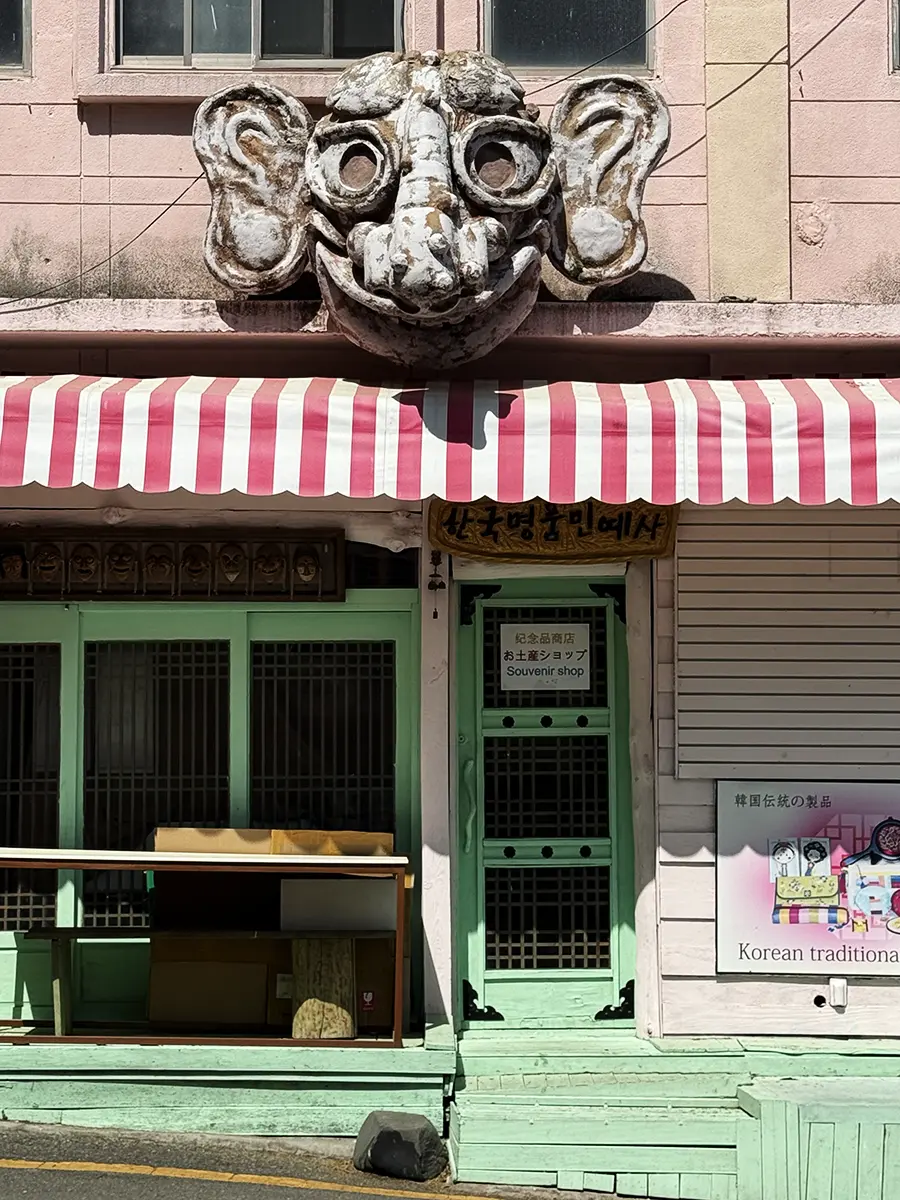
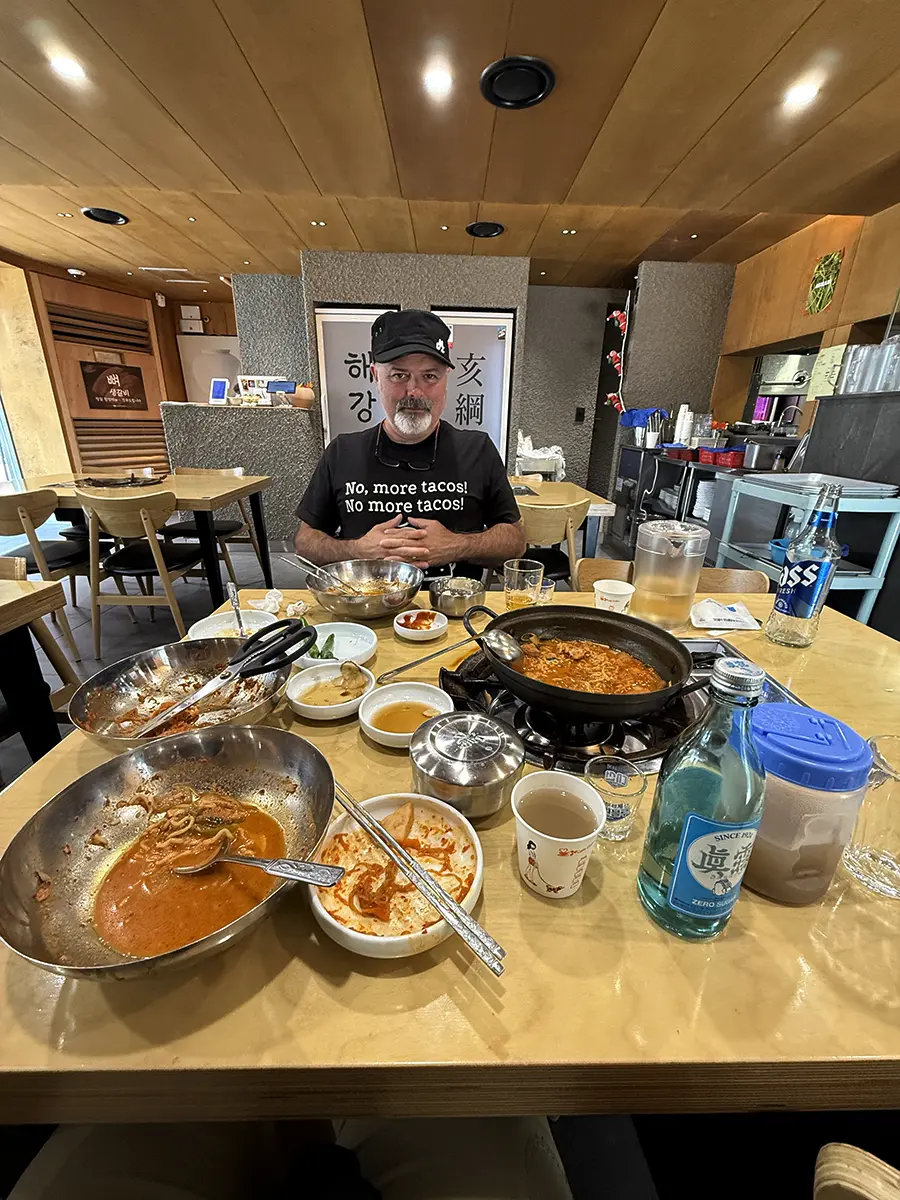
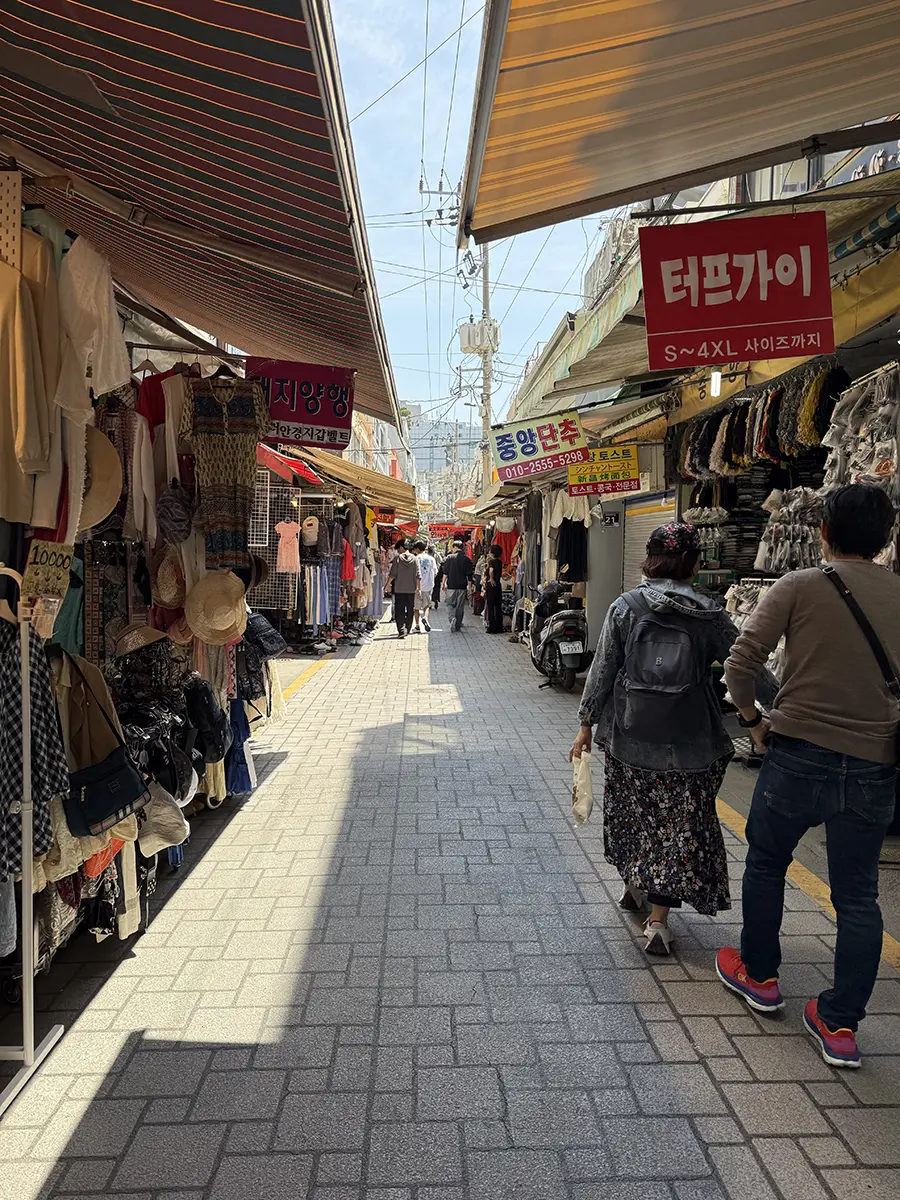
For lunch we dove into a huge cauldron of stew - spicy, boiling hot, and delicious. It was enough to feed a small army, but too good to leave behind, so we powered through it. At this point we were in the thick of Gukje ("International") Market, which is an entire neighborhood of over 1500 shops. Again, this grew out of the departure of the Japanese, followed by the Korean War. People set up shop here to trade overseas products left behind, or brought in by Koreans returning home after the occupation, and smuggled or imported goods. It's easy to get lost in the overwhelming maze of alleys crammed with merchandise of all kinds.
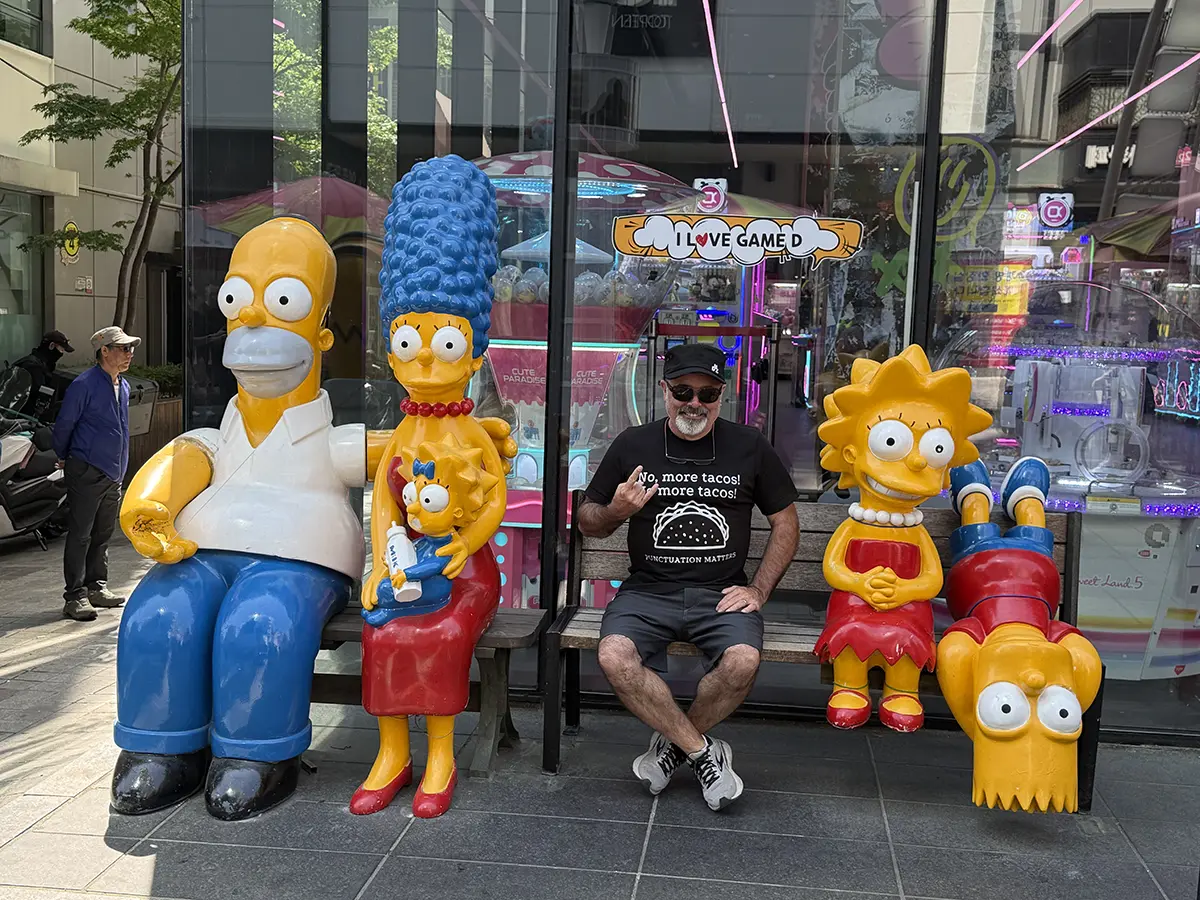
Nearby was BIFF Square, home to the annual Busan International Film Festival. This bustling walking street celebrates Busan's status as a hub for cinema. Known as the "Korean Walk of Fame," it's embedded with famous handprints, and packed with food vendors, souvenirs, and of course, the famous Korean quirky socks. Naturally, we couldn't pass up a family portrait with life-size versions of "the Simpsons."
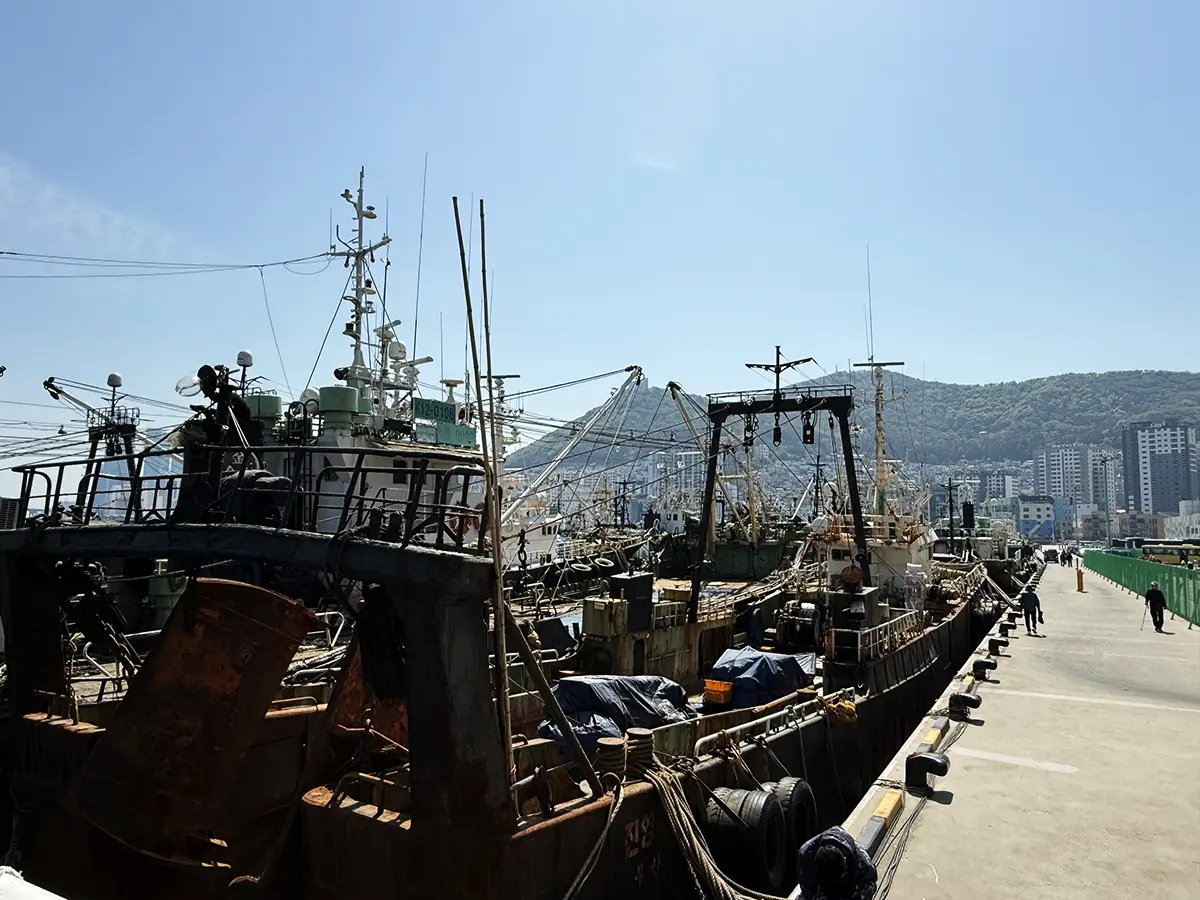
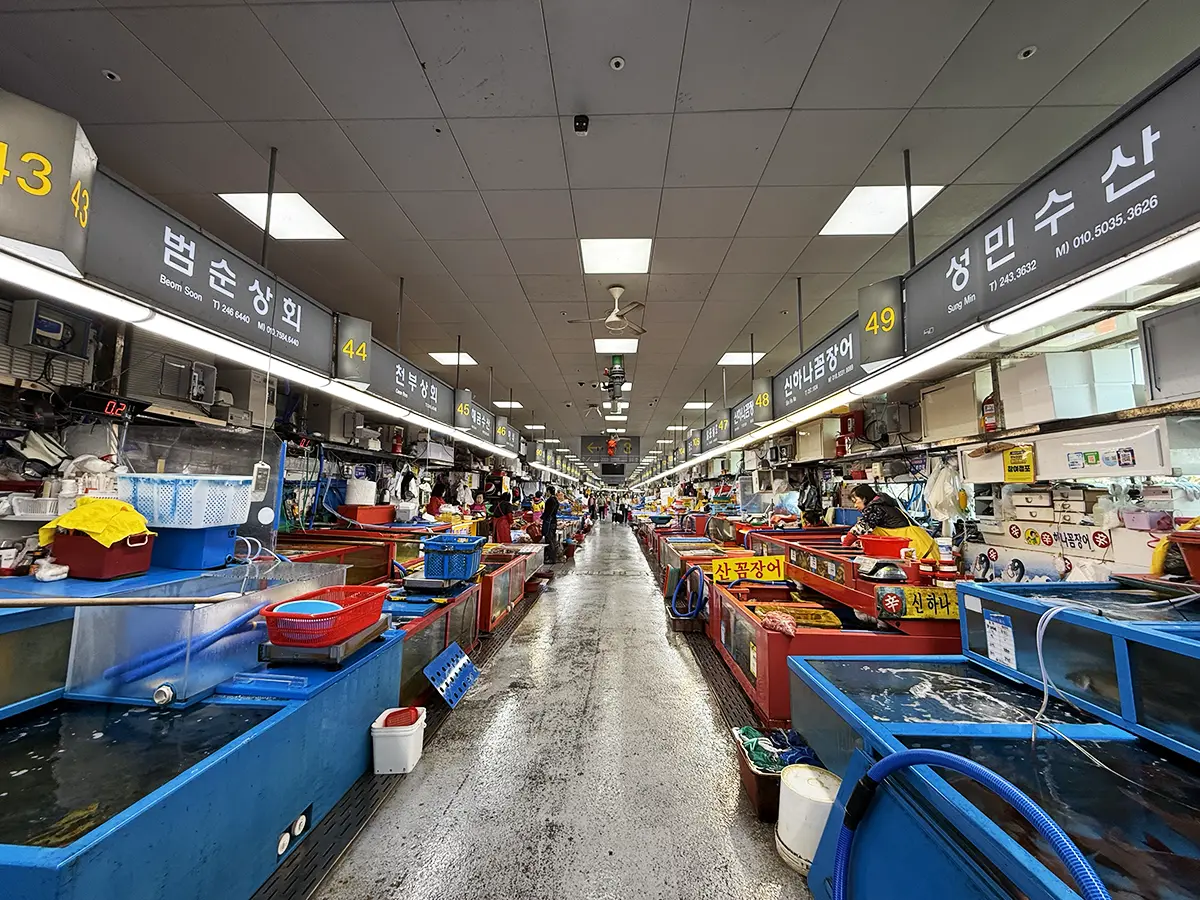
Turning towards home, it was time to explore the largest fish market in Korea, and one of the top 10 in the world - stretching over 3 km by 200 meters. Jagalchie Fish Market is another institution that dates back to post war period, when widows (called “jagalchi ajummas” or "pebble wives") sold fish from the docks to survive. These tough entrepreneurs earned a legendary reputation - loud, boistrous, and ready to haggle. The outer harbor stalls (Zone 1) are an experience in their own right - chaotic, pungent, and intense. Streets doused with fish water and guts are crowded with thousands of vendors squatting under umbrellas, stretching so far it was hard to believe we hadn't even made it to the heart of the market!
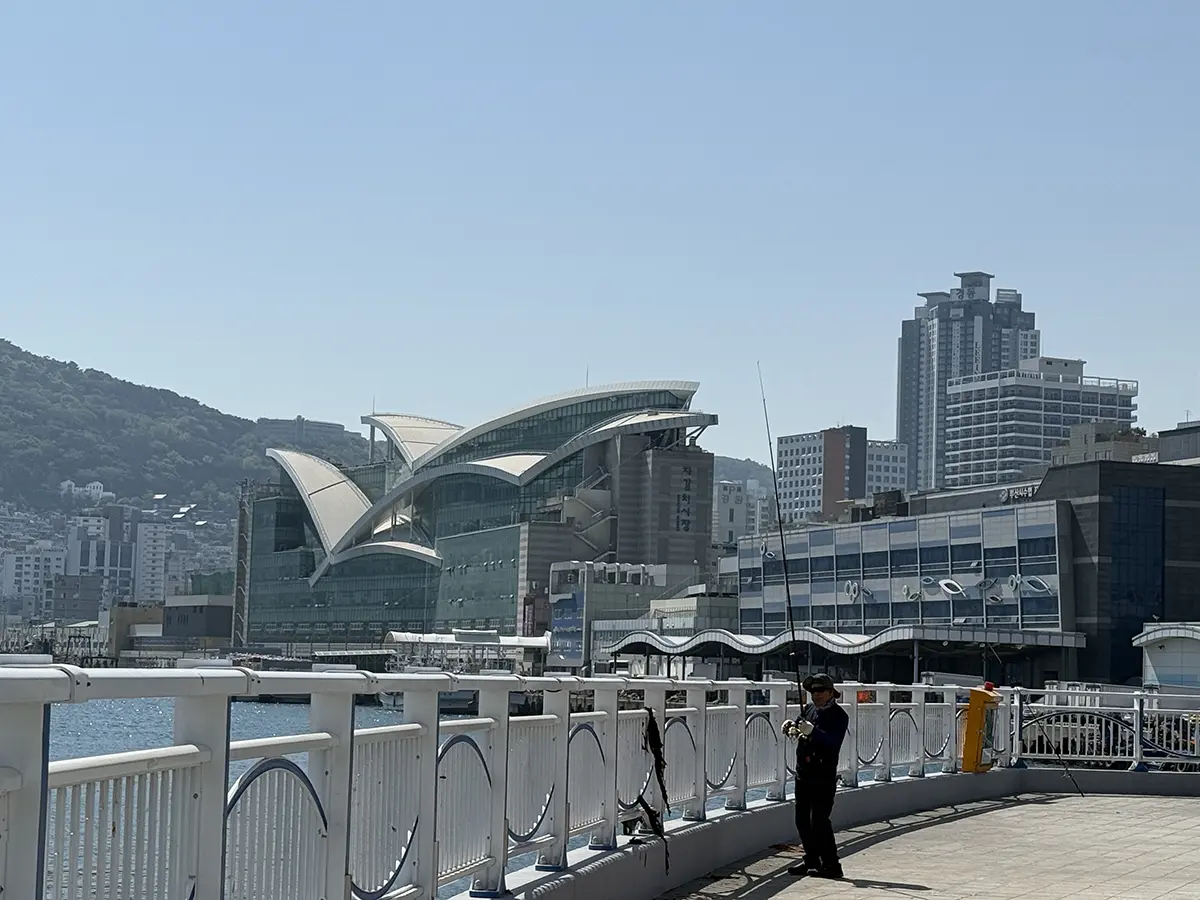
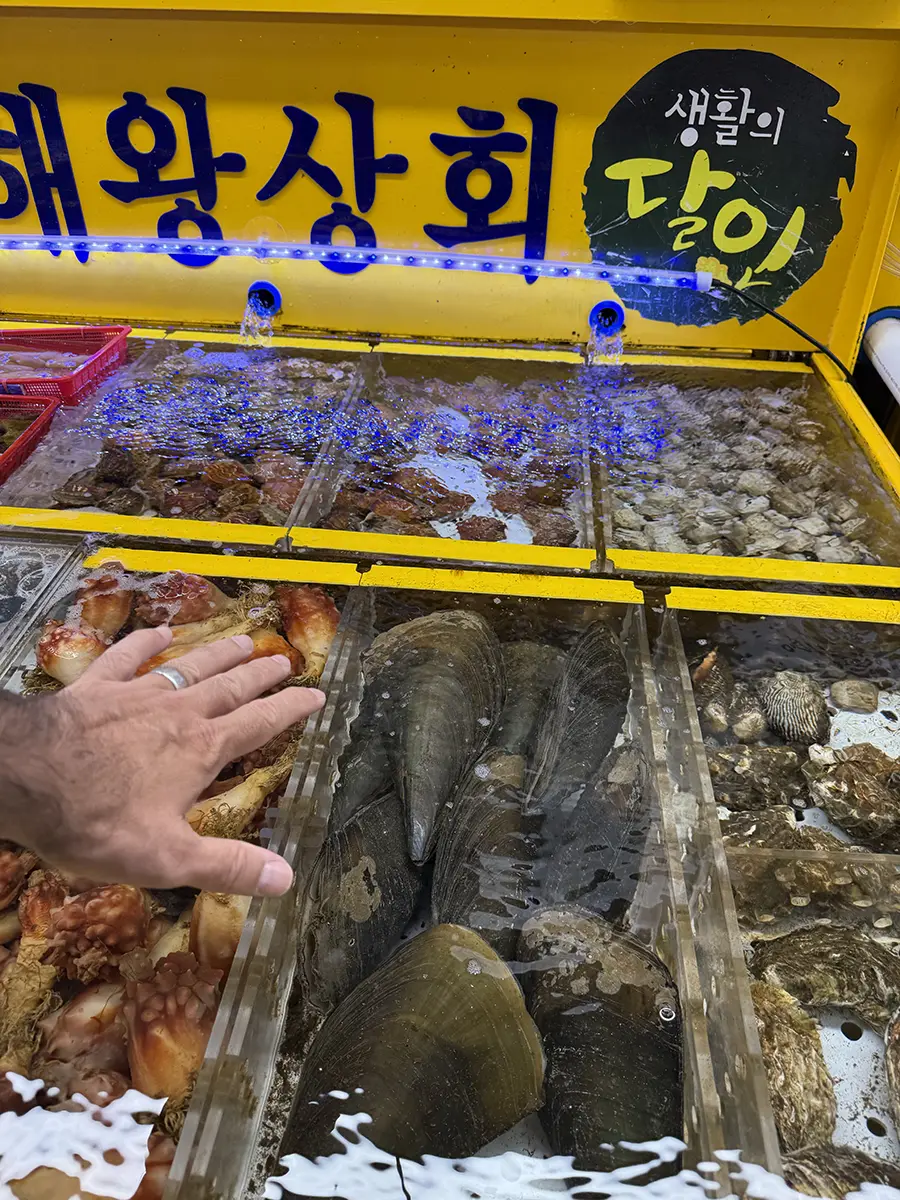
The main building must be near the size of a football field. The outside resembles a fish, and is lit up in changing colors at night. Inside is much more orderly than the "wild west" of the streets, but just as overwhelming. On the ground floor (Zone 2), endless rows of tanks stretch on forever. Everything you've never heard of is swimming or squirming or trying to escape, waiting to be haggled over and brought upstairs. The entire second floor (Zone 3) is full of restaurants to prepare your purchases, or anything else on the menu. Sadly our lunch had been so huge we couldn't yet do justice to eating here. Back at the hotel, we went up to the rooftop to sip on beer and soju (Korean rice wine), watching a magnificent sunset turn into a nighttime rainbow spectacle of city lights over the water. So far we were pretty happy with our choice to visit this place.

Gamcheon Culture Village
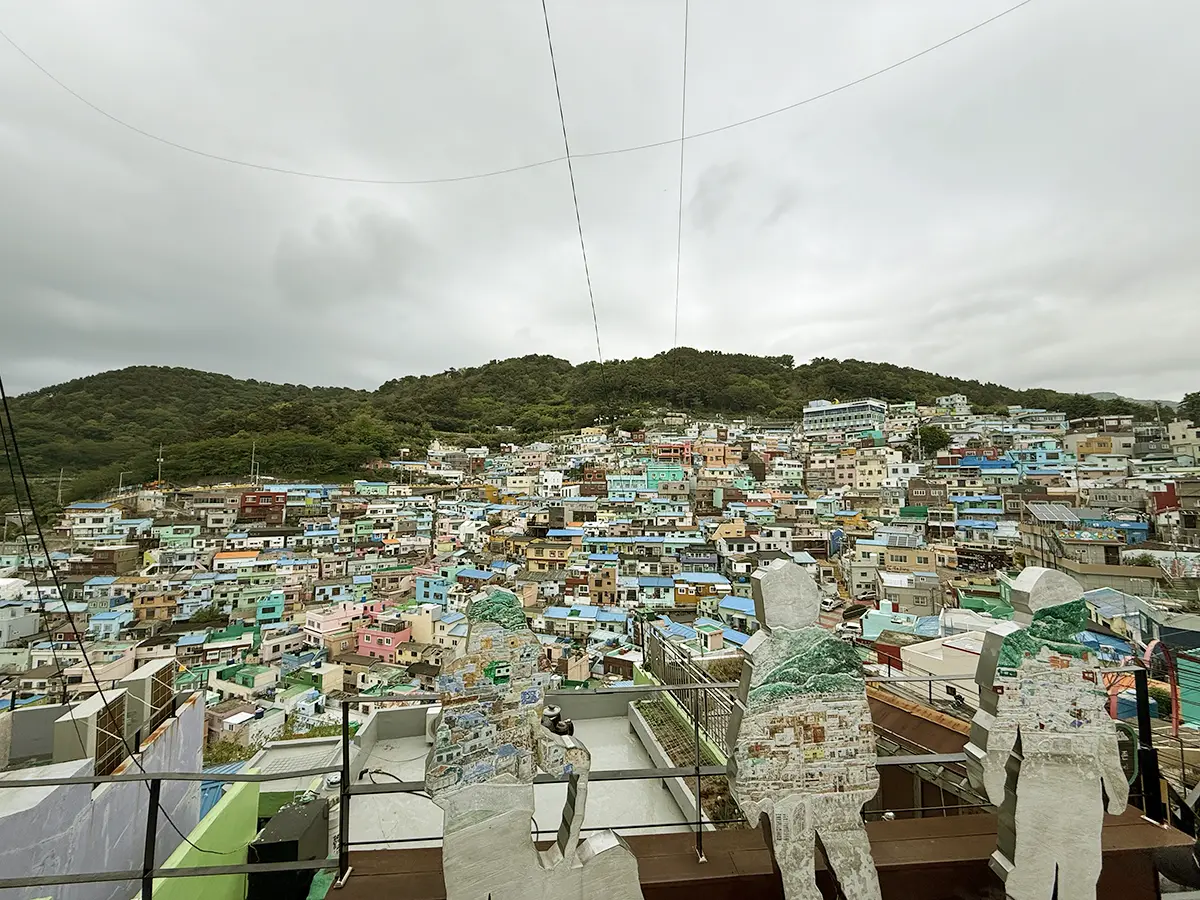
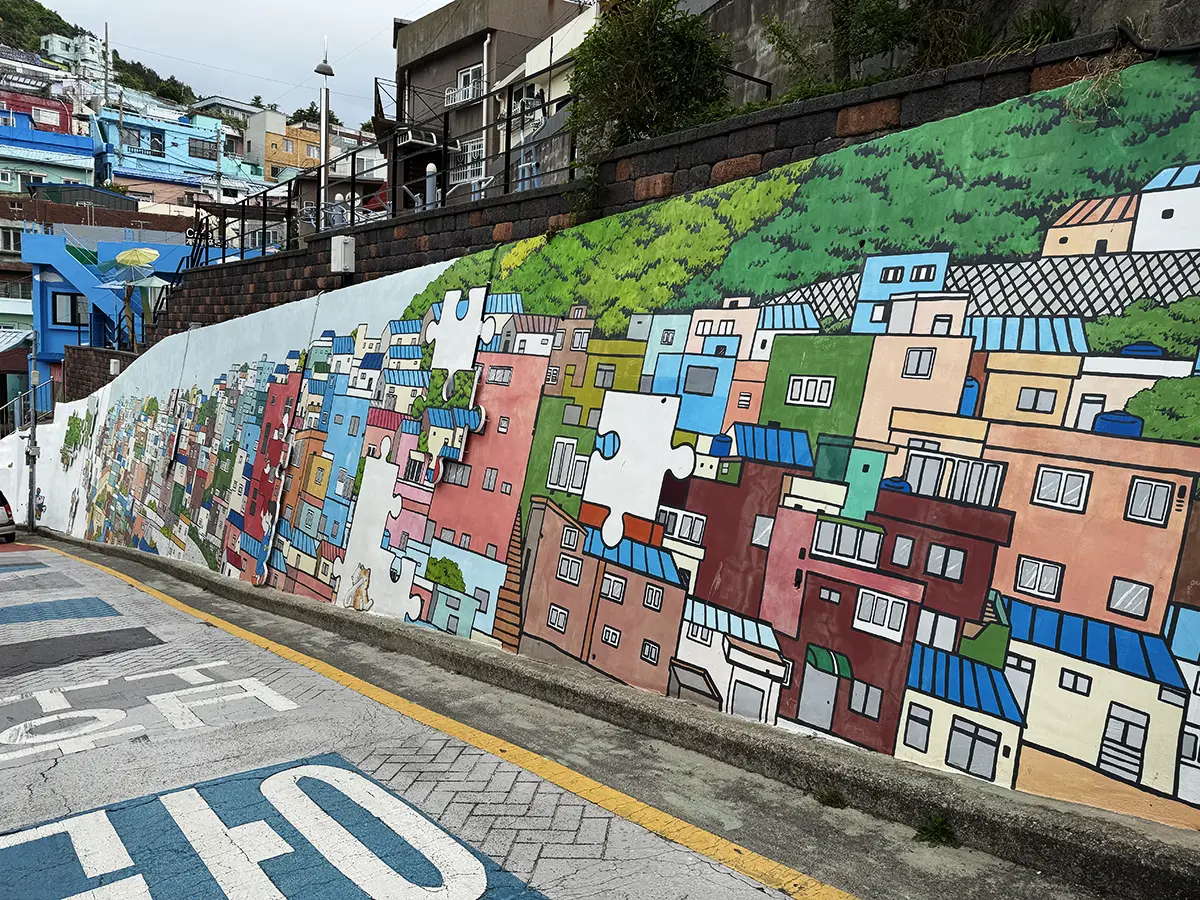
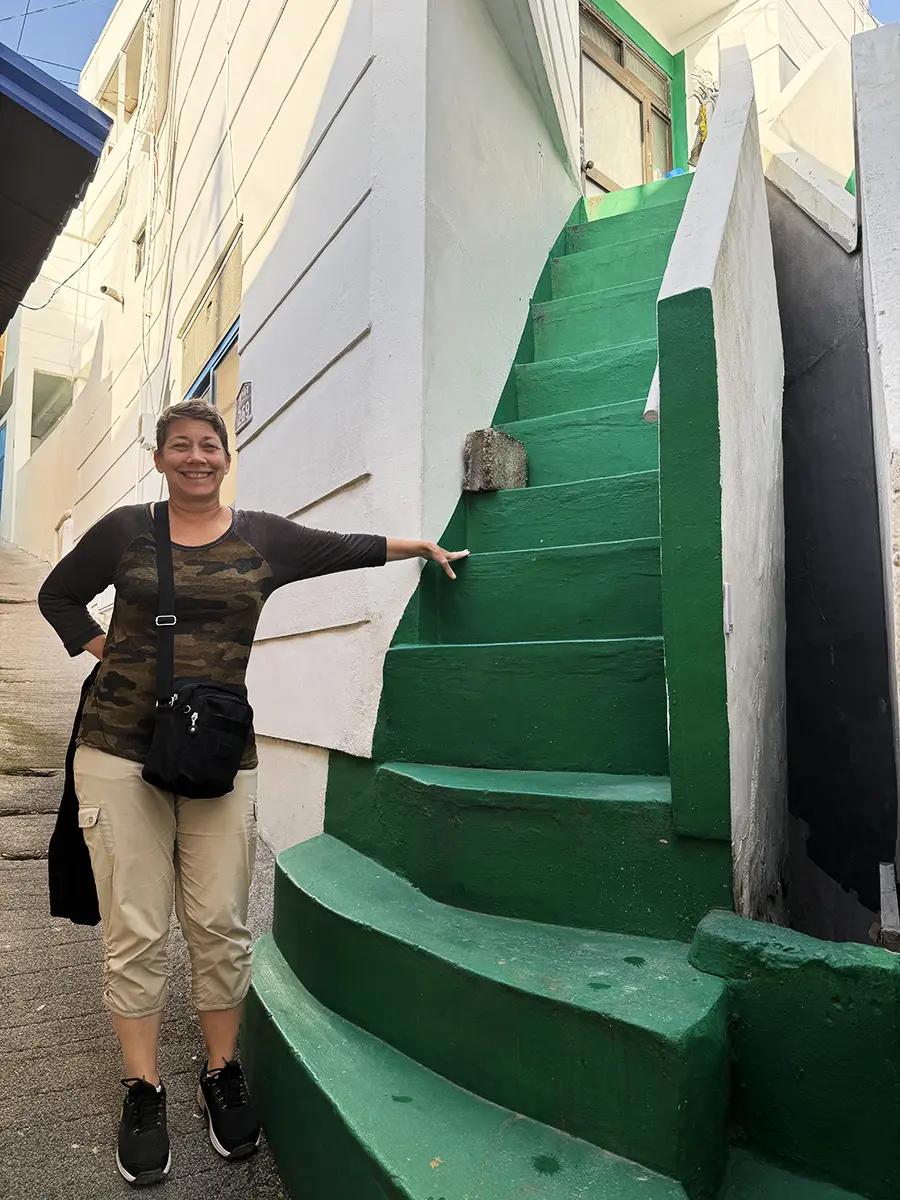
We started the day by catching a bus to Gamcheon Culture Village. Once a steep hilltop slum, it has been transformed over the last 20 years into a vibrant art community. Beautiful and quiet in the morning, the crowds started filtering in soon enough. The terraced streets riddled with stairways has been called the Machu Pichu of Korea. It began as a shanty town of make-shift homes housing wartime refugees. Today, brightly painted pastel houses, art installations, and murals, make this a huge open-air art gallery.
It's still a living neighborhood of over 8,000 people, and we felt deeply sympathetic to whoever has to deliver the mail here. Not to mention residents coping with hordes of tourists crawling over everything, like an invading army of ants (like us). We walked the unbeaten path up and down twisting alleyways, munching on fried chicken in a cup for the hike up to Gwaneumjeongsa - a tiny temple with a major view. It was tempting to keep going on the wooded trails that started here, but we still had much of the village to explore.
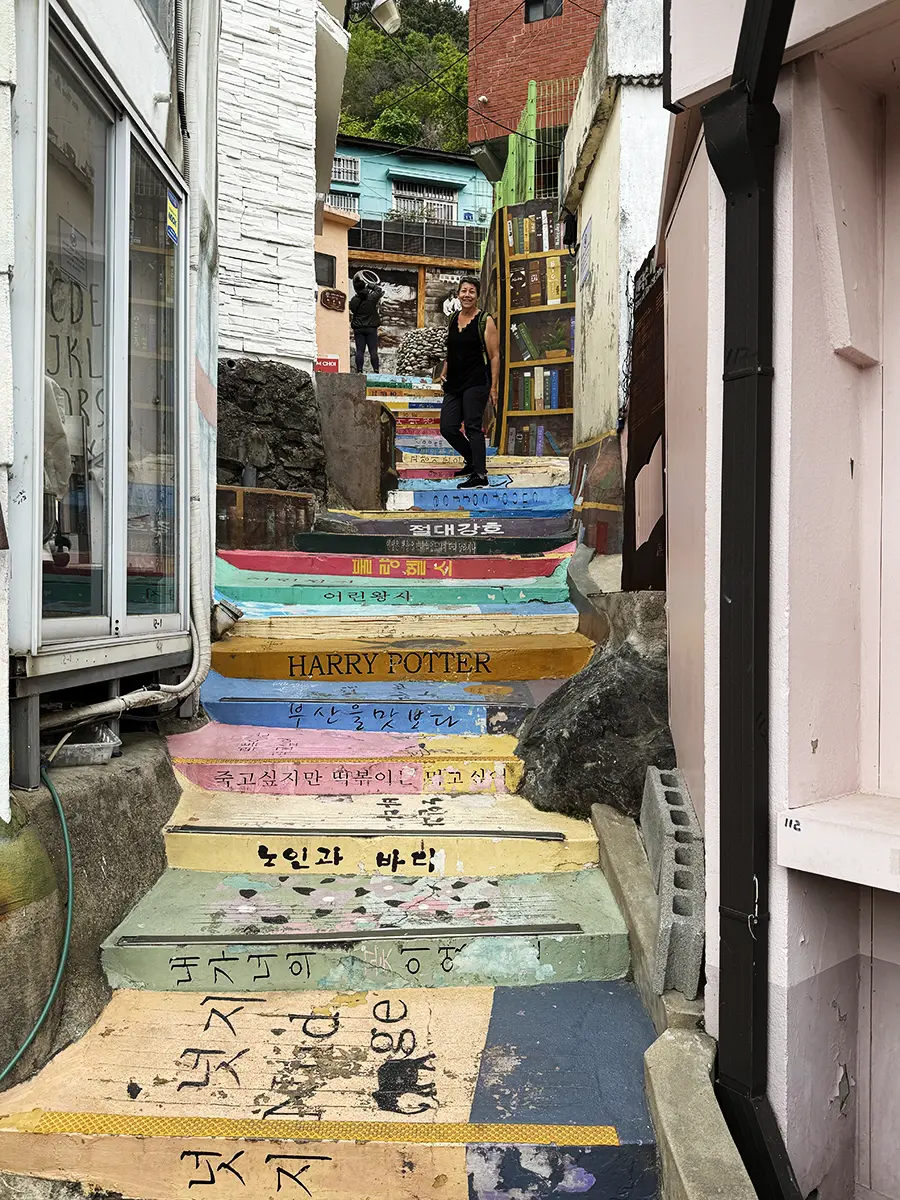
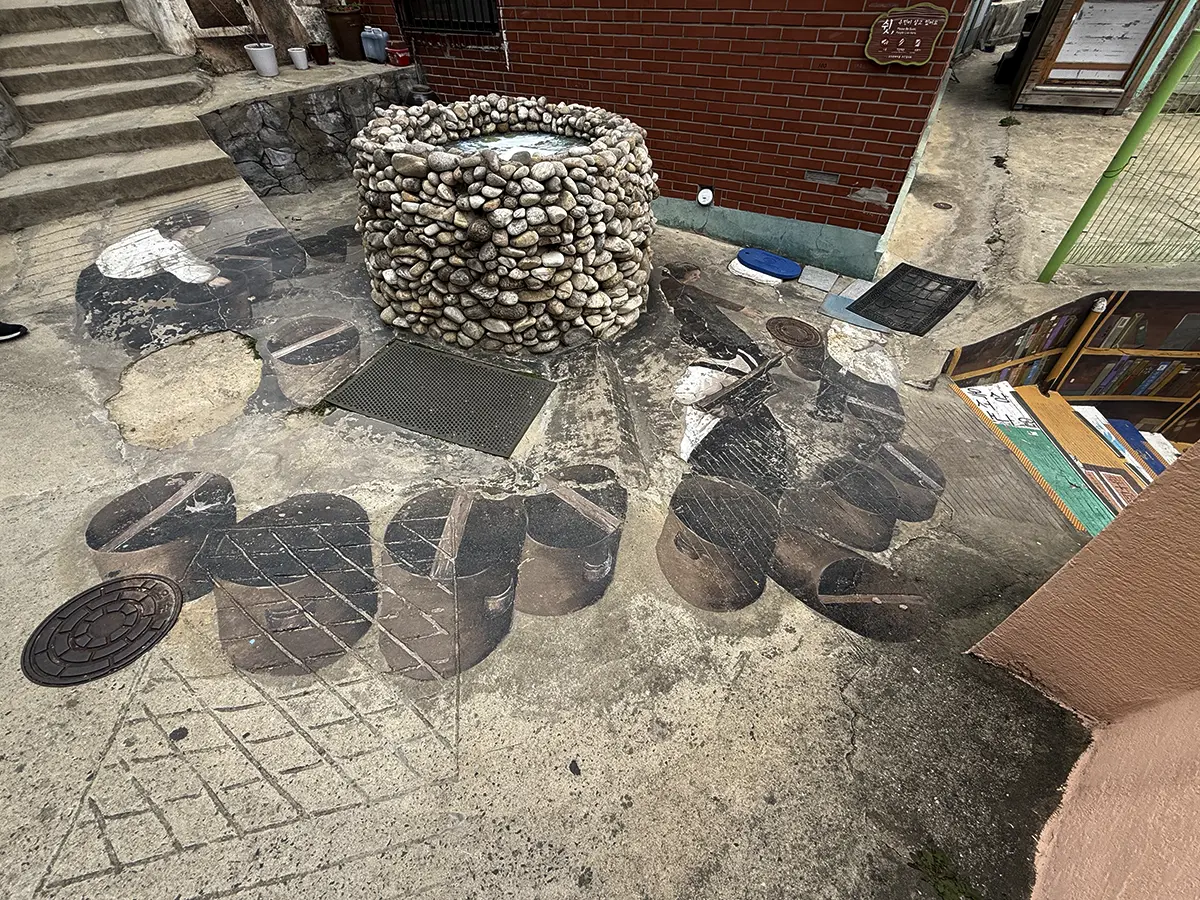
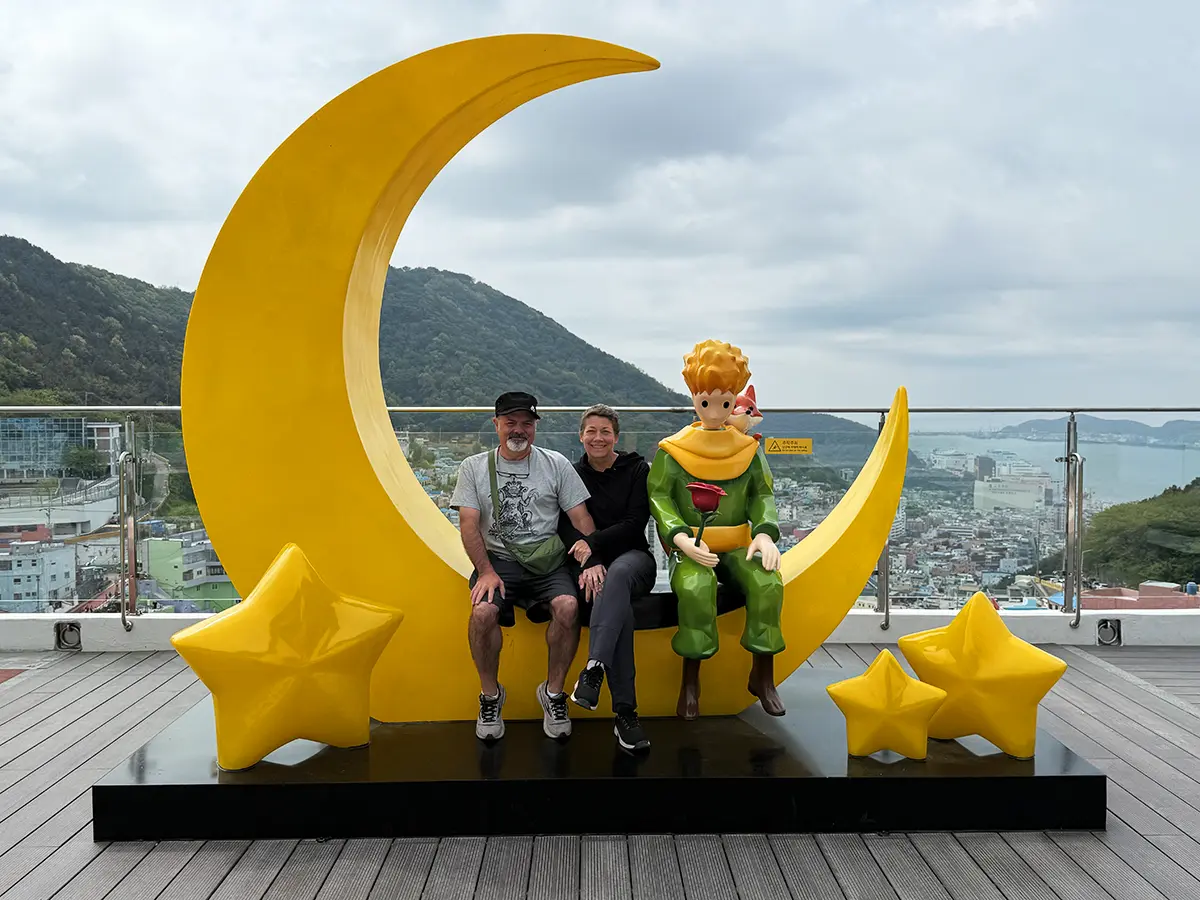
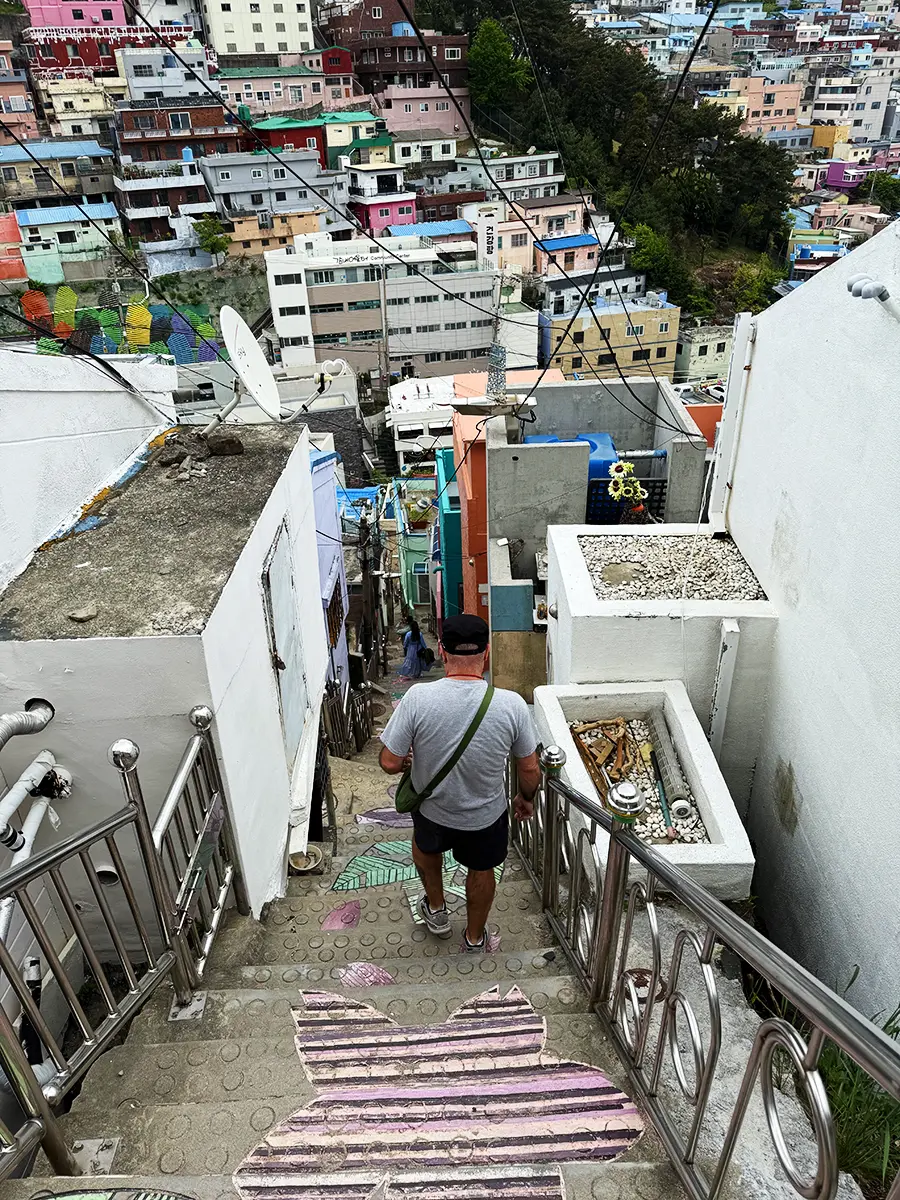
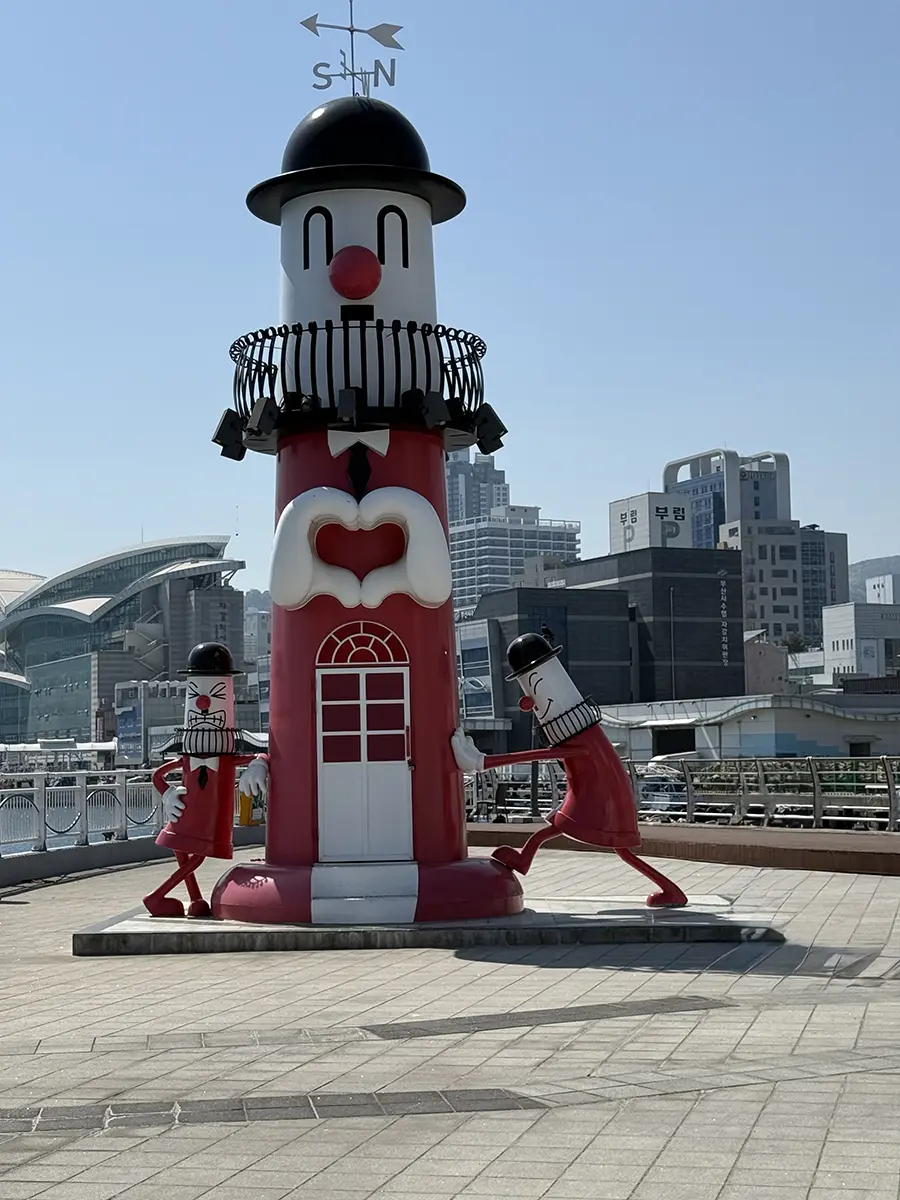
It seemed like everywhere we went there were references to The Little Prince (especially the famous statue here), but I couldn't find anyone to explain the connection. The Stairs to See Stars got its name because of the difficult trip back up from the 3 wells that used to be at the bottom (fortunately for me, struggeling with all the hills and stairs, we found ourselves taking the downward path). There is staircase painted to look like books, and another one decorated with fish. The whole place felt like falling down the rabbit hole - it was so much fun to be surprised by whatever appeared around every corner. But best of all was stumbling on the craziest coffeeshop in our travels so far: Duf Coffee.
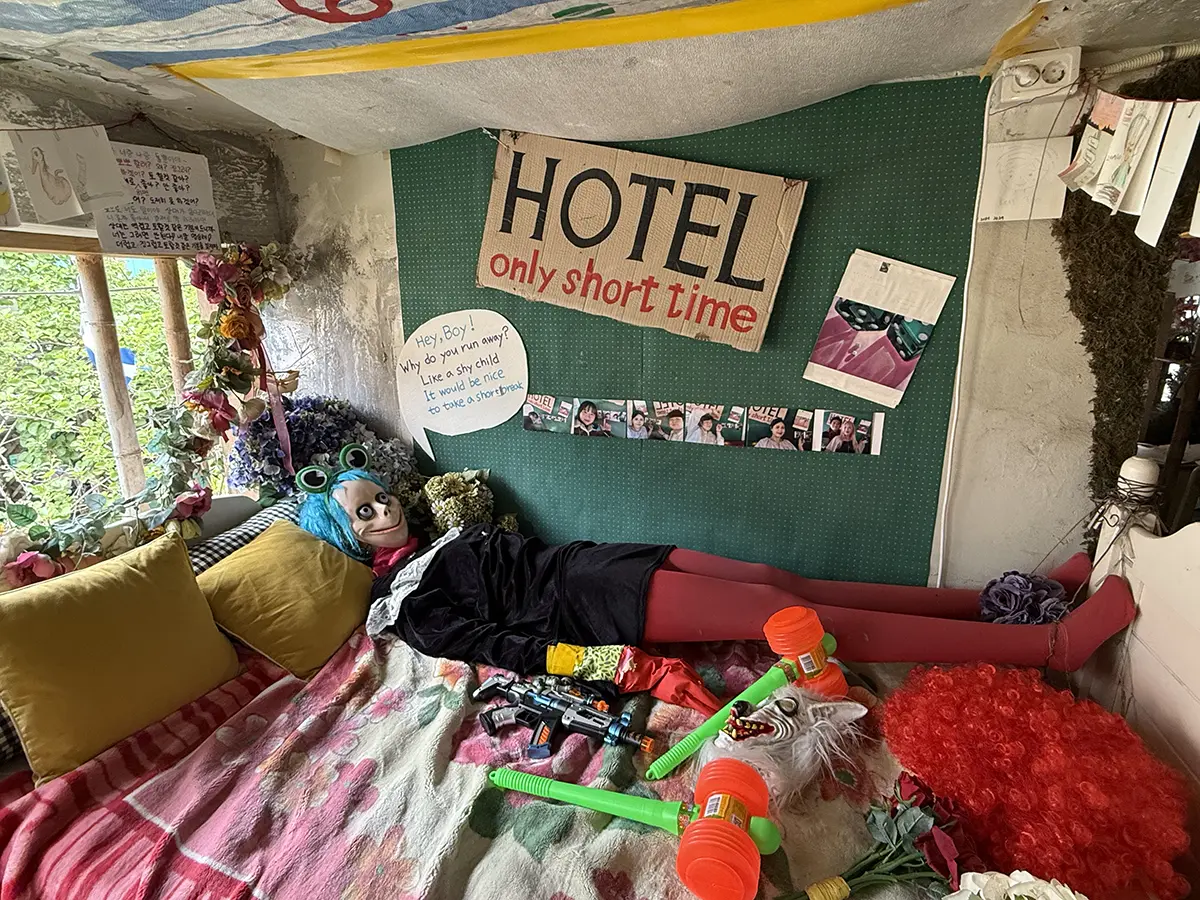
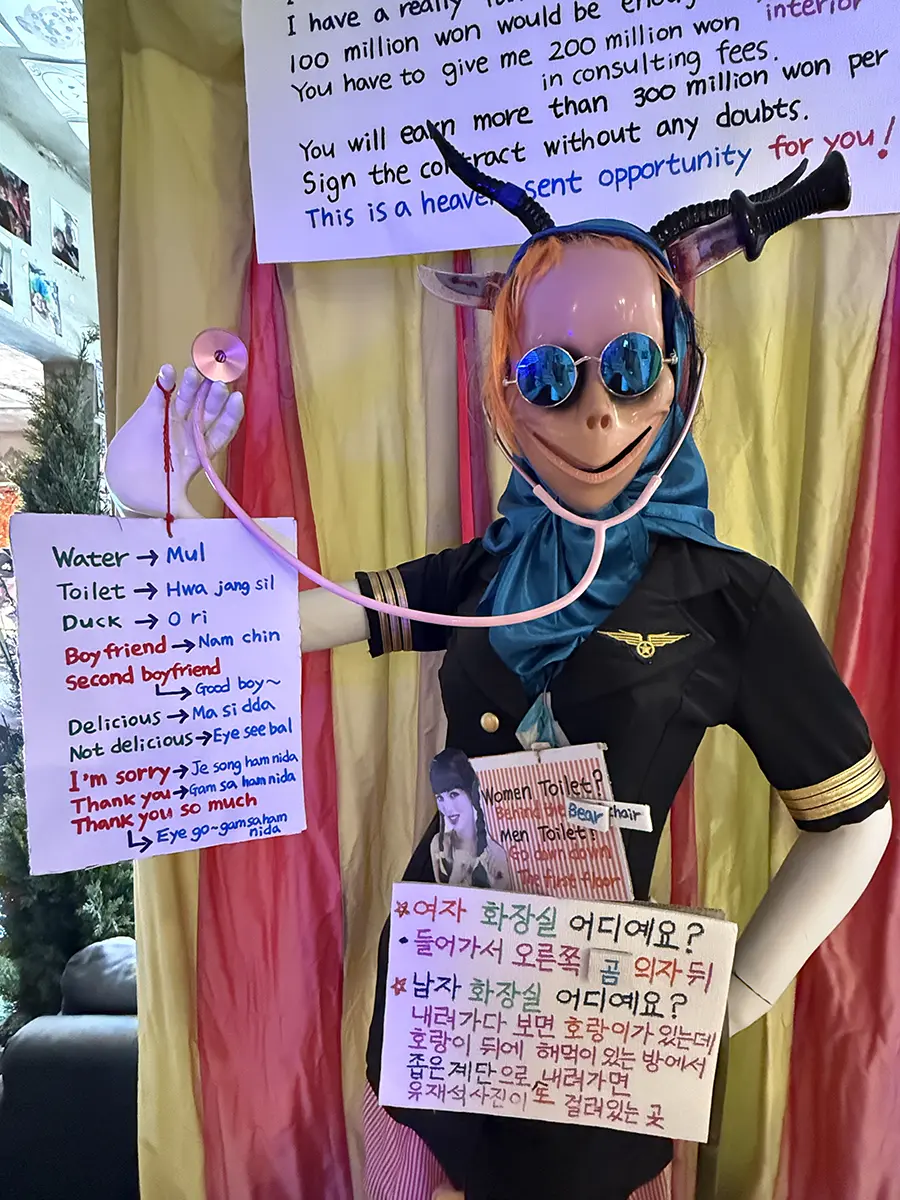
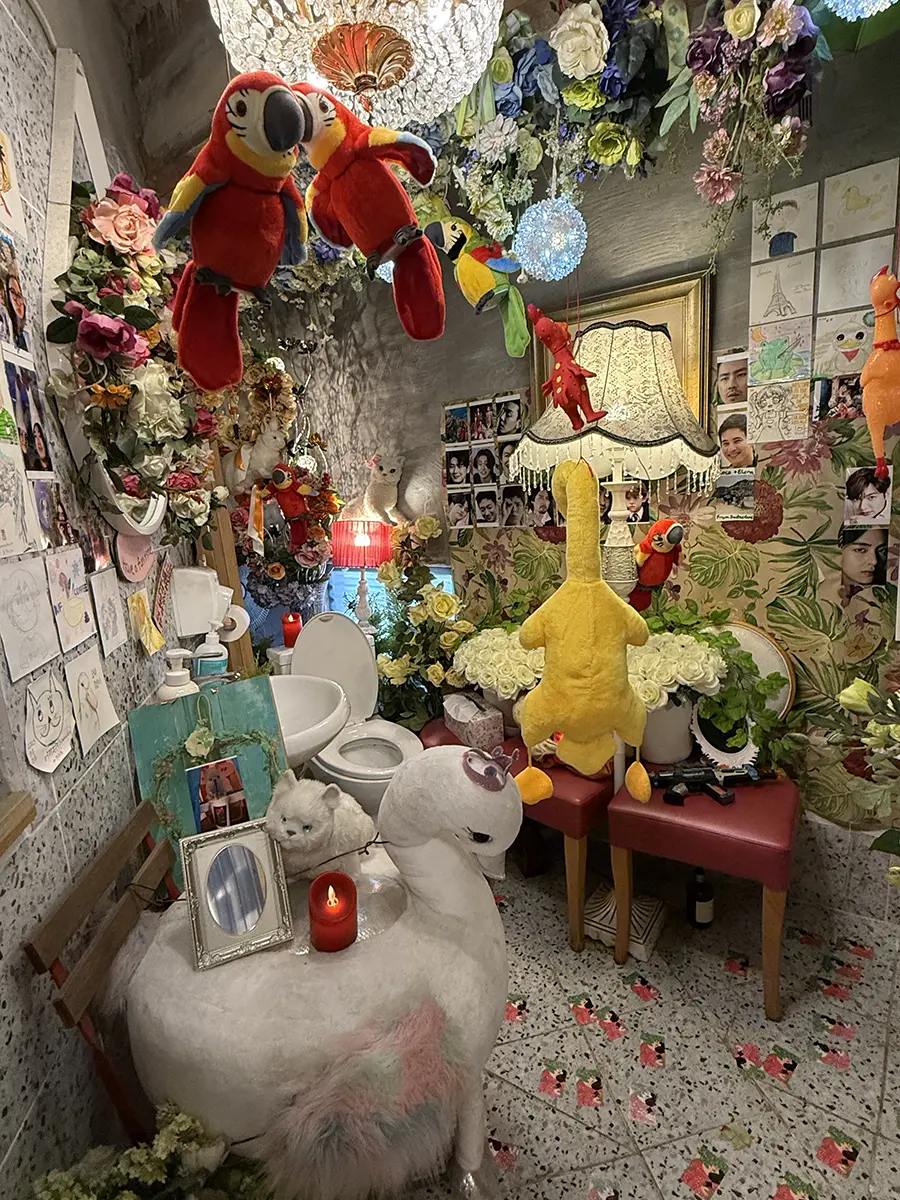
This place was chaos incarnate. Every room is different - wildly decorated with huge stuffed animals, creepy mannequins, and just about everything else you can imagine. You can play dress-up, shoot water pistols, lounge in hammocks, learn Korean, and draw on literally everything. Your coffee comes with a packet of treats to feed the resident ducks - if you can find them. To do so you must navigate a 2-story, somewhat treacherous spooky maze. We could see them in the courtyard at the bottom, but it still took us like three tries to locate the actual door. Somehow we found a blank spot on a wall to leave our mark (next to "Jack the Ripper" - haha), and went to the rooftop for great views - and of course more toys to play with. This place alone was worth the excursion.
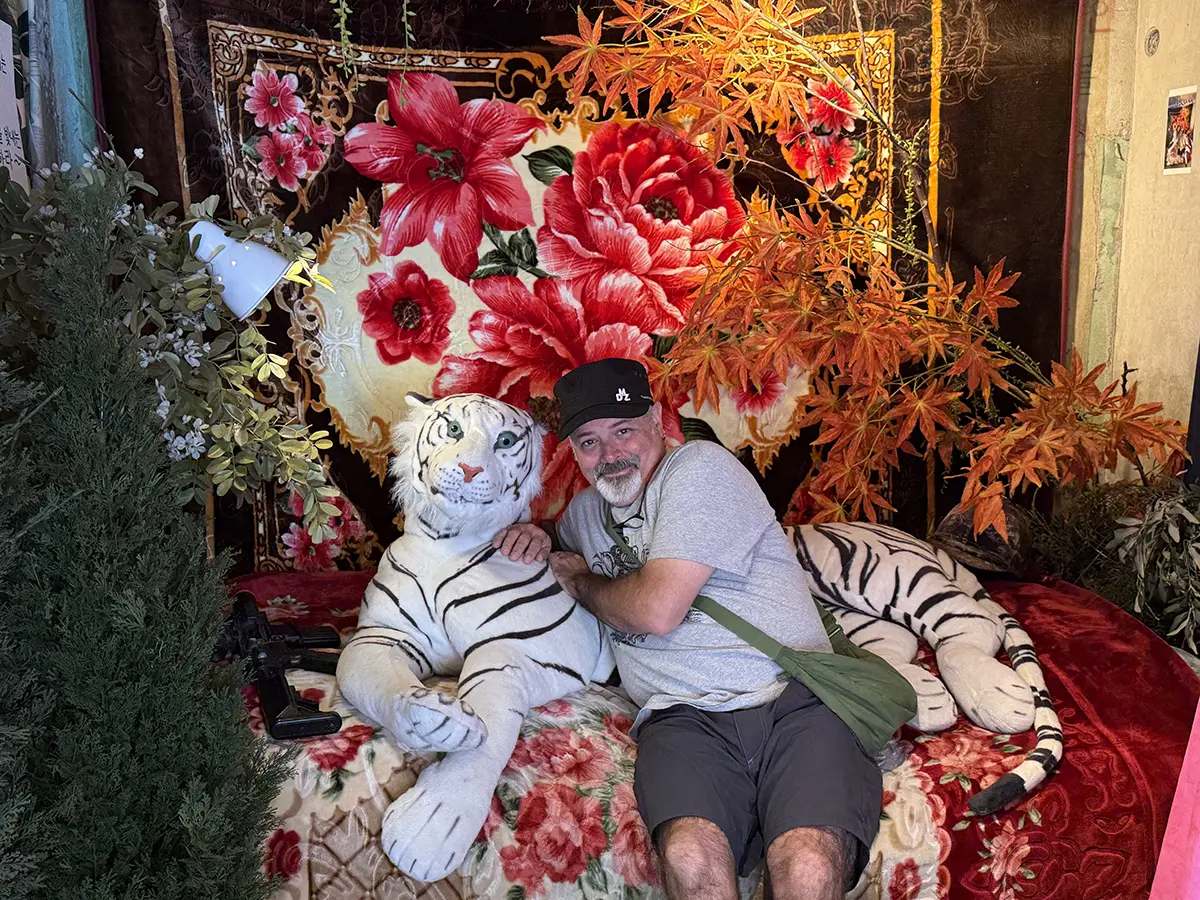
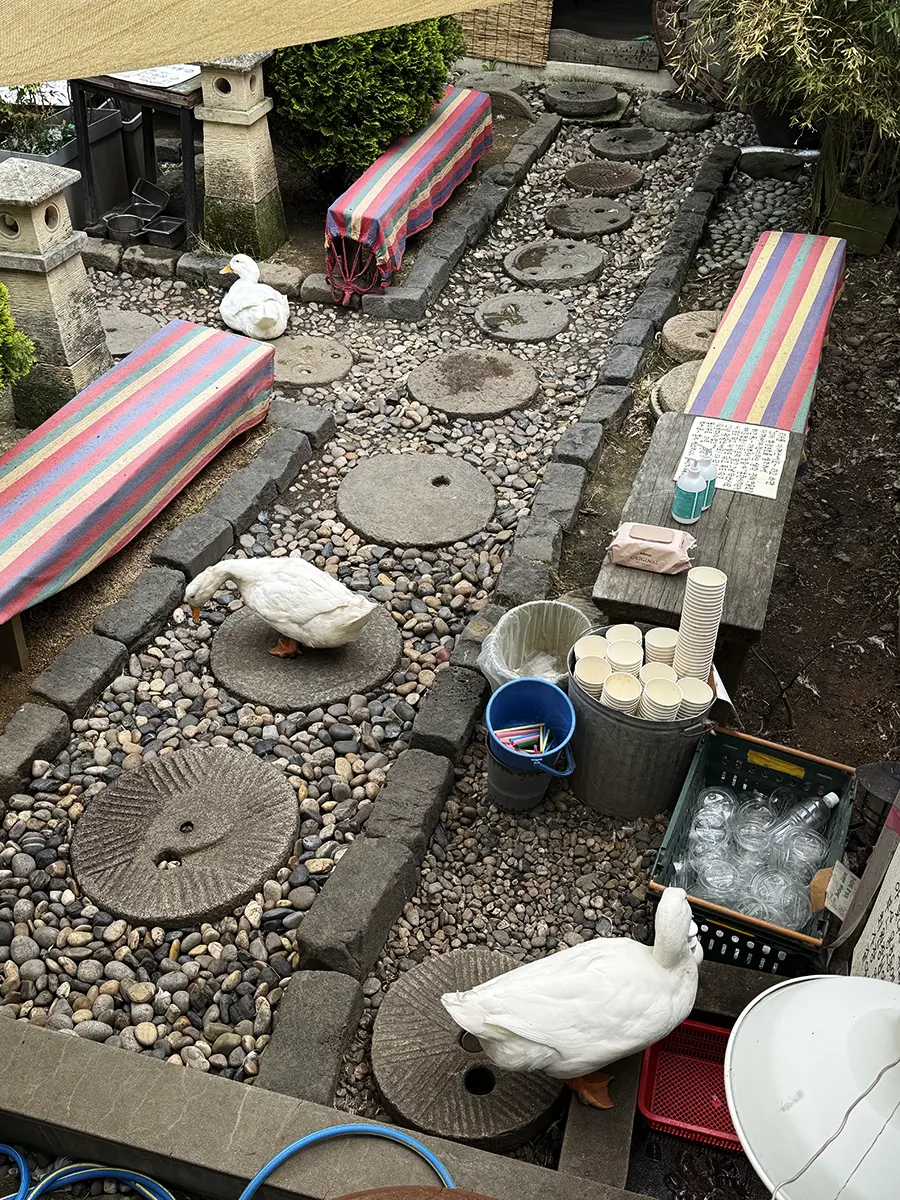
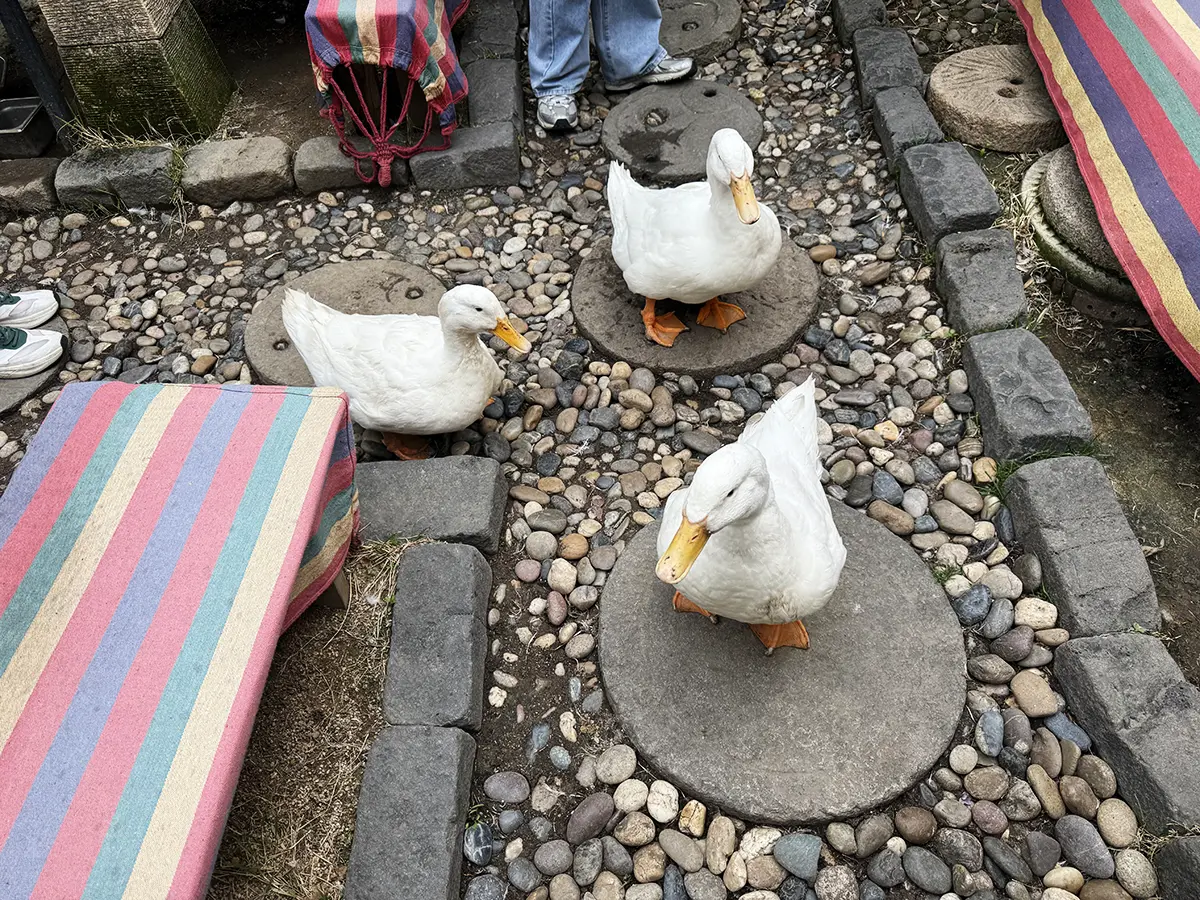
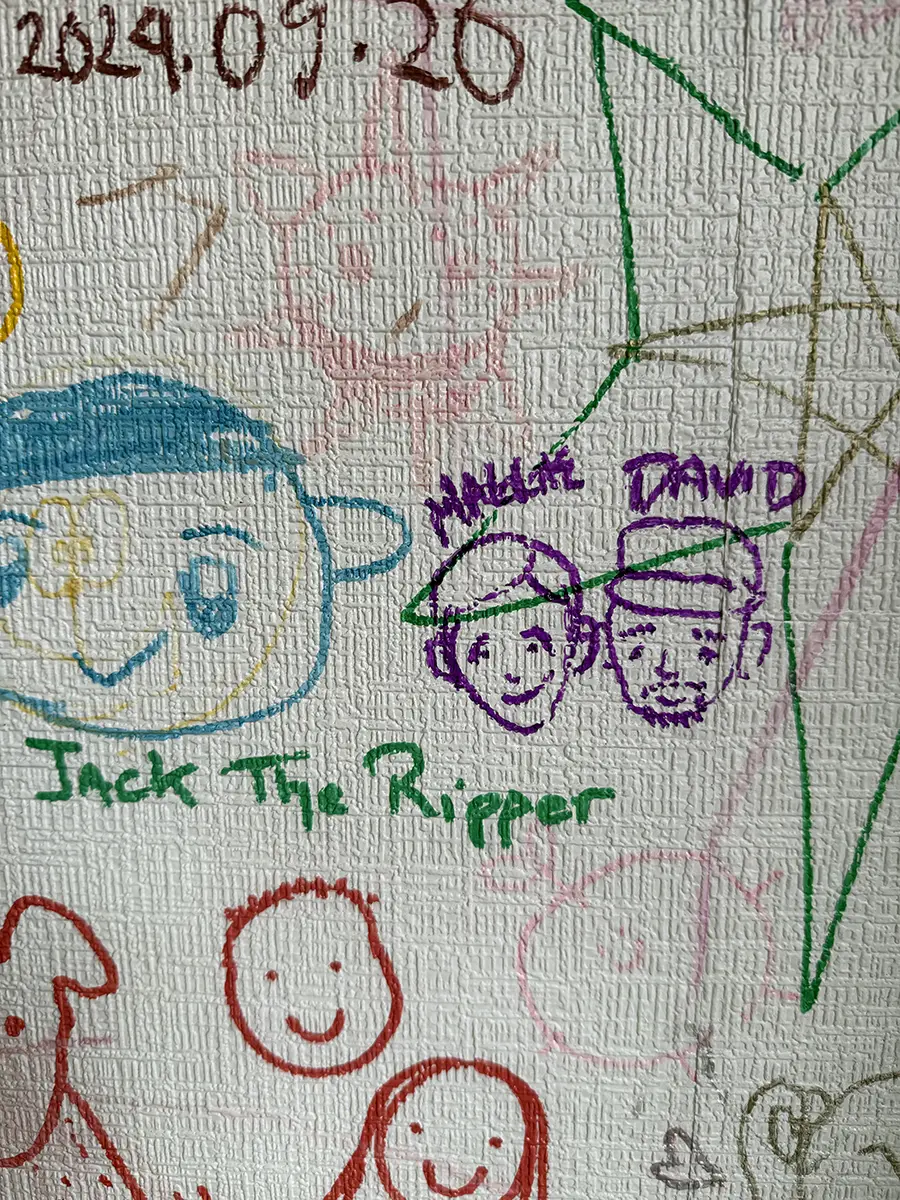
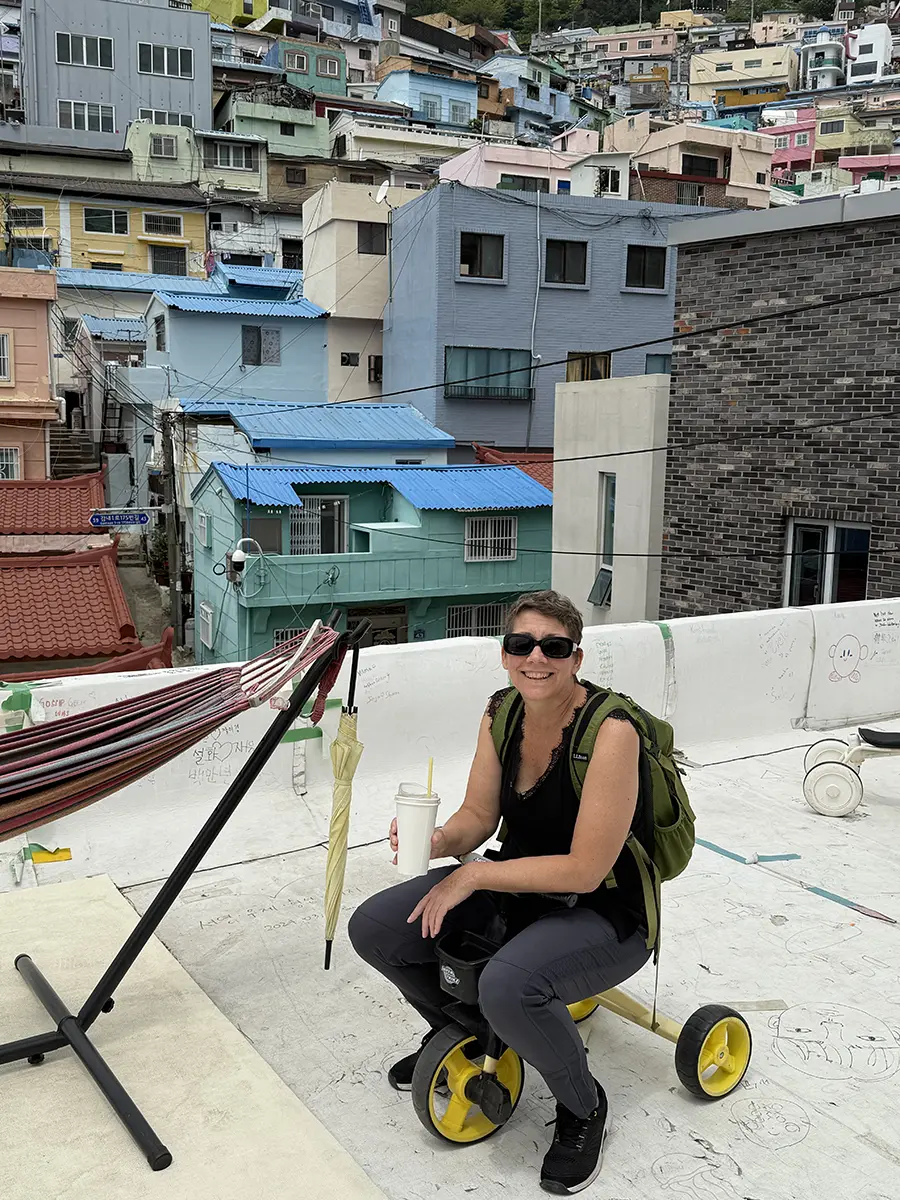
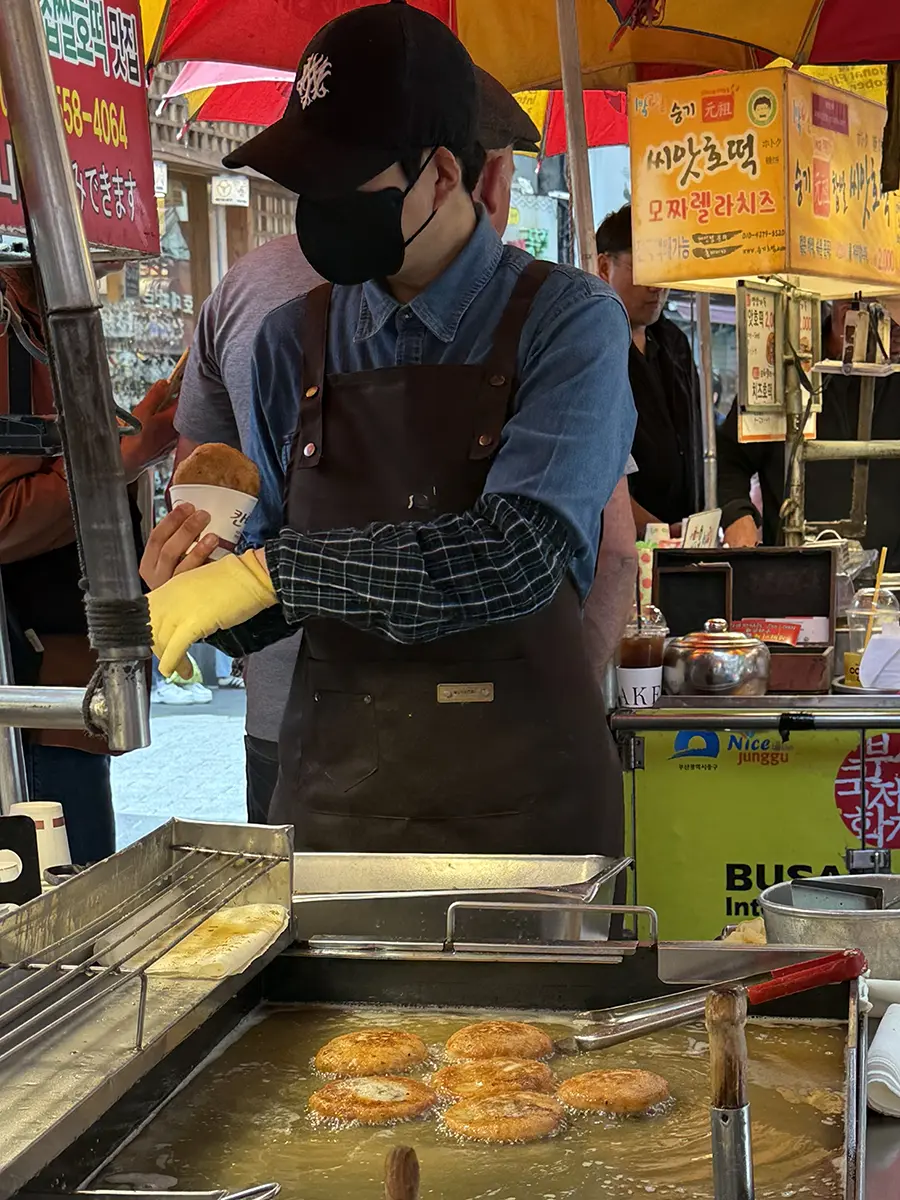
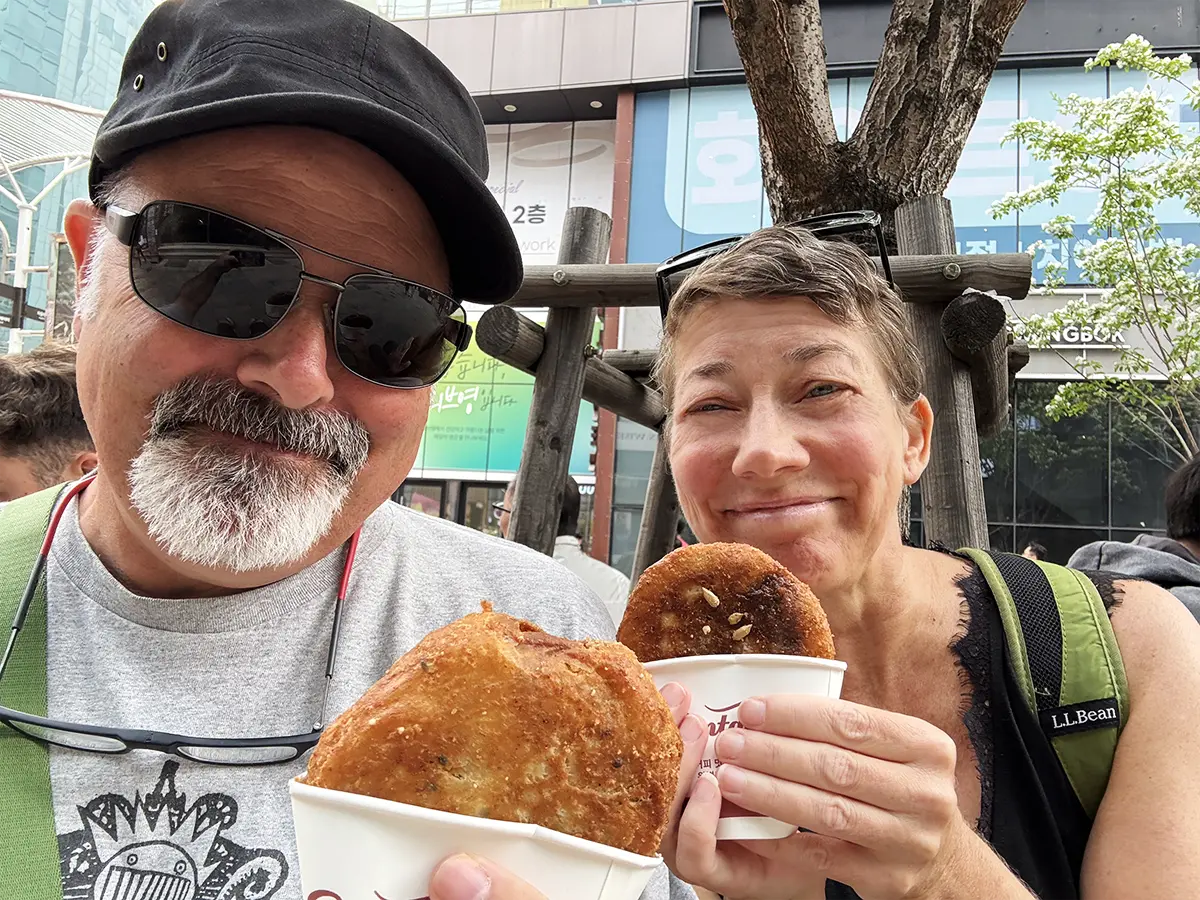
On our way "home," we stopped back at Gukje market to get a rare souvenir (a taekwando jacket for our favorite dog, Tank), and to check out a pretty cool board gaming café. We finally bussed back to Nampo for street food, munching on corn dogs, veggie "sushi" rolls and hotteok - our new food obsession. A long line of customers stretched from a busy cart, so it seemed like something we needed to try. Pan-fried yeast dough stuffed with a brown sugar is cut open and stuffed with a seed and nut filling. So good! We walked back along the harbor to our hotel for a nap before the rain set in. Great timing!
Haeundae District
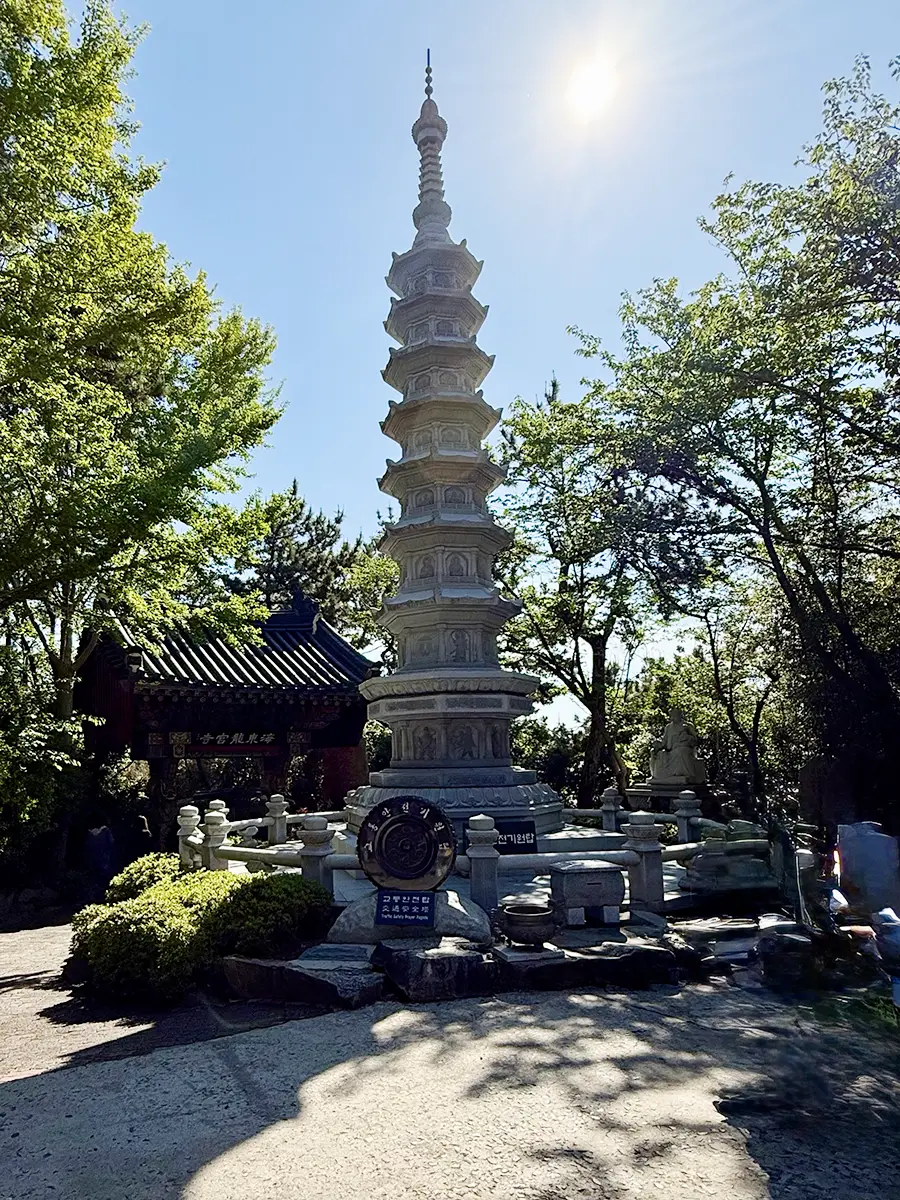
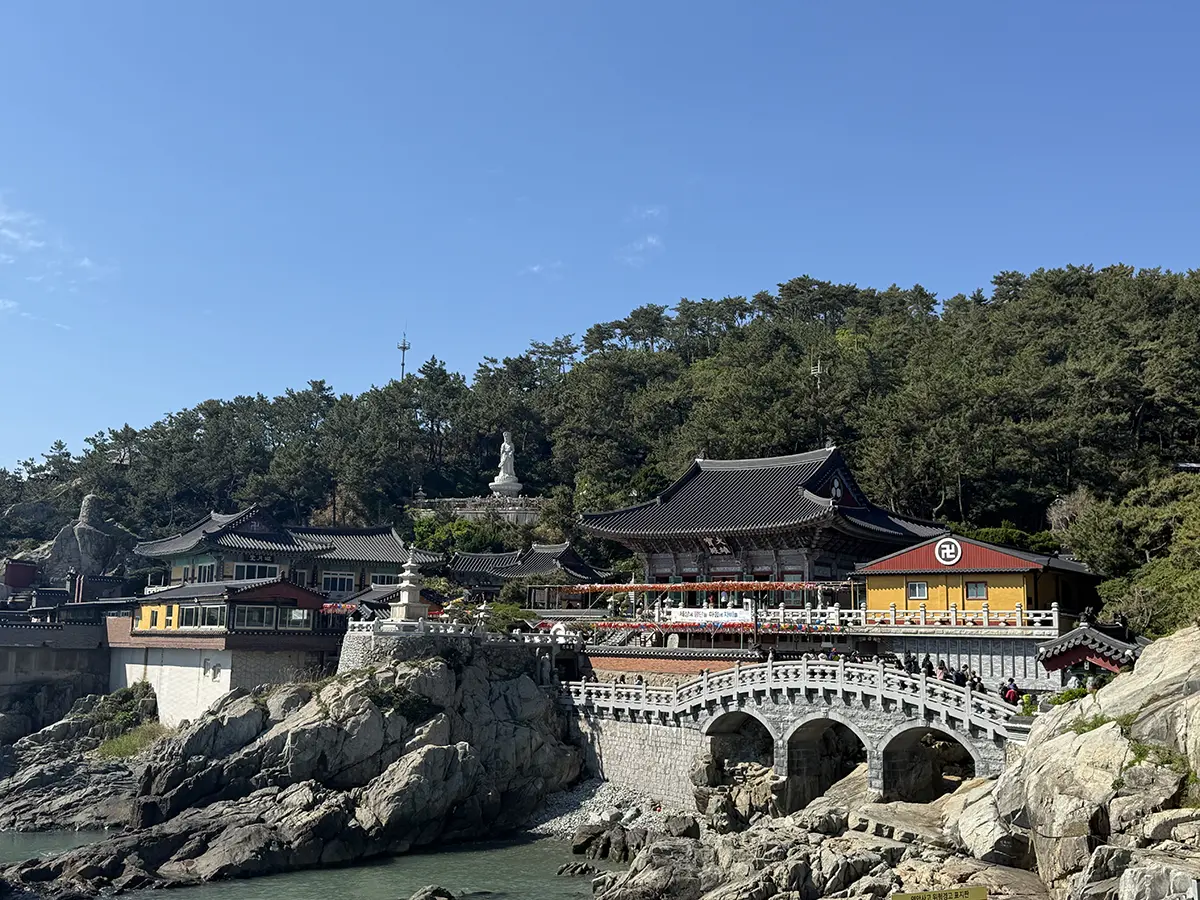
We had breakfast in our room, taking advantage of our fantastic view. Then we bussed to Haedong Yonggungsa temple, or "Dragon Palace Temple of the Sea." Rare for being built on the ocean shore, it is considered one the most beautiful in South Korea - it definitely has to be the most crowded. It's approached by a long path through the woods lined with statues of the Chinese zodiac. You then pass by a pagoda dedicated to traffic safety (adorned with a large hubcap) and descend a symbolic 108 steps (for the 108 illusions proper to the mind), through a bamboo and rock tunnel, to finally face the sea. The view is truly stunning - even with hordes of people. I don't think there's any such thing as beating the crowds here. Framed by rugged coastline, the main temple sits among the cliffs, accessed by a picturesque bridge. Off to one side, a large golden Buddha sits gleaming in the sun.
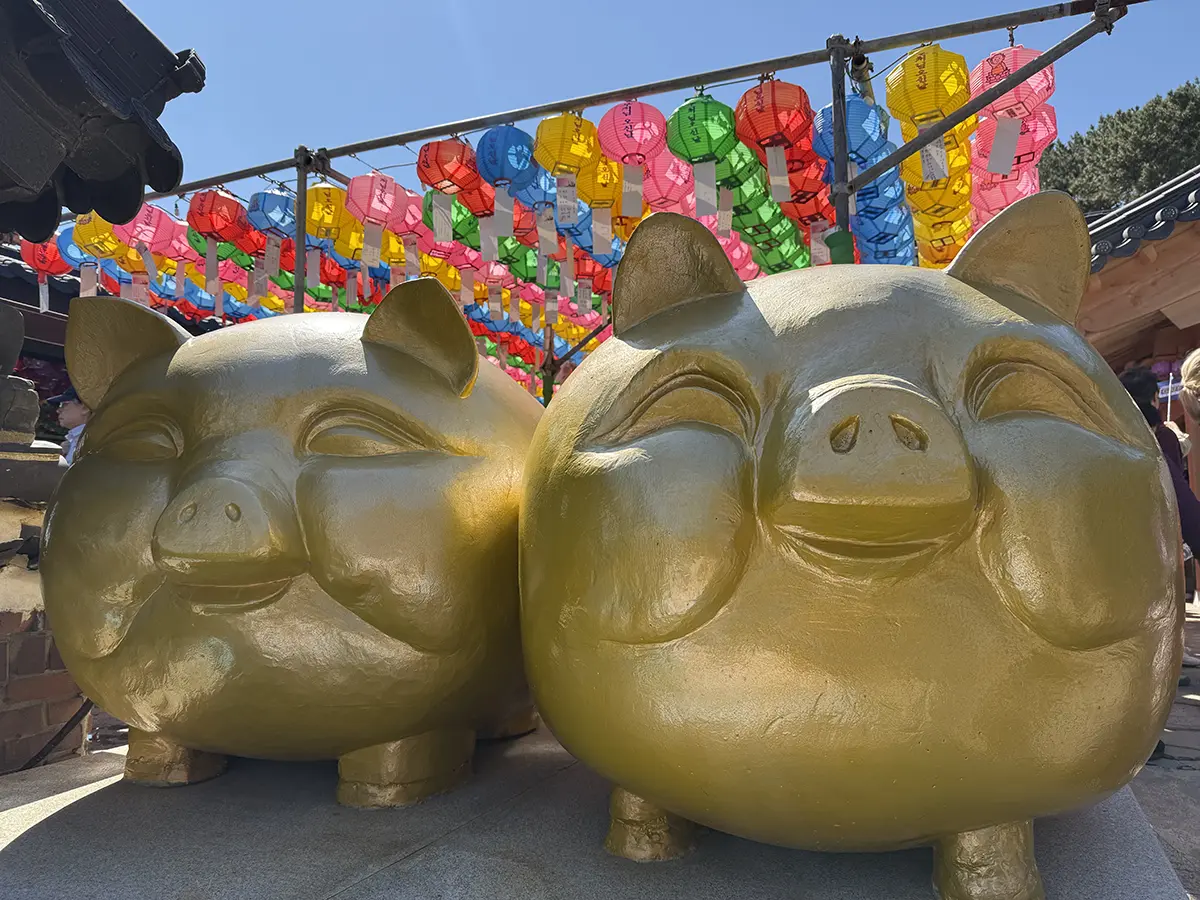
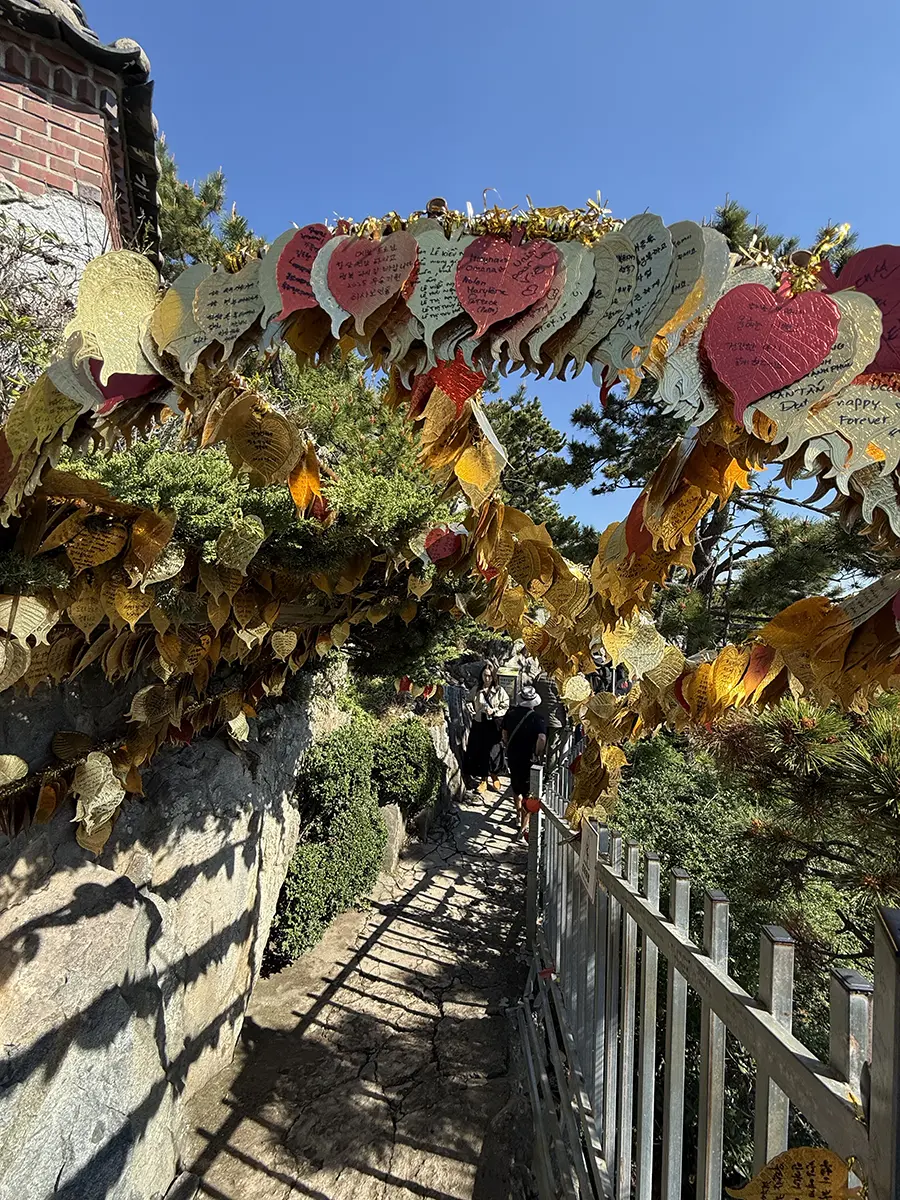
The temple buildings are situated on the hillside in the constellation-like shape of an enormous dragon, including an underground cave with a sacred freshwater spring. The golden leaves of the wishing trees and the overhead lanterns danced and sang in the stiff breeze. We have been to many temples, but this one lived up to the hype. Above the parking lot, we explored the "healing walk" through a bamboo forest. Sadly, the observatory was closed for some kind of work. Moving on, we got some more hotteak from the parking lot food trucks, and hit the bus to Haeundae beach.
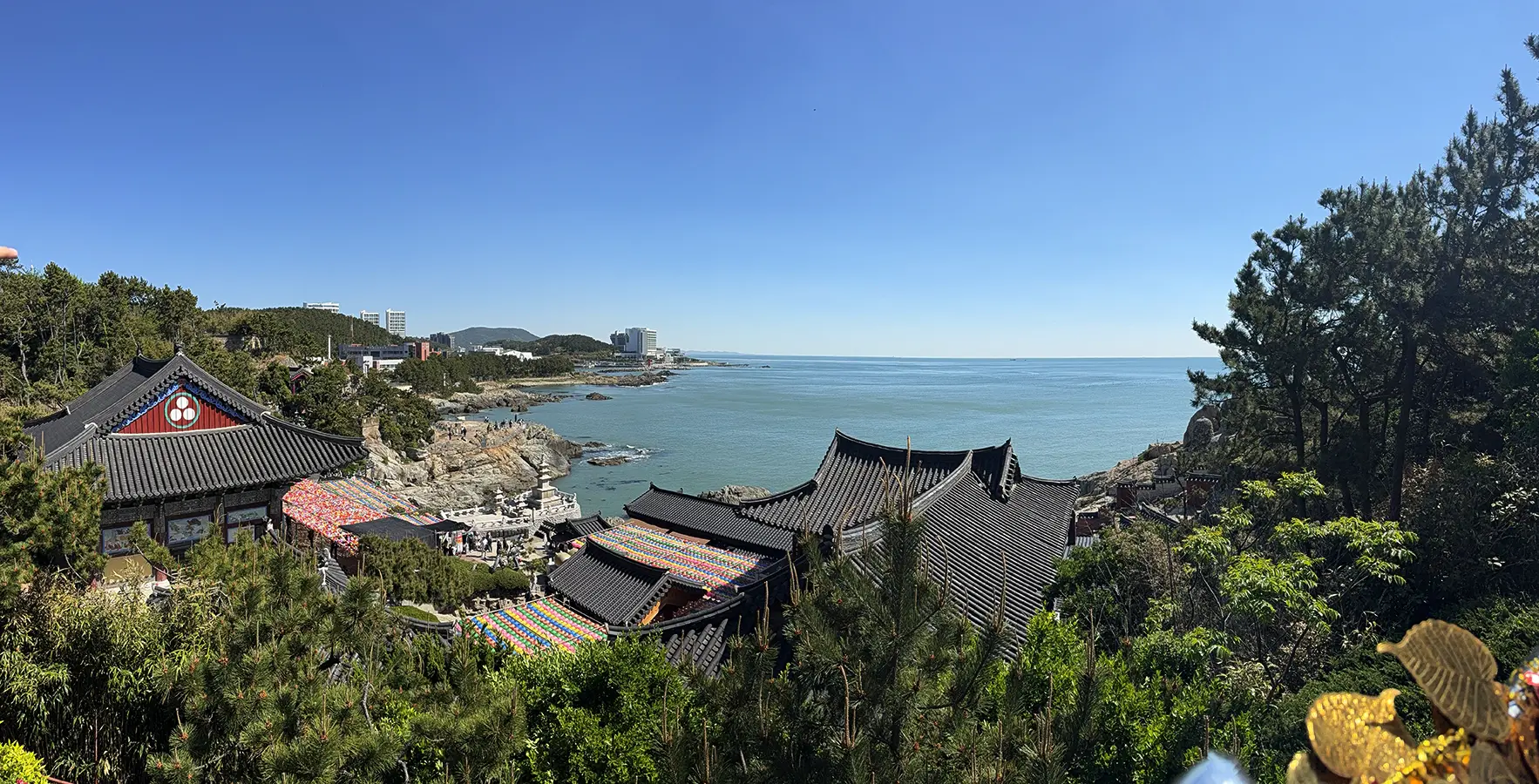
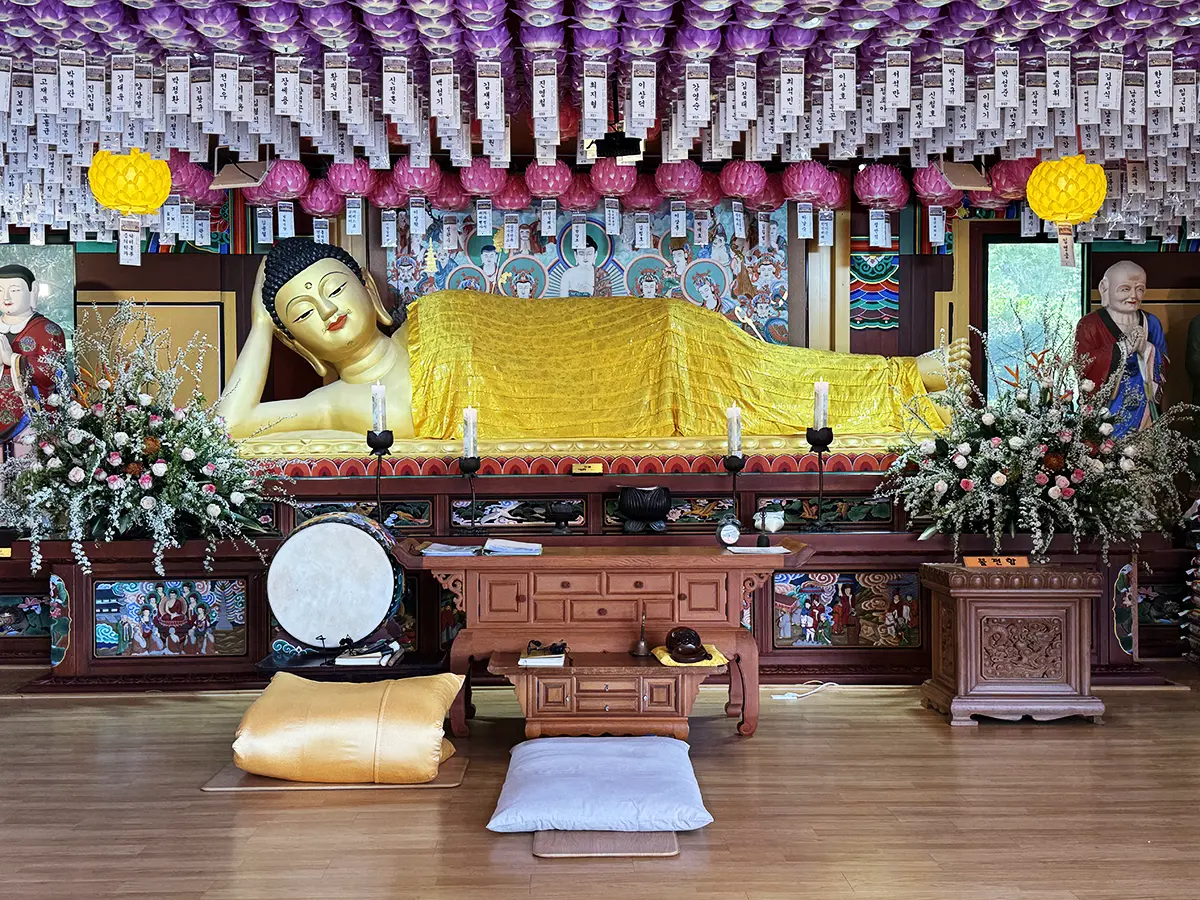
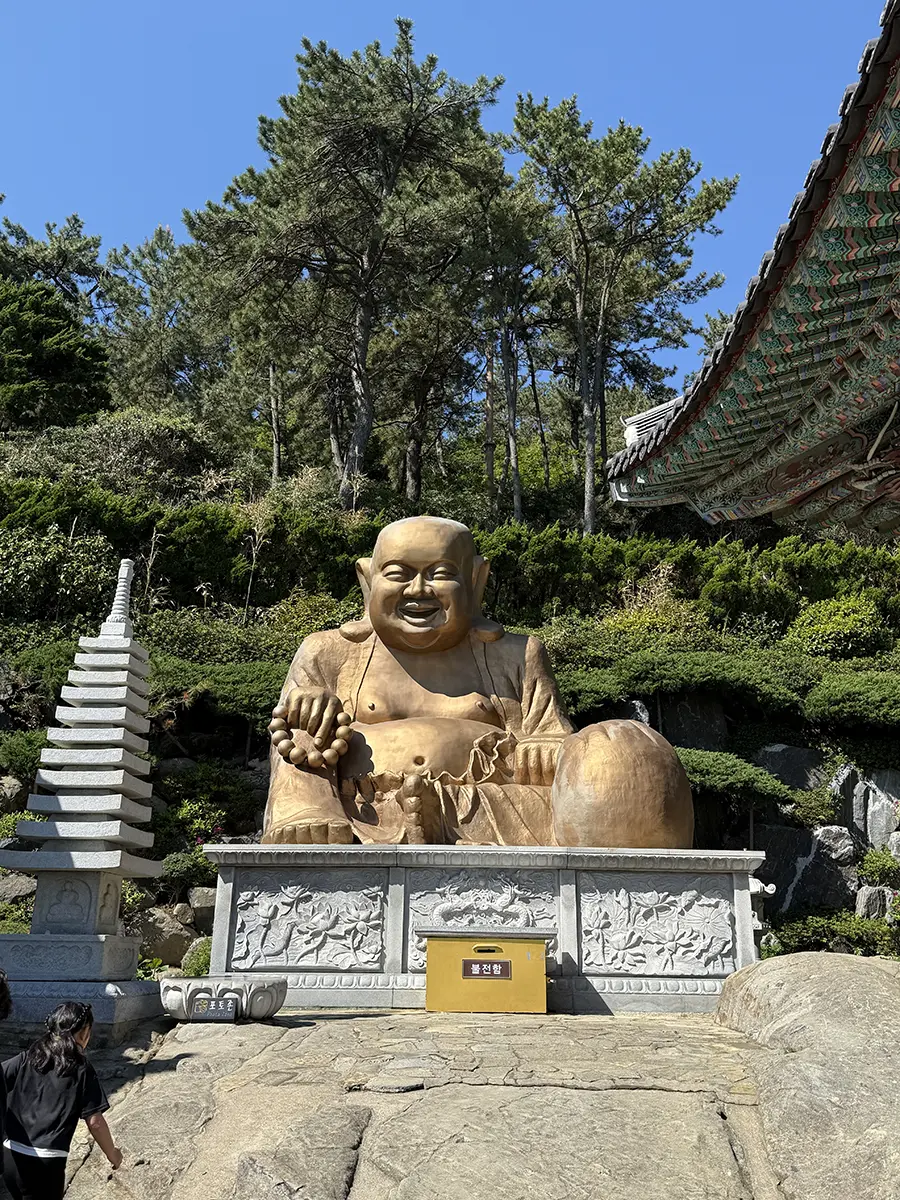
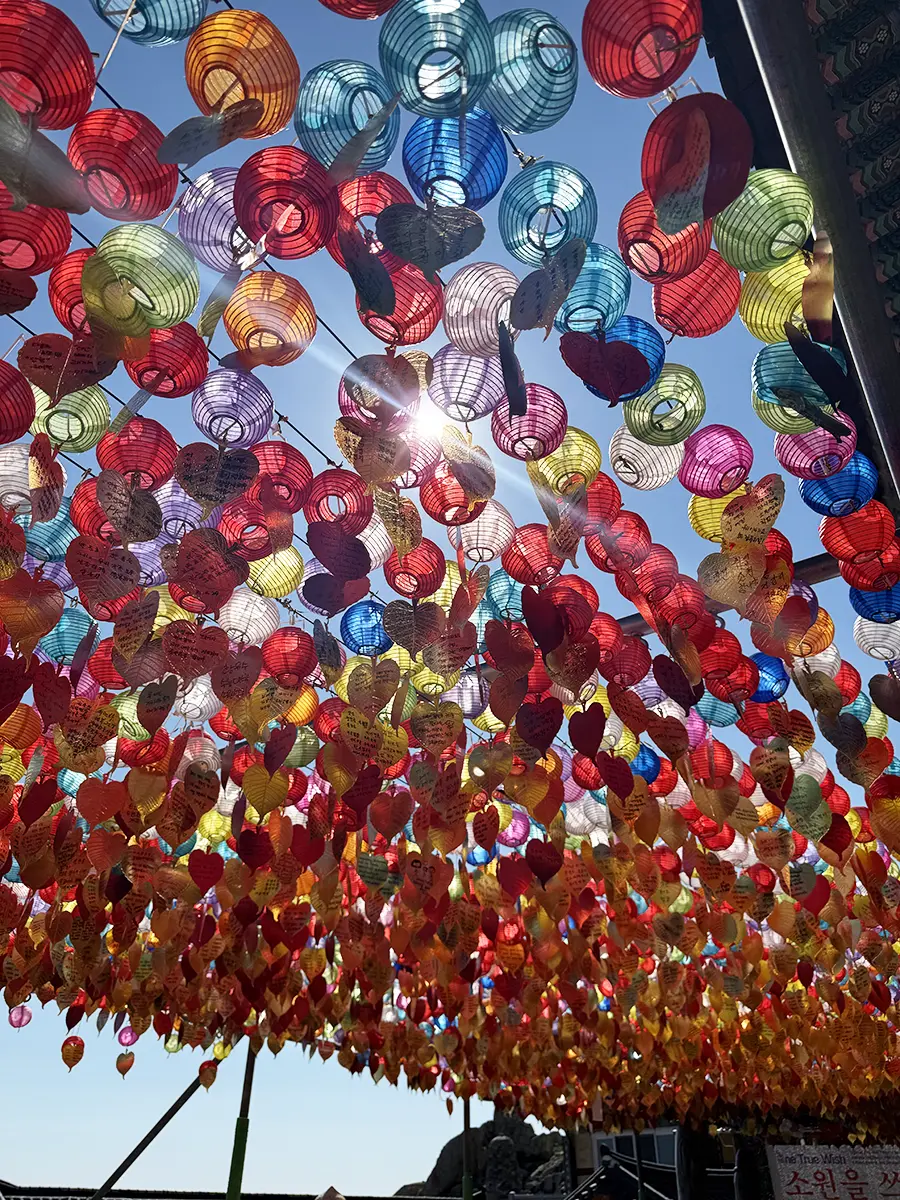
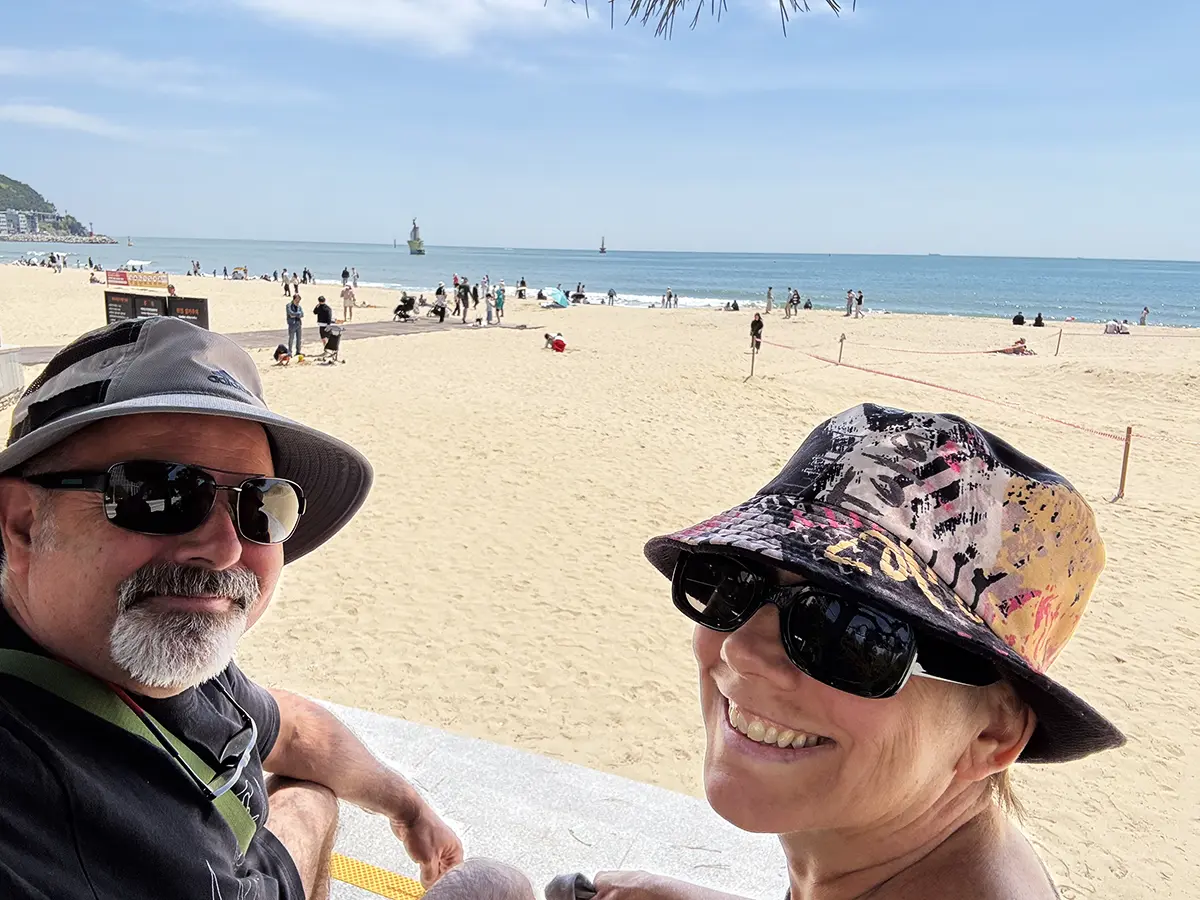
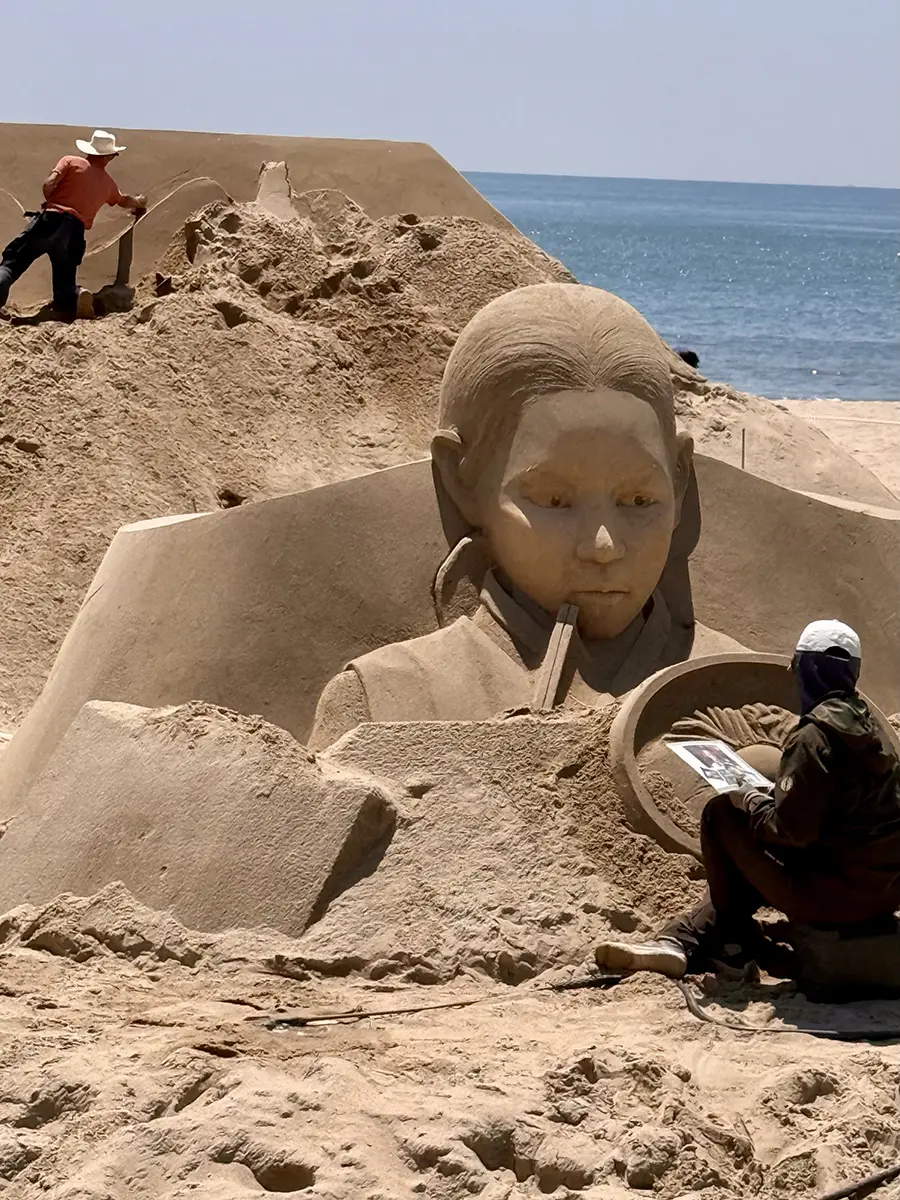
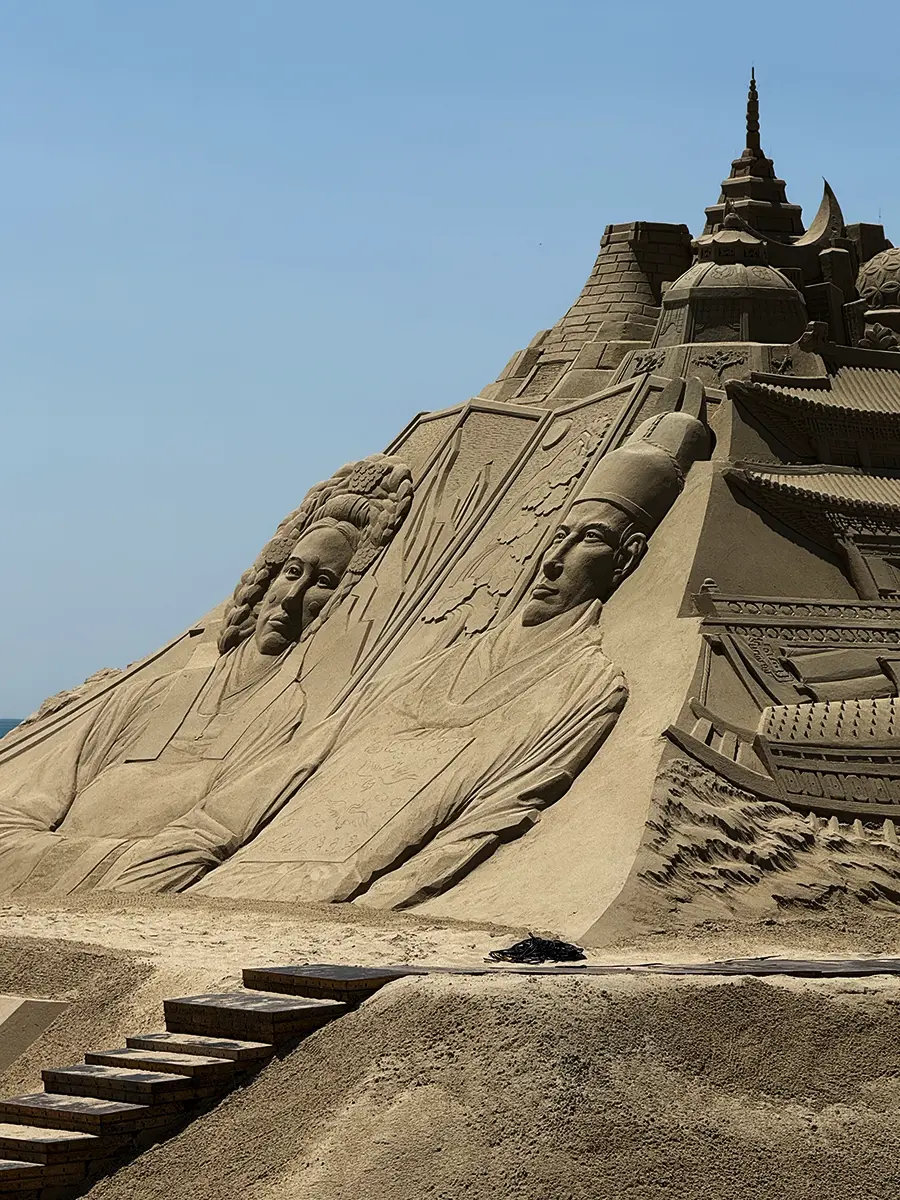
Once again we had wandered unknowingly into something incredibly cool - the beginnings of the Haeundae Sand Festival. Massive sand pyramids built over a base of shipping containers were in various stages of completion. The skill and intricacy were incredible. We wandered the beach gawking, stuck our feet in the (very cold) East Japan sea, and had some great craft beer at Gorilla Brewing.
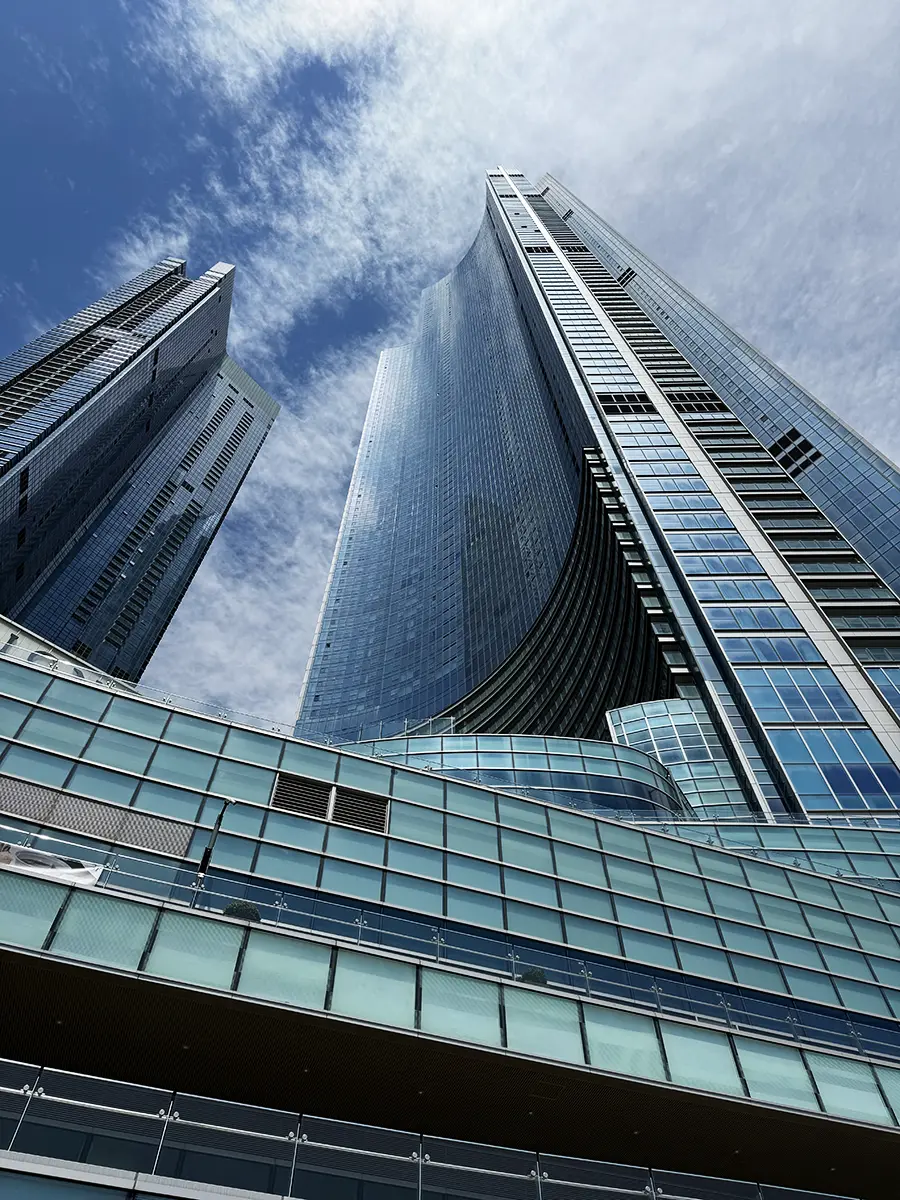
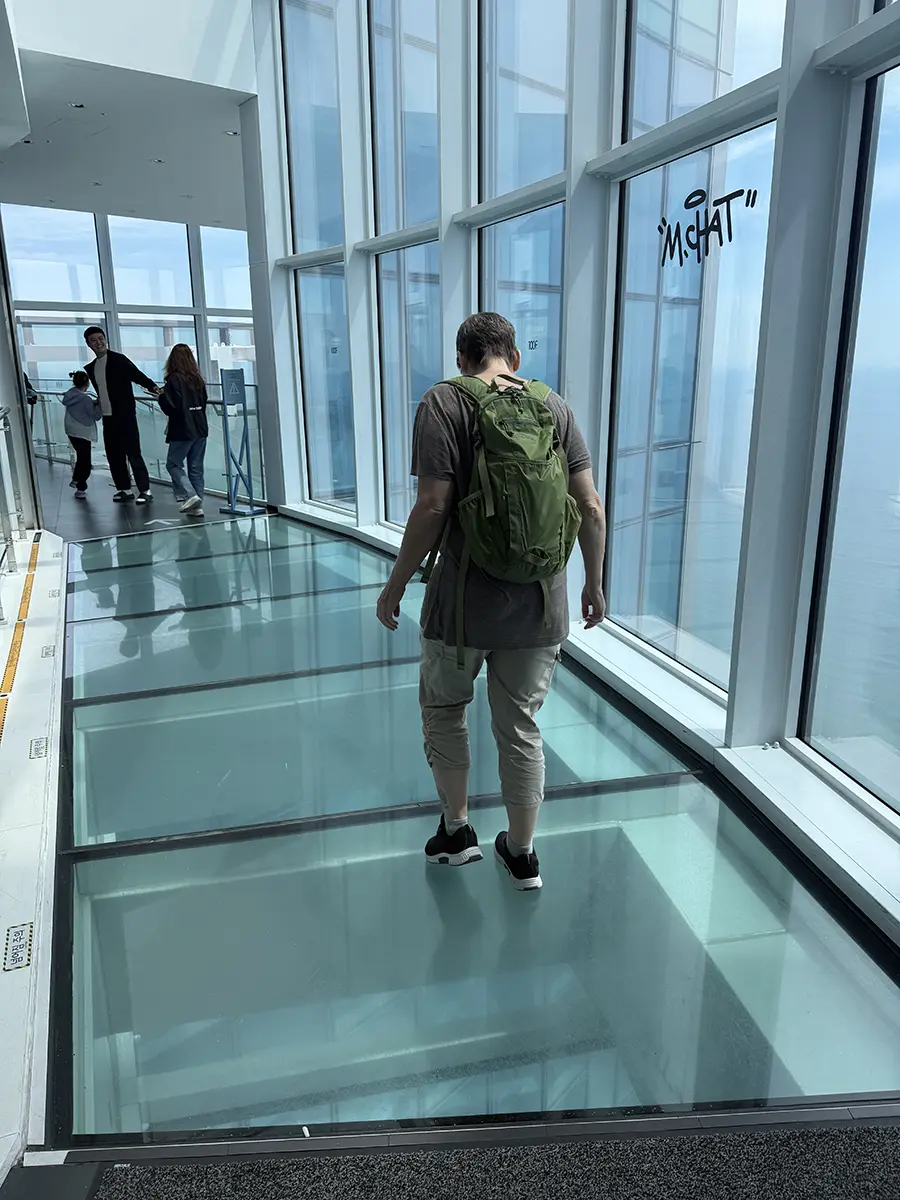
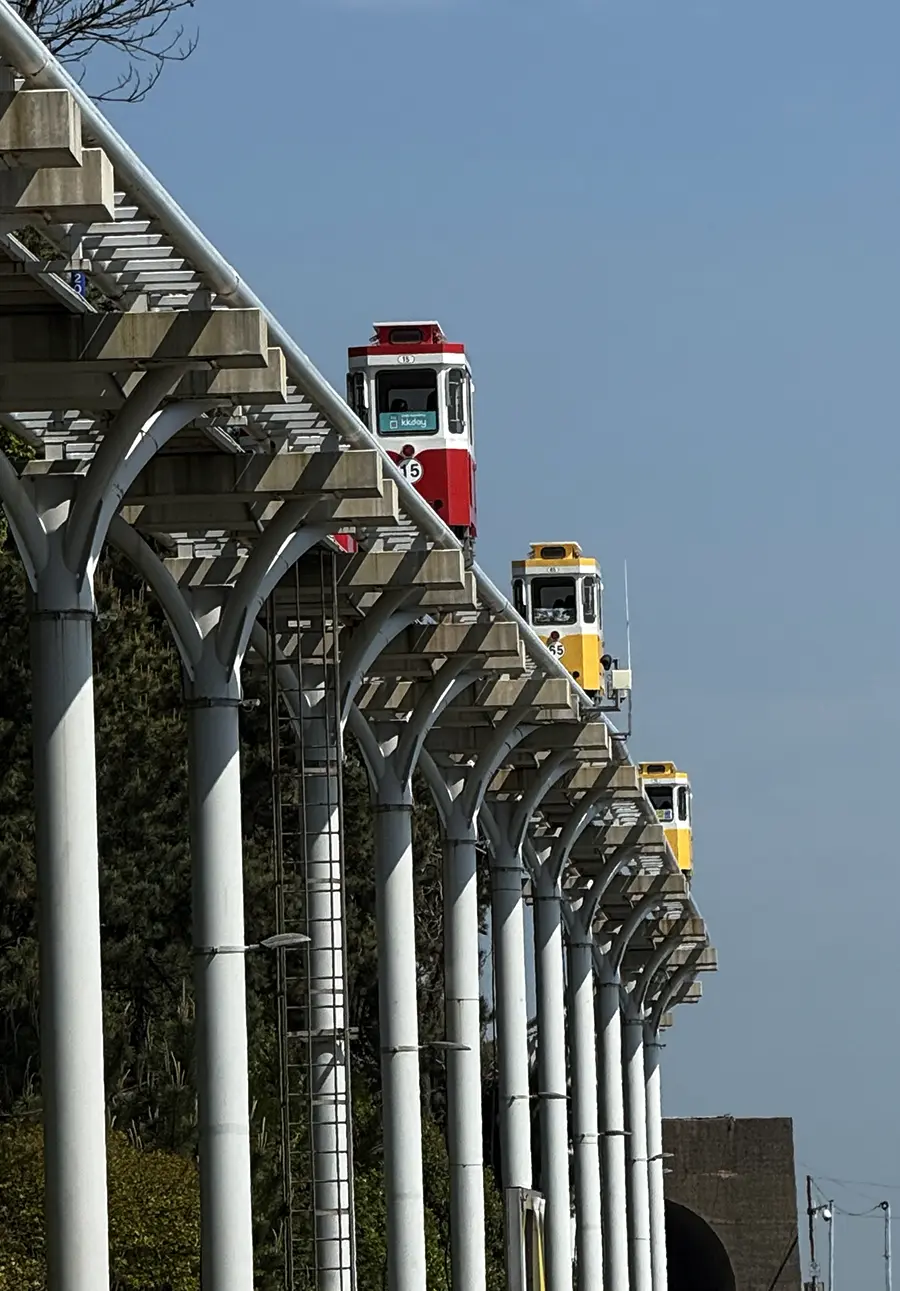
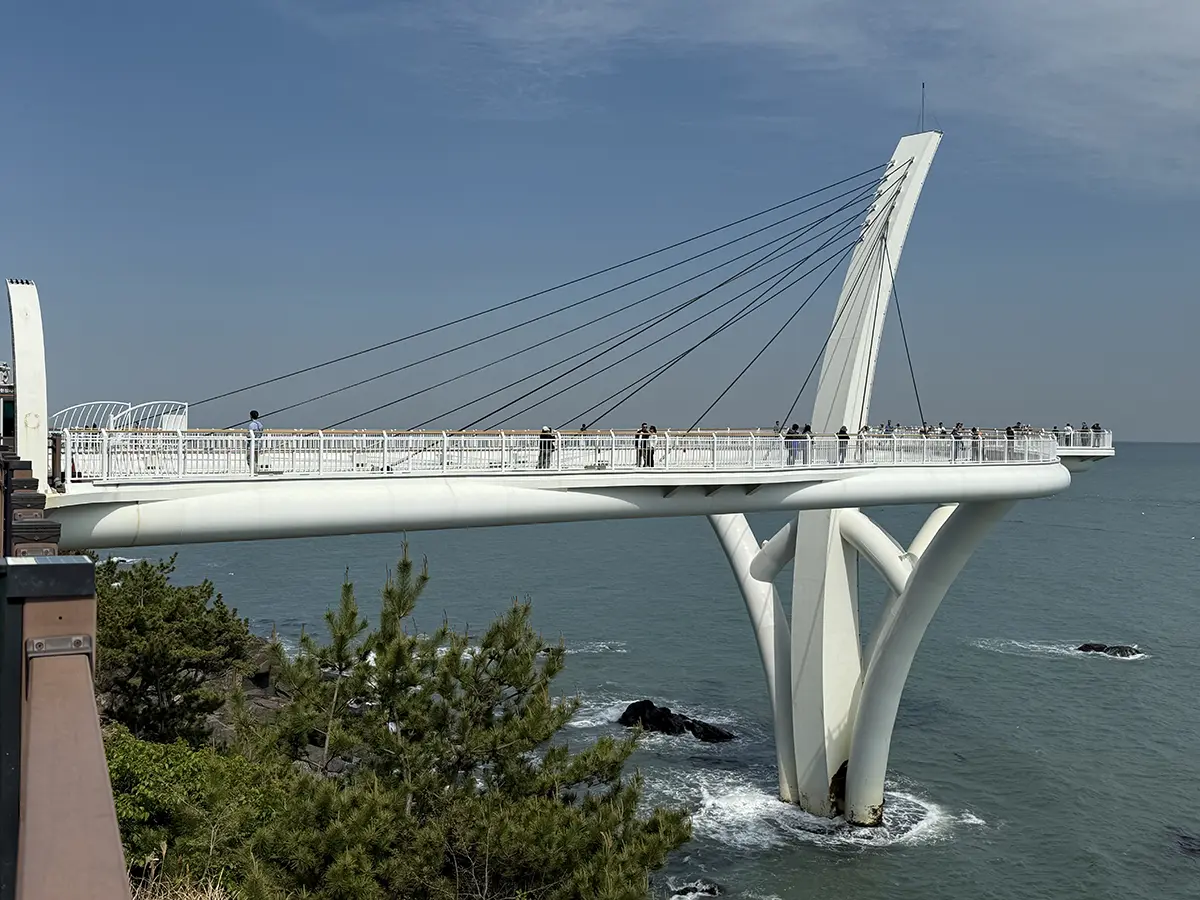
From here it was 100 floors up (David's favorite) for more epic views of the city and the sea at Busan X the Sky, since somehow it wasn't crowded. The building itself is beautiful, inside and out. Then we walked along the elevated platform of Blueline Skycapsule Park. Once a coastal railway, it now has lollipop-colored, tiny retro rail cars that slowly cruise for 2 km on an elevated track, high above the ground. It was a beautiful day, so we opted to walk along the pedestrian path rather than wait forever for a car. We were glad we did, exploring the many viewing platforms along the way looking over the wooded coast and sea, and the glass-floored observatory deck reaching out over the waves.
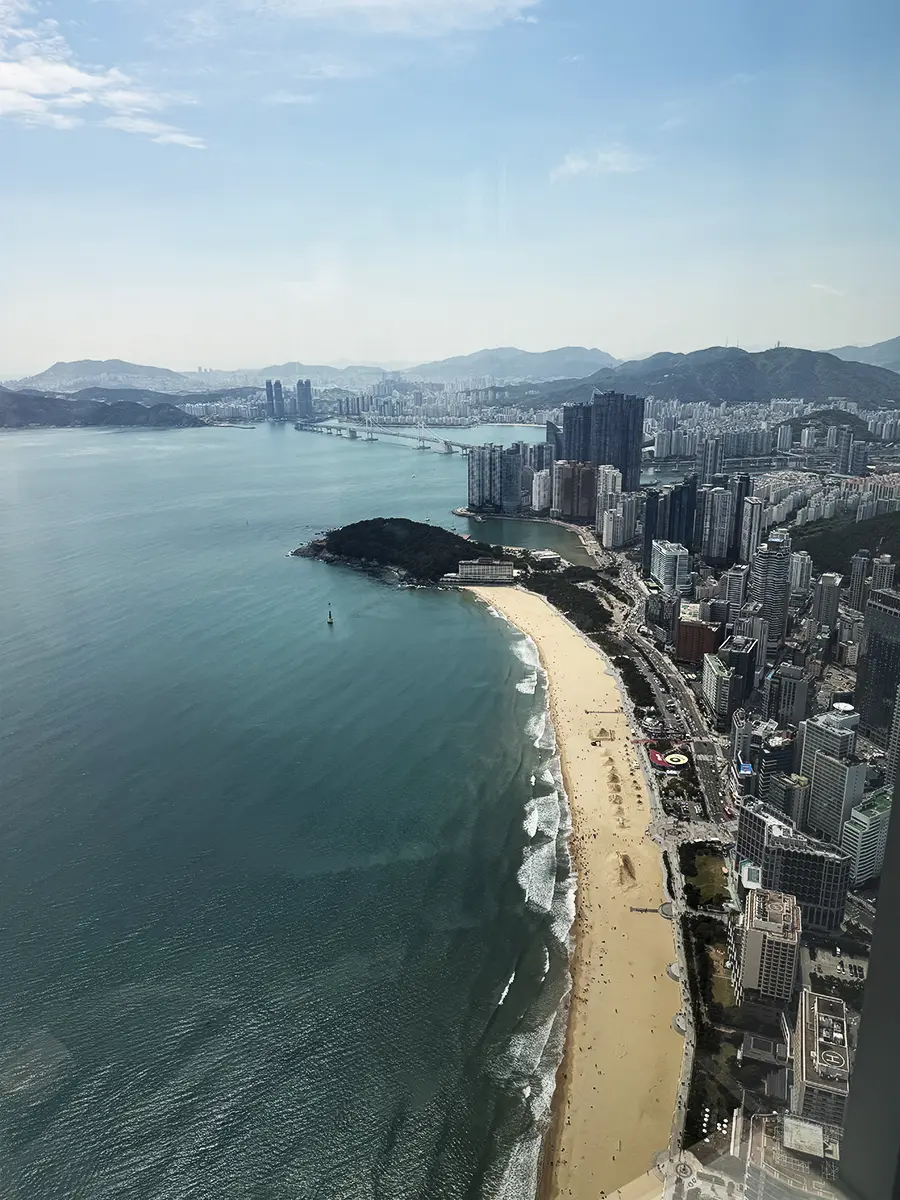
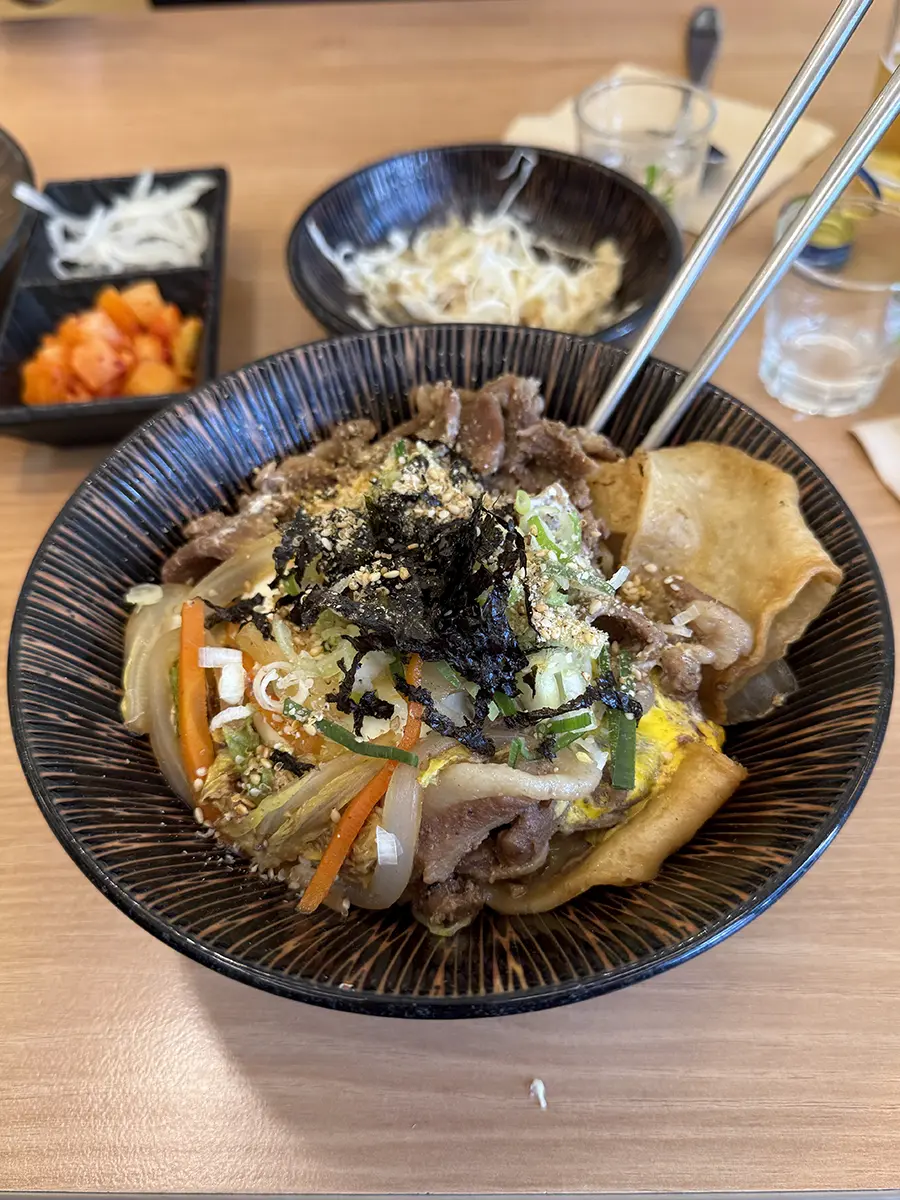
On the way back we managed to get on the wrong bus, and scrambled to get back to our hood. We had been anxiously watching the pocha carts set up, magically materializing in what had been a busy parking strip only minutes before. Even being prepared, we were way too late. Crowds and long lines for each cart had already formed in the few minutes it took us to get downstairs. Instead we ate incredible bulgogi, spicy pork cutlet and cheese balls at O Yumidang nearby. After another sunset viewing, it was time for bed.

Rainy day
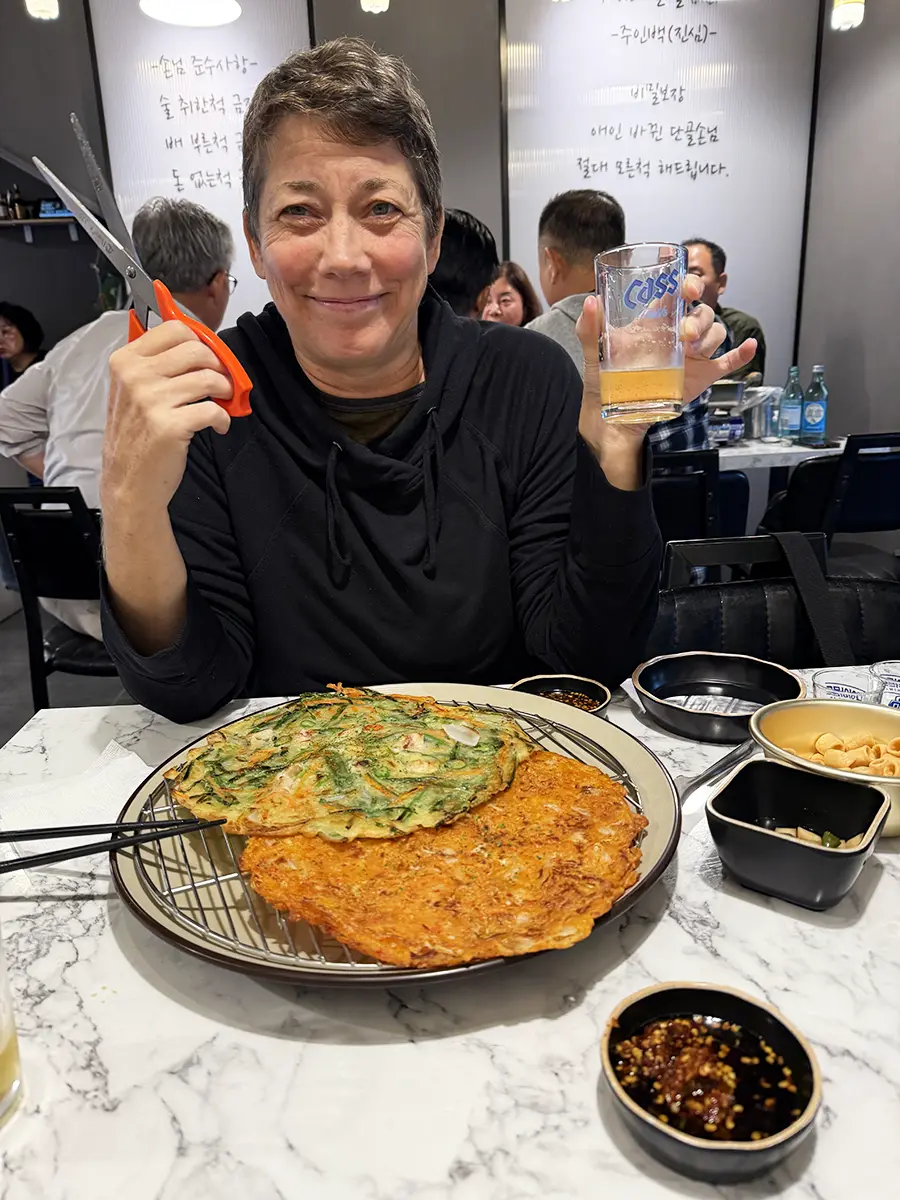
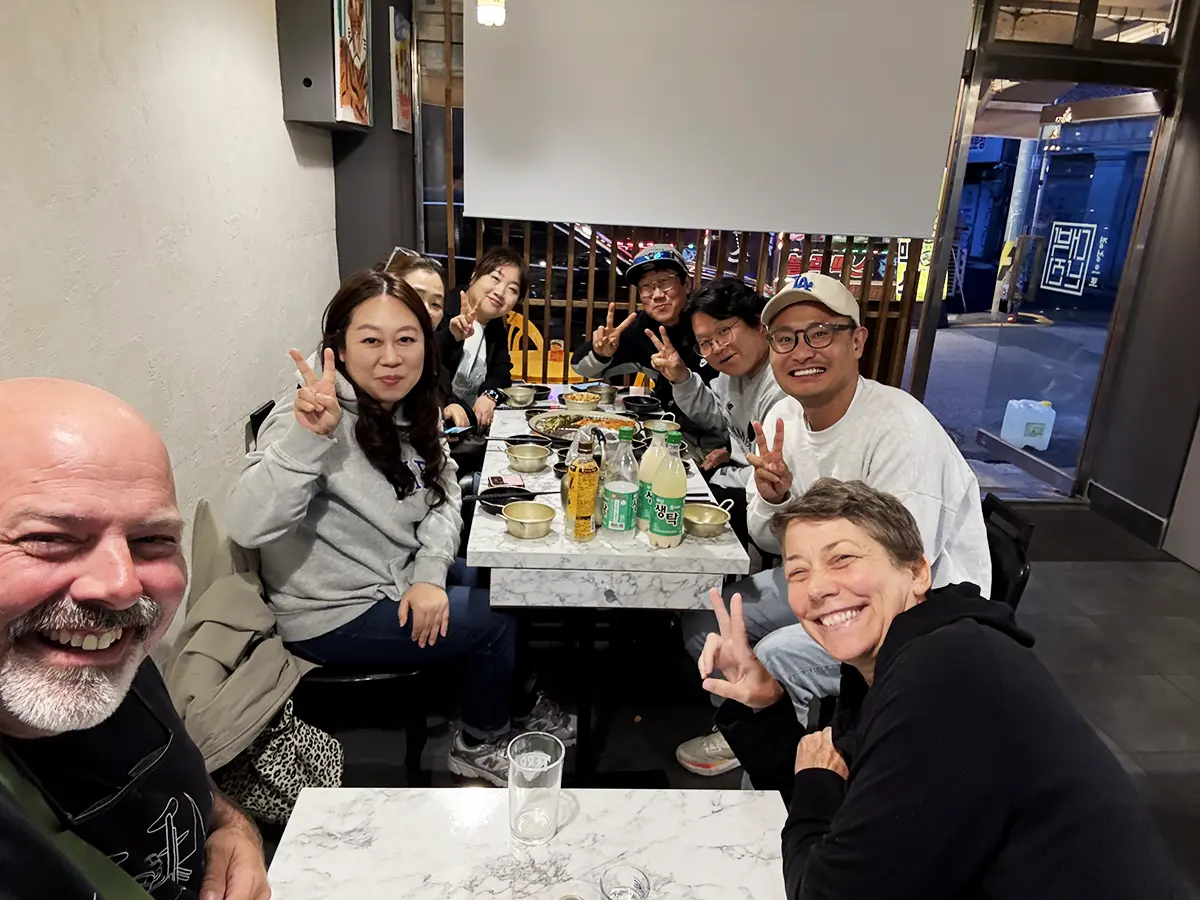
The change from perfect weather to rain brought us something rare - a day to RELAX! We took the much needed opportunity to plan for our next jump to Japan. We also took full advantage of the hotel sauna and onsen hot tubs after lunch. We each had the men's and women's facilities to ourselves, which was epic. By now we had given up on the pocha carts, so we bounced around the neighborhood looking for dinner, finally landing at Daebak Nanjeon. At the next table, a fun group was having a reunion. They asked where we were from, and soon we made friends, sending each other beer and soju (which helps!). We ordered kimchi and squid Buchimgae - pizza-sized thin pancakes served with scissors for cutting. Our new friends even shared some of their dishes, making sure we got to try their favorite things. Eventually we peeled ourselves away for a beautiful walk back, enjoying the harbor lights on the water, and then bed.
Songdo Bay/Annam Park
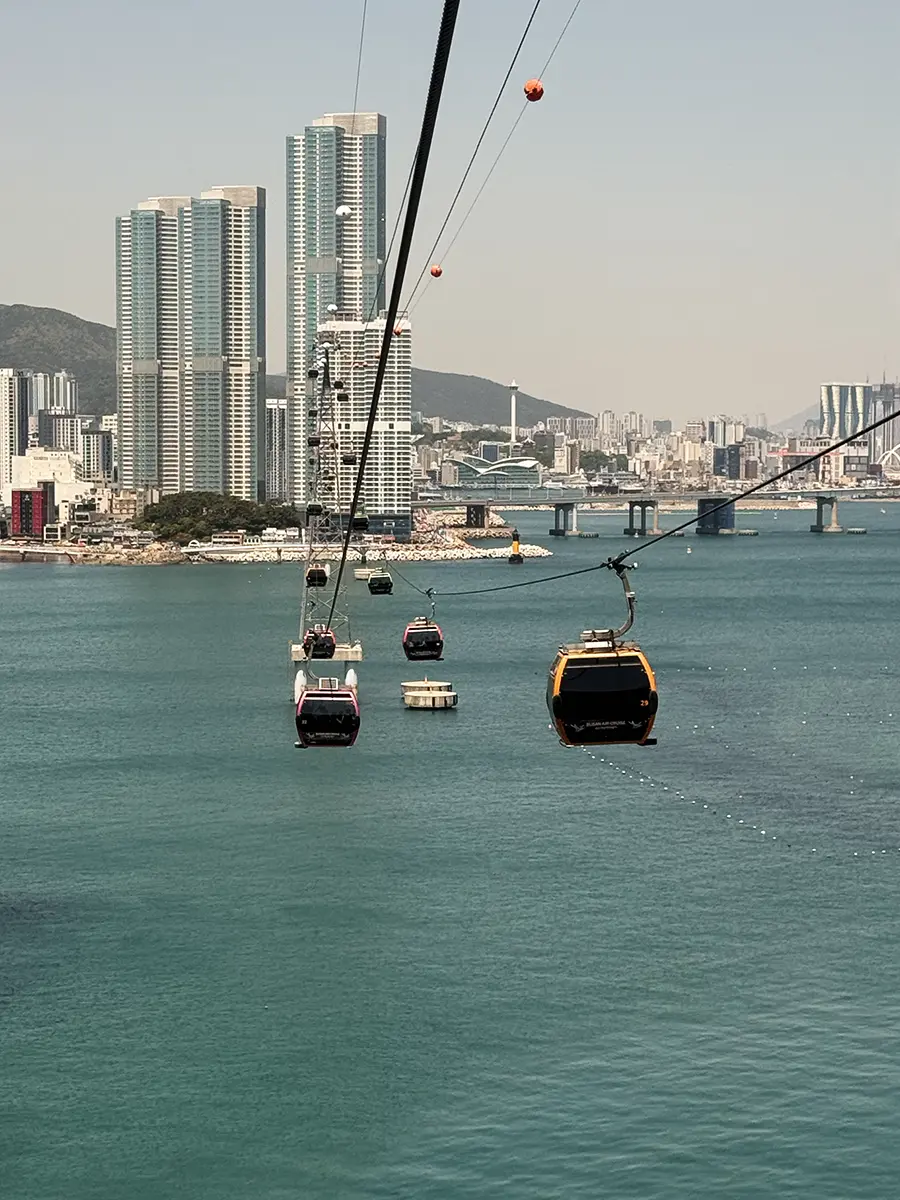
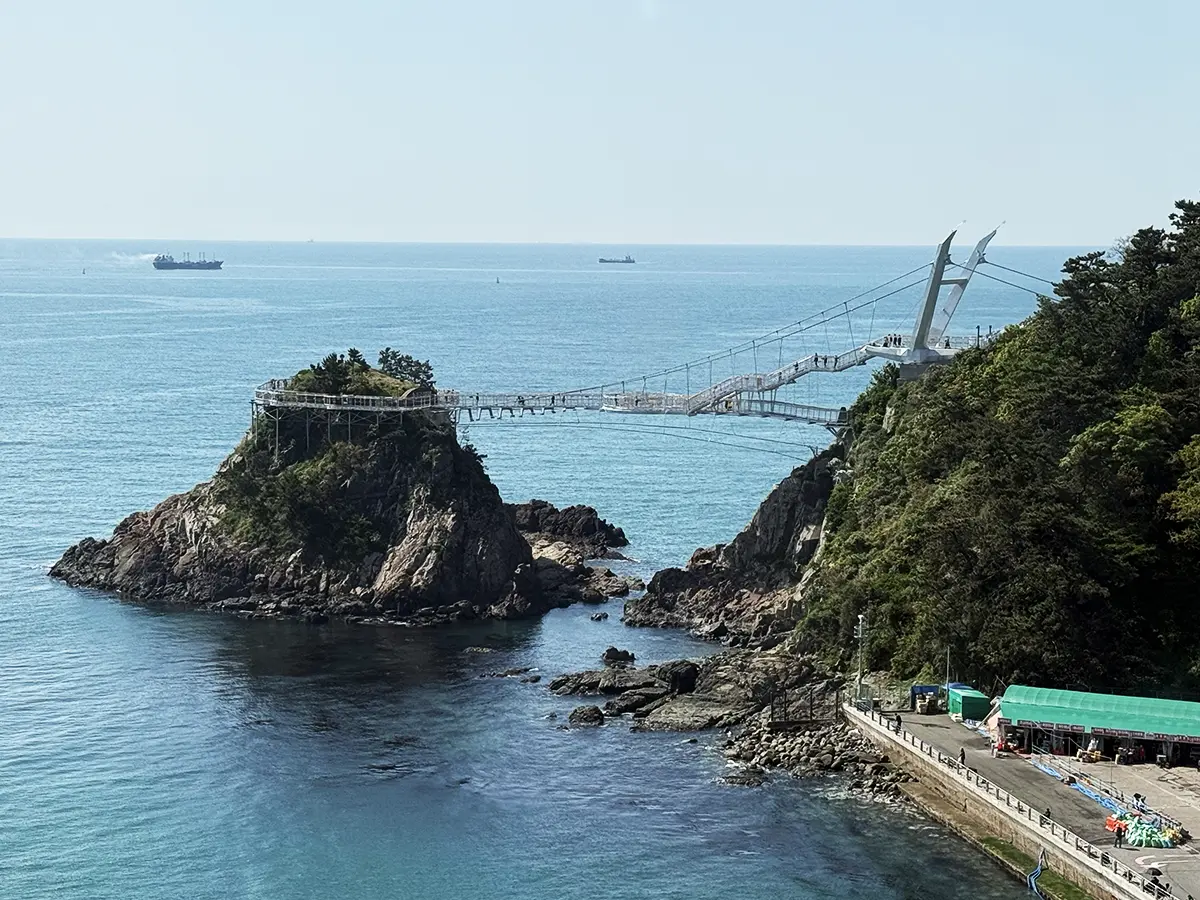
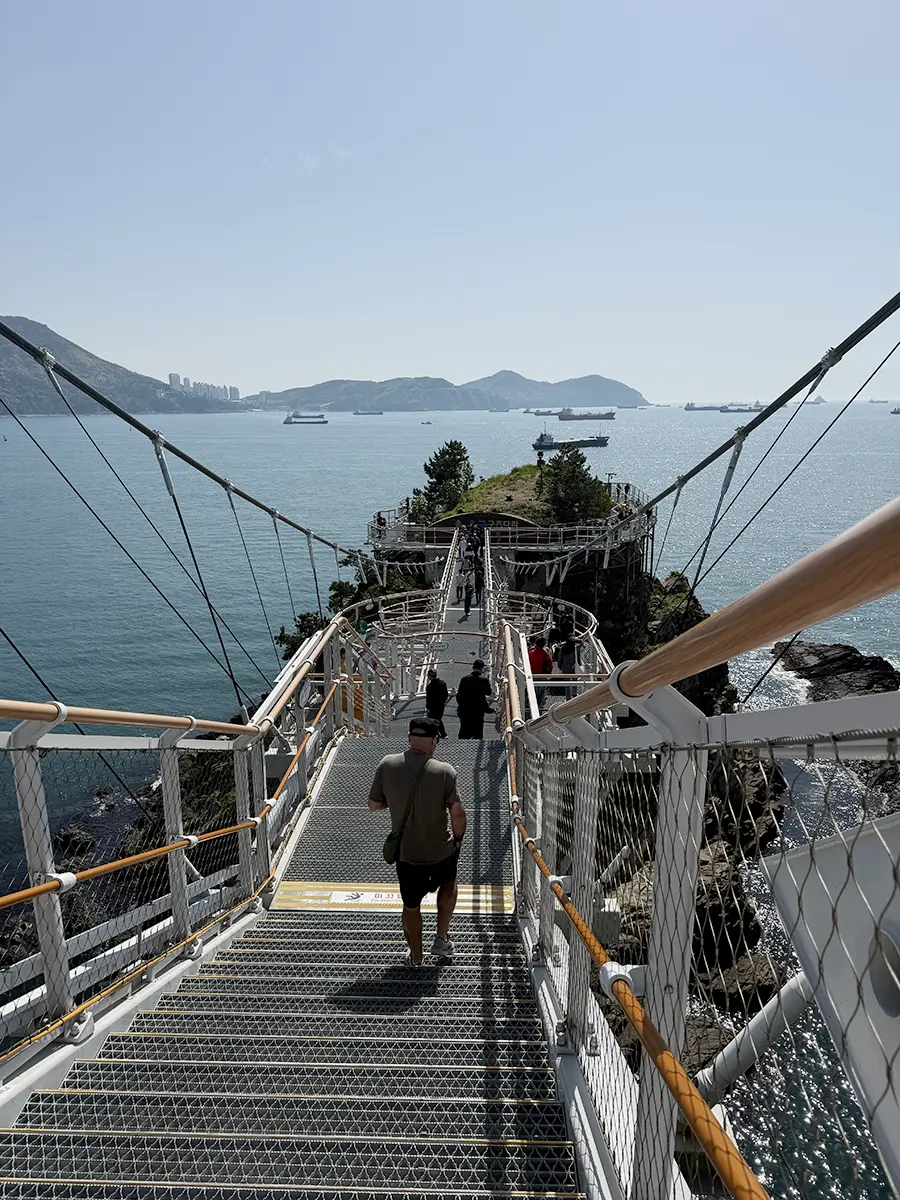
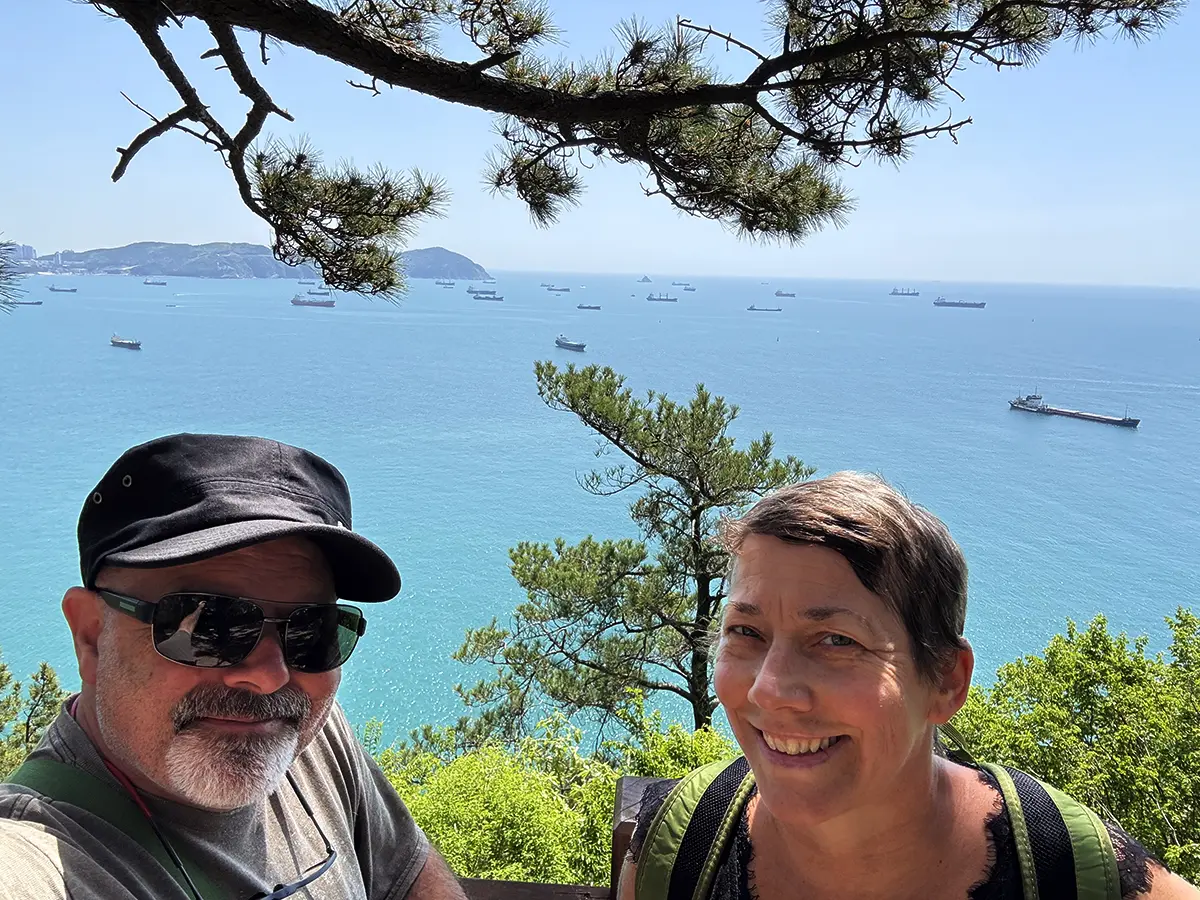
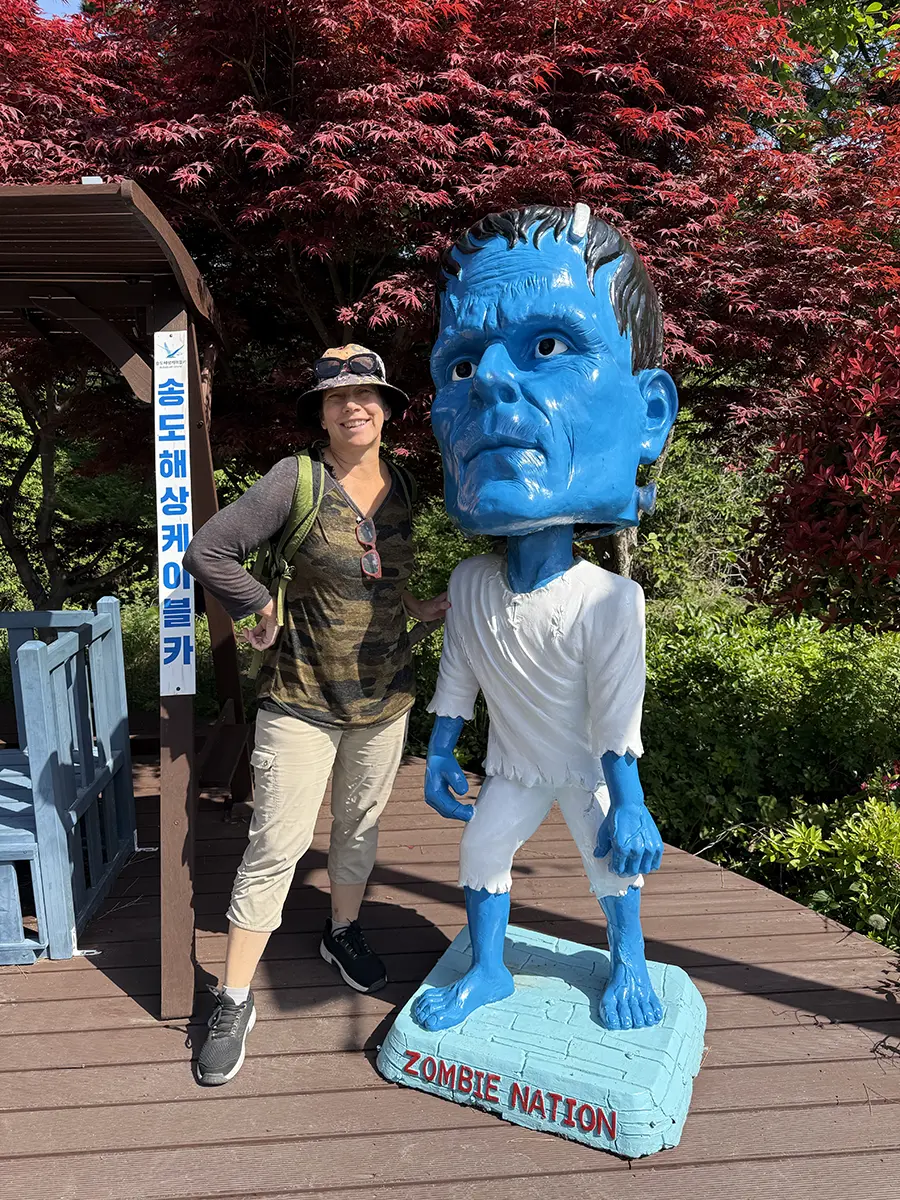
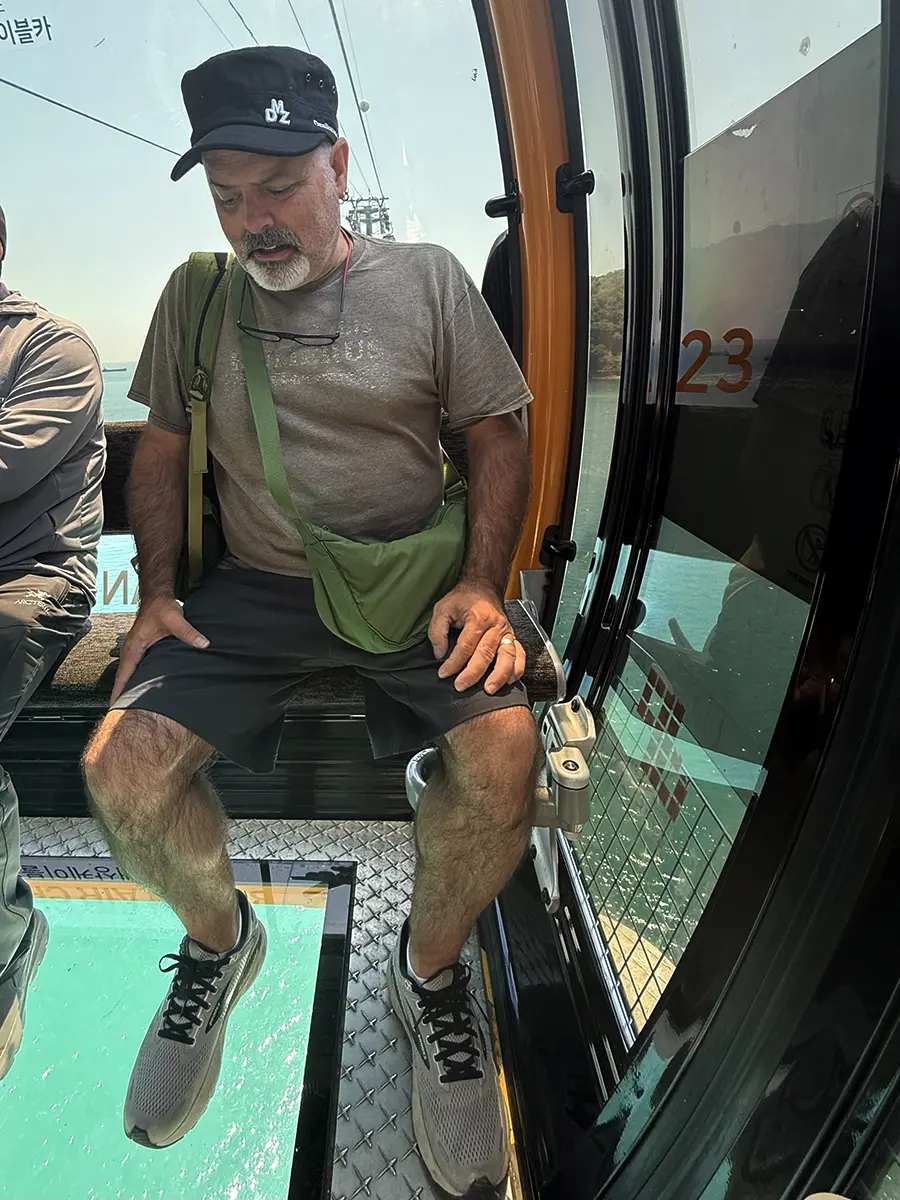
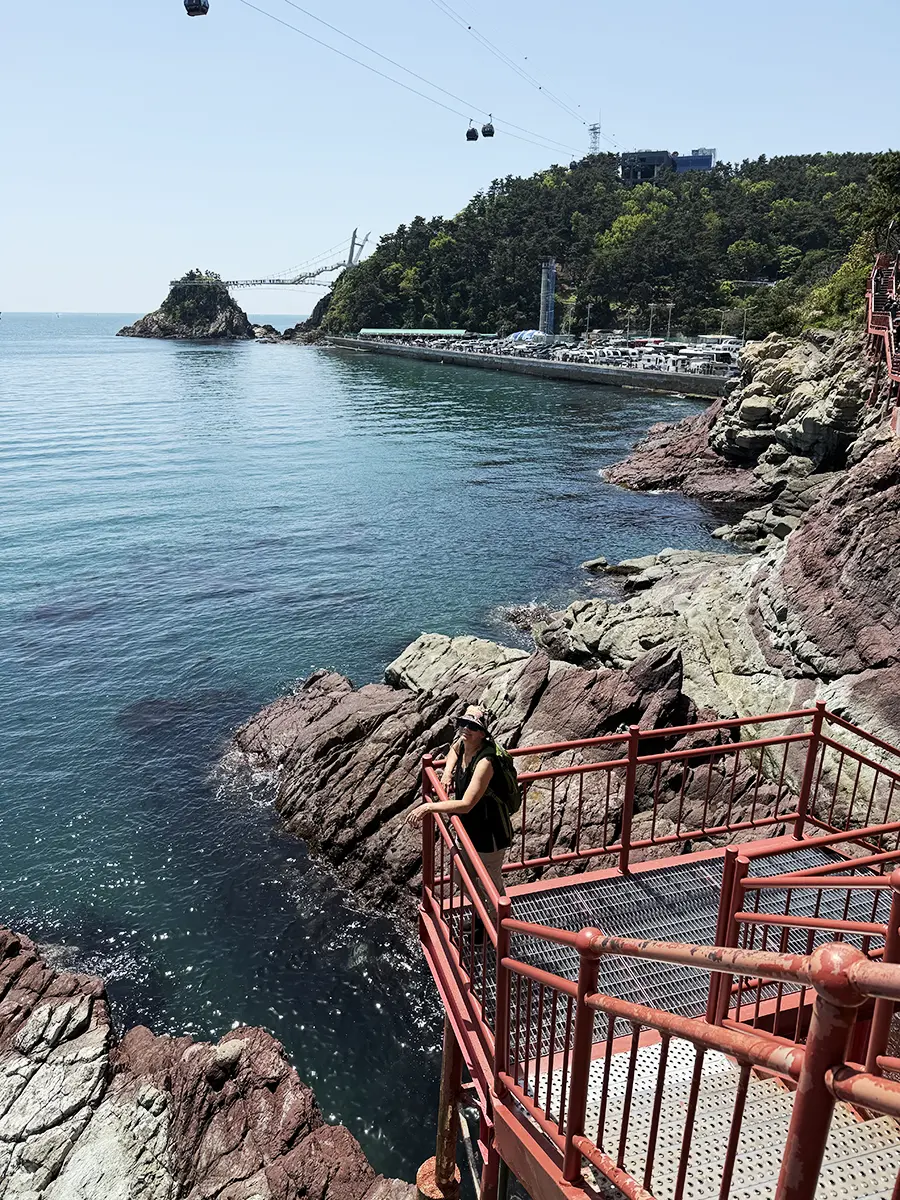
Despite our fun the night before, we left early in the morning to catch a bus to the Busan Air Cruise. This was another long (glass-bottomed) gondola stretching over Songdo Bay. Our perfect weather was back, so the views of the bay and the coast were spot-on. Once we disembarked at Annam Park, we walked over the Sondo Yonggung suspension bridge to Dongseom Island, then ran up and down the steep coastal trails. Back at the Visitor Center, there were goofy zombie statues, animatronic dinosaurs, and of course more Little Prince statues for photo ops. (Having done some reading about the apparent Korean obsession with this book, taking solace in childhood innocence - and cuteness in general - seems like a natural response to having a nuclear-armed madman for a next-door neighbor.)
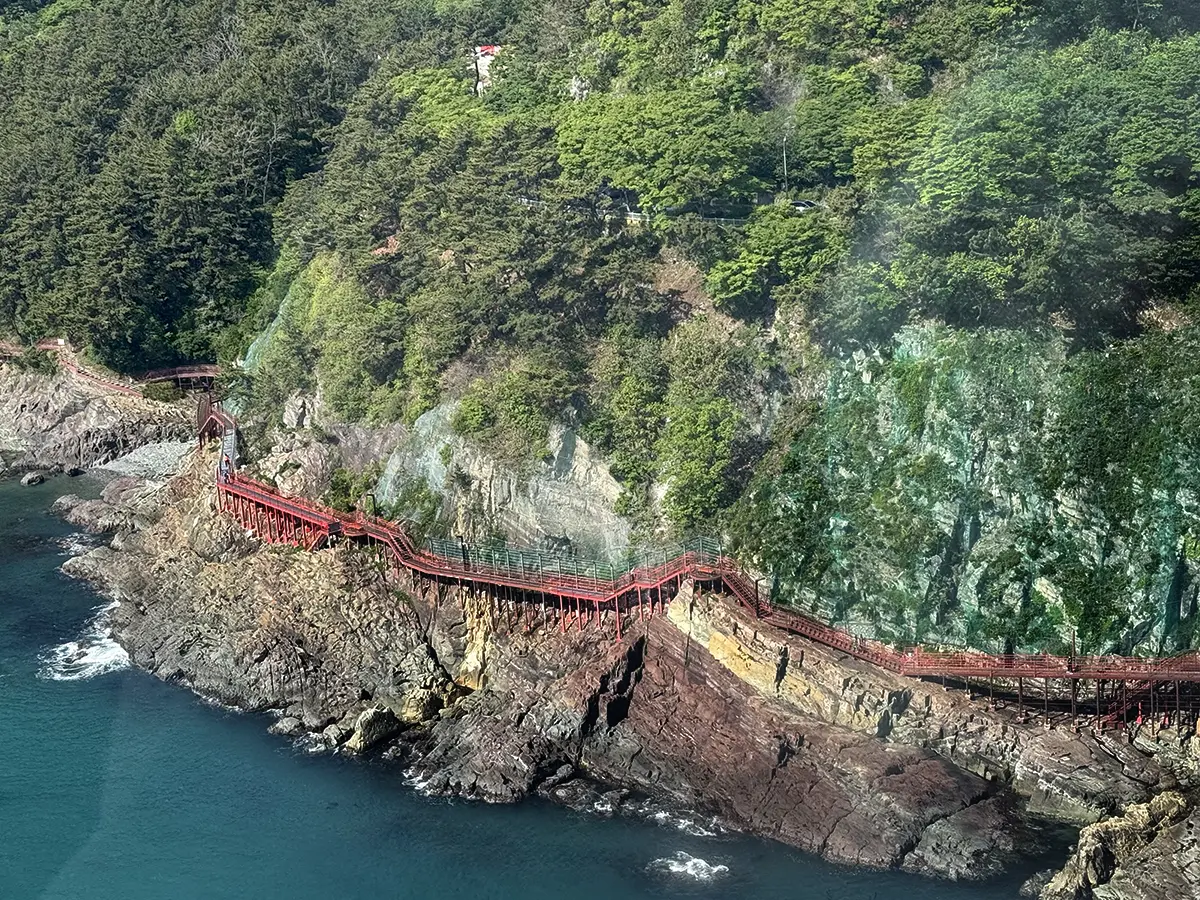
Anyway, the food court here was overwhelming, and we made poor choices. After a mediocre lunch in the blazing sun, it was time for more dramatic views on the Annam Park Cliff Walk. This metal boardwalk stretches along the coast back towards Songdo Beach, wrapping the rocks and cliffs at the water's edge in an orange ribbon lacework of metal walkways, bridges and stairs. Reaching the end, we took the air cruise back and crammed onto a bus like sardines.
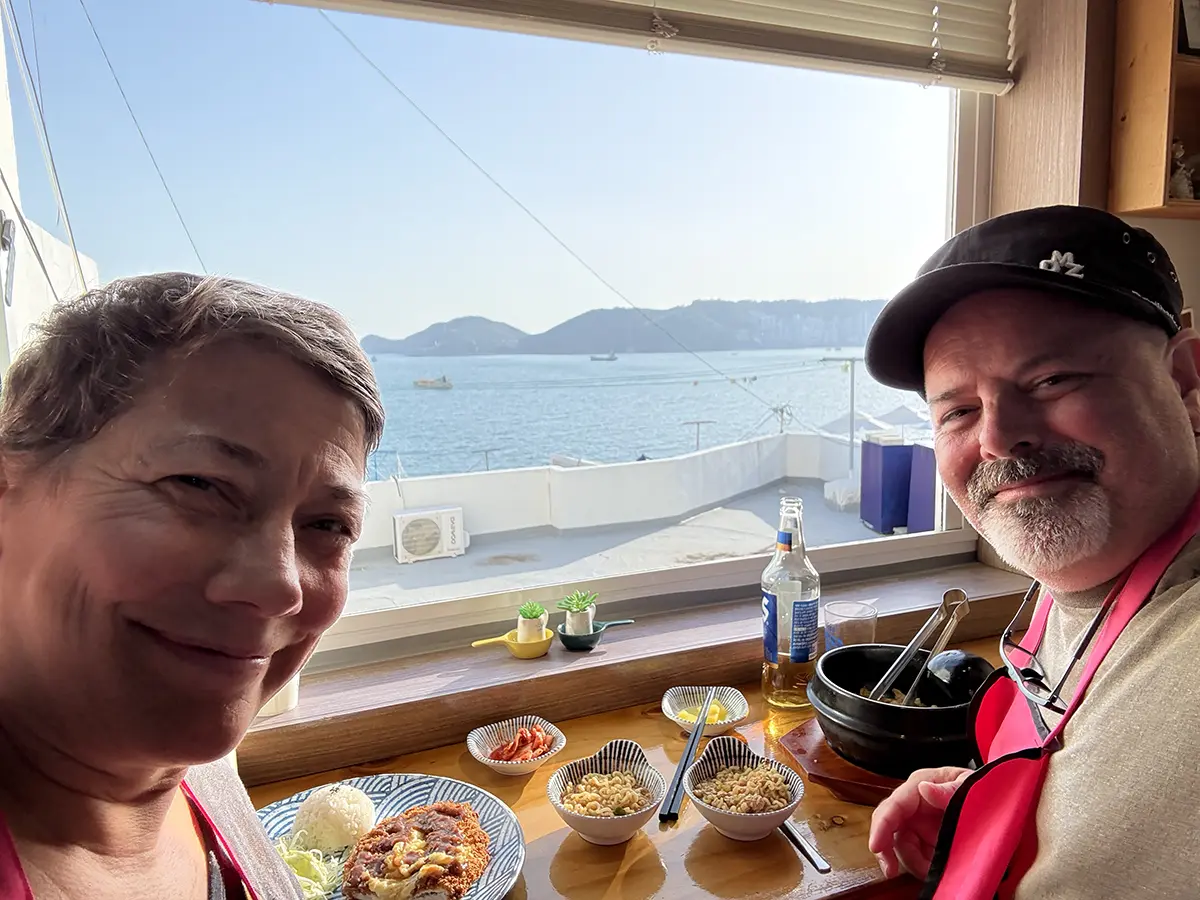
On our way back towards "home," we stopped at Huinnyeoul culture village for dinner. Similar to Gamcheon, this is another art village of reclaimed refugee housing. Predominantly white and blue plaster houses line steep and narrow streets overlooking the coast, drawing comparisons to a miniature version of Santorini, Greece. This was definitely accurate - especially the crowds and constant photo shoots. Amongst the themed cafés, we feasted at "Geoin Jumbo Pork Cutlet". This tiny place was packed, but seemed worth the wait, and we weren't wrong. Once a spot cleared, the extremely busy (and friendly and funny) owner ushered us to the counter and gave us adorable hot pink bibs to wear. Incredible curry pork and spicy ramen with the sunset over the ocean was a happy end to our time in Korea.
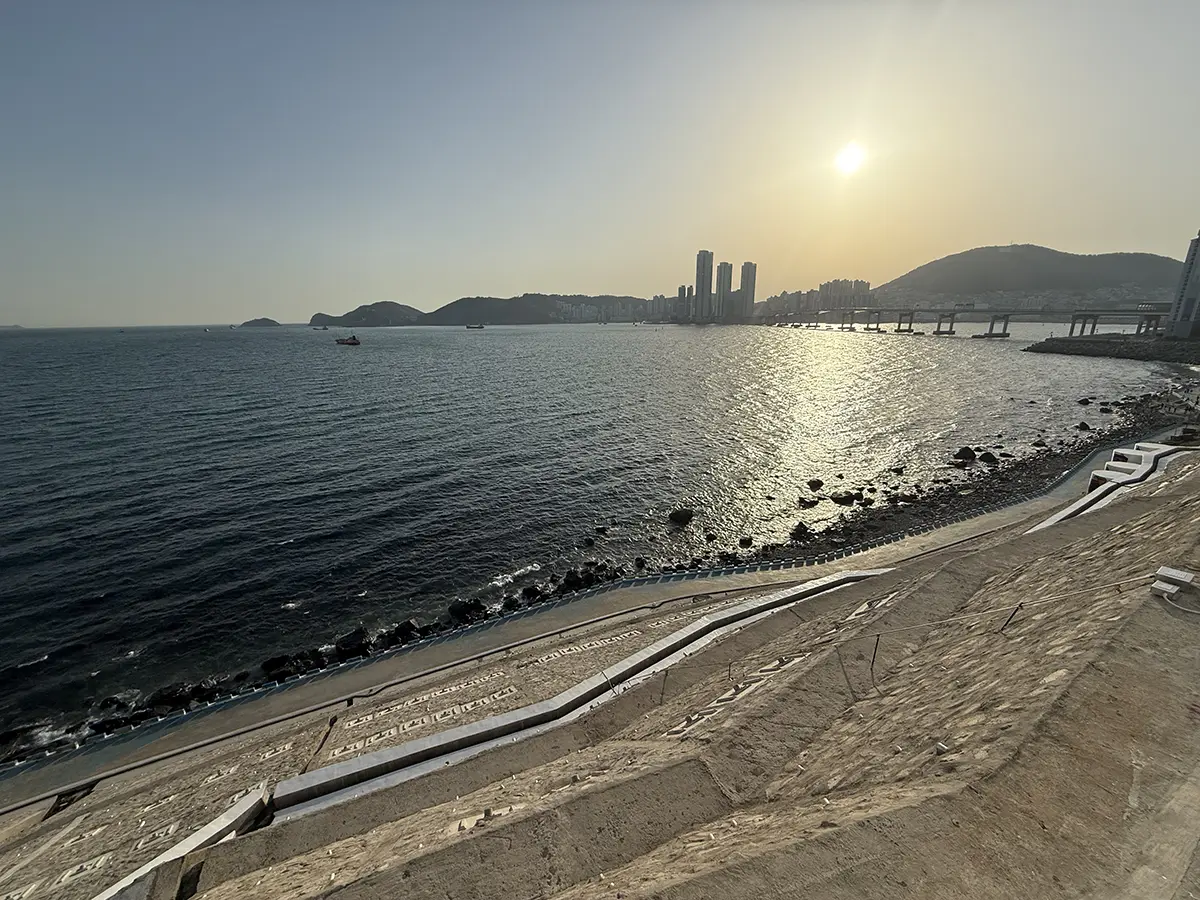
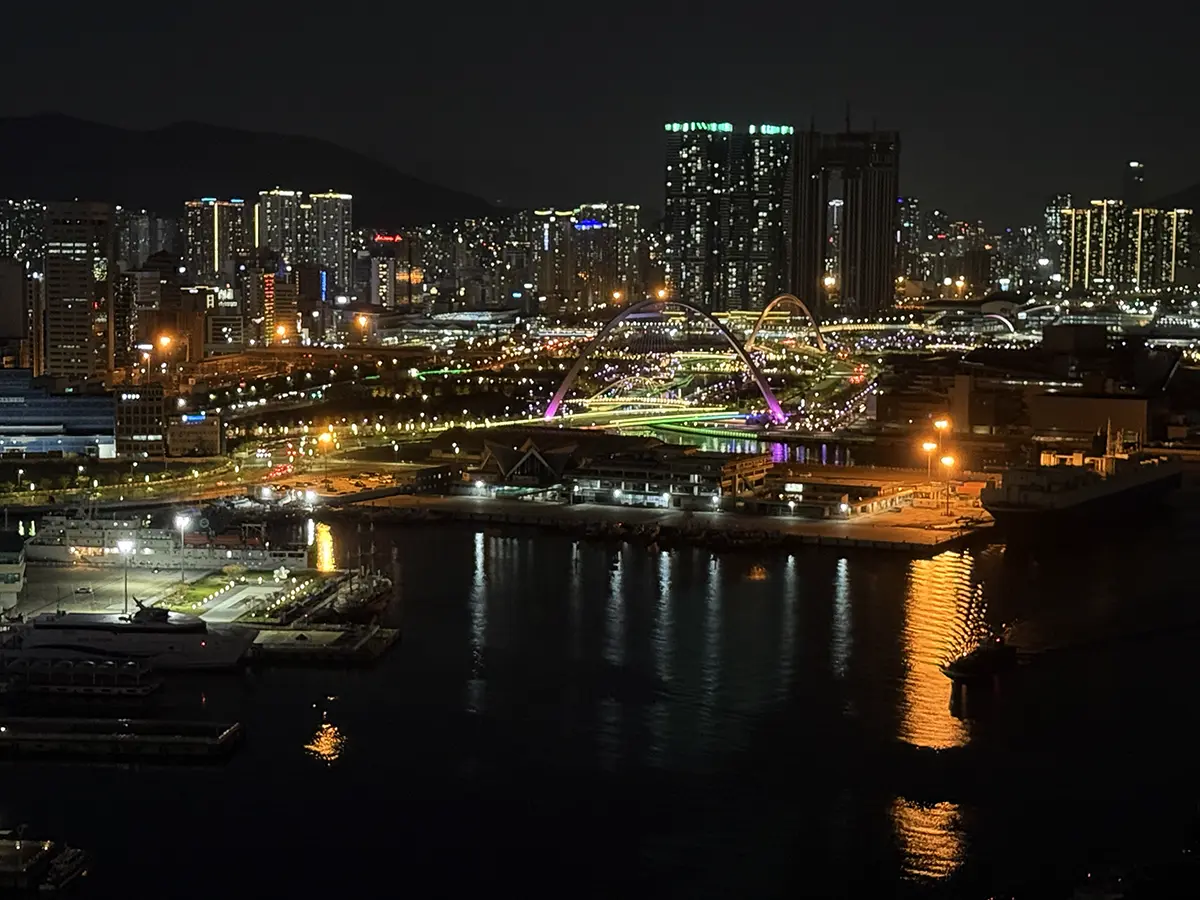
We walked off our dinner through the village and along the coast, before finishing the bus ride back to our hotel. We ended the night with a last visit to the rooftop, for more spectacular views of all the beautifully illuminated bridges, arches, and buildings reflecting on the water.
Next stop... Japan.


Comments